Testicular problems can develop in different ways, ranging from mild discomfort to sudden pain that requires immediate medical attention. While some symptoms may result from infections or minor injuries, others can indicate conditions that need prompt evaluation. Recognising these changes early can help prevent complications and ensure timely treatment.
However, not every lump, swelling, or ache points to a serious illness, and even symptoms like painful urination but no infection can have causes that are not obvious, making it important to understand what these symptoms could mean making it important to understand what these symptoms could mean.
A new lump on a testicle or an area that feels harder than usual should never be ignored. It may not cause pain or interfere with everyday activities, which can make it easy to overlook.
Watch for a new bump, hard spot, or change in the testicle’s usual texture. Although many lumps are non-cancerous, a doctor should examine them. As reported by the American Cancer Society, only about 1 in 250 males develop testicular cancer in their lifetime.
Testicular discomfort can feel like a dull ache, tenderness, or an occasional twinge that gradually becomes more noticeable. The pain may stay in one testicle or spread towards the groin and lower abdomen.
A lingering ache in the testicles may have several underlying causes, including infection or irritation. However, intense pain that starts suddenly needs emergency assessment, as it may be caused by testicular torsion.
It is normal for one testicle to hang slightly lower than the other, and a small difference in size is common. However, a noticeable change from your usual appearance may point to conditions like varicocele.
New swelling or enlargement may occur due to fluid buildup, inflammation, or other conditions. Seek medical advice if these changes develop.
Sometimes, the warning sign is not pain but a feeling that the scrotum has become heavier than usual. This sensation may be more noticeable while standing, walking, or going about your daily activities.
Fluid around a testicle or enlarged scrotal veins can cause heaviness. Persistent discomfort or swelling should be assessed by a doctor.
The testicles and surrounding tissues may become swollen or more sensitive than usual. Even gentle contact may cause discomfort, and the skin around the scrotum may sometimes appear red or feel warmer.
An infection may cause these symptoms, particularly alongside fever or discomfort while urinating. Sudden or severe pain requires emergency medical attention.
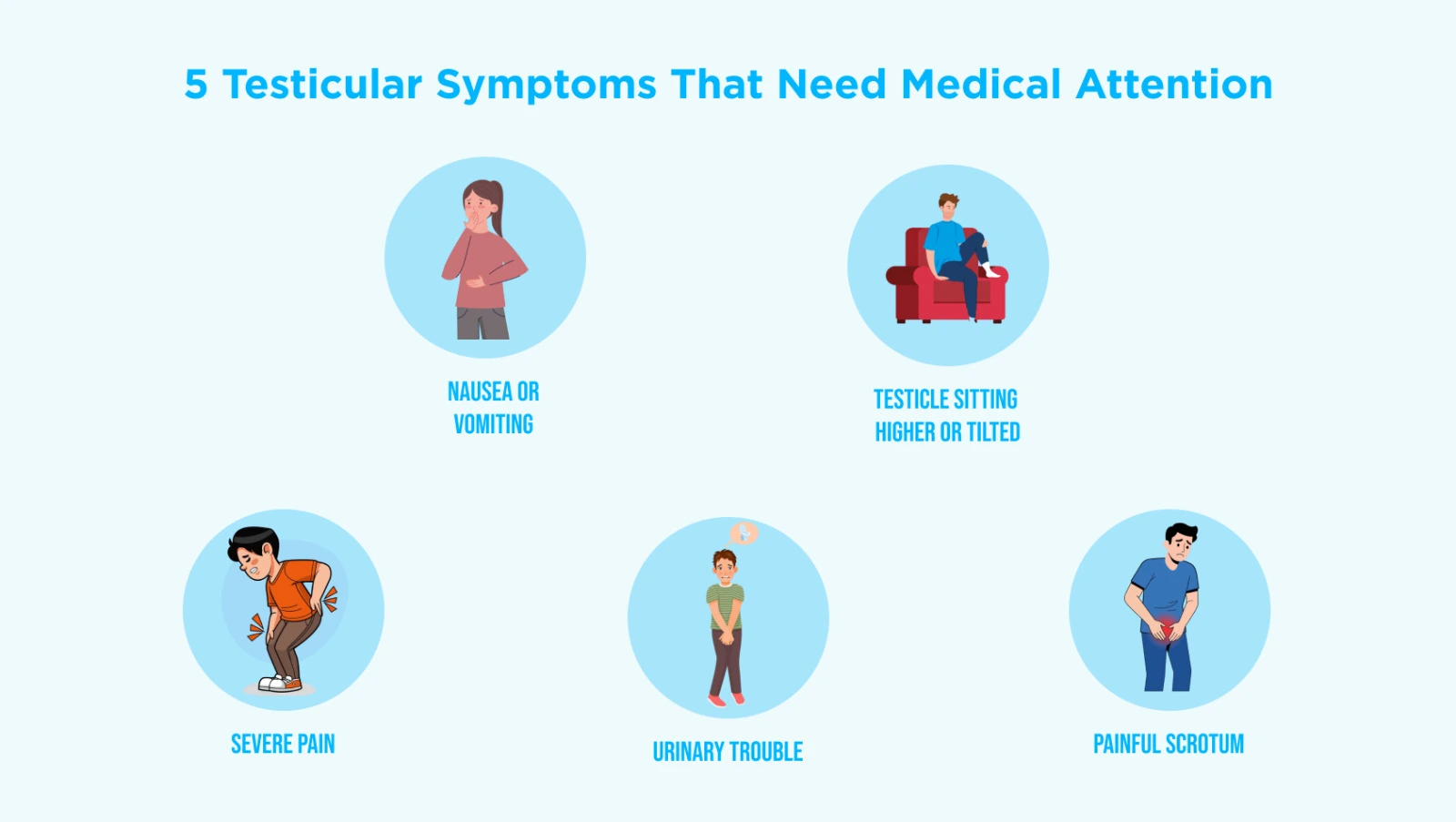
Feeling sick or throwing up along with testicular or lower belly pain should be taken seriously. This combination often appears when the pain is severe, and it should not be waited out at home.
A testicle that suddenly rides higher than usual or sits at an odd angle needs immediate attention. This change in position is a classic warning sign of testicular torsion.
A little soreness after a knock to the groin usually settles on its own. Intense pain or swelling that follows an injury may point to damage inside the scrotum and needs a proper examination.
Difficulty passing urine or bladder control problems in men, along with severe groin or testicular pain, calls for prompt care. It may indicate an infection or another condition affecting the urinary tract and the testicles.
A high temperature along with a warm, red, or very tender scrotum suggests a possible infection. Without timely treatment, an infection can spread, so get medical help the same day.
If you develop a lump, swelling, or ongoing discomfort, our urology hospital in Chennai can help you access the appropriate evaluation and care.
Yes, most testicular problems can be treated successfully, depending on their cause and severity. Early diagnosis helps doctors choose the right treatment, relieve discomfort, and reduce the risk of complications. While some conditions respond to medication, others may require surgery or regular monitoring.
Testicular torsion is a time-sensitive emergency. A study published on PubMed found better outcomes among patients who received treatment within 24 hours, reinforcing the importance of seeking medical care without delay.
Seek emergency medical care immediately for sudden, severe testicular pain, as delays can cause permanent damage. Consult a doctor if you notice:
Early evaluation determines the appropriate testicular problem treatment. At Dr. Mehta’s Hospitals, our specialists can assess your symptoms and guide you towards suitable care.
Testicular problems can range from minor infections to conditions that require urgent medical attention. Do not ignore persistent discomfort, swelling, or a new lump, even if it does not cause pain. At our top private multispeciality hospital in Chennai, we are committed to providing comprehensive care for a wide range of urological conditions.
Our esteemed urology specialists focus on accurate diagnosis, appropriate treatment, and personalized guidance to help patients make informed decisions about their health and seek timely care when needed.
Yes, some conditions, including testicular cancer, may cause a painless lump or swelling.
2. Does a lump on the testicle always mean cancer?
No, lumps can develop due to several non-cancerous conditions, but every new lump needs medical evaluation.
3. Why does one testicle suddenly become swollen?
Sudden swelling may result from an infection, injury, fluid buildup, or testicular torsion and requires prompt assessment.
4. Is it normal for one testicle to hang lower than the other?
Yes, a slight difference in position is common, but a sudden change in height or angle needs urgent medical attention.
5. Can a testicular infection affect fertility?
Yes, some testicular infections can interfere with fertility, particularly when inflammation affects sperm production or causes damage to reproductive tissues.
6. How often should men check their testicles?
Men can become familiar with their normal appearance and feel through occasional self-checks and seek medical advice about any new changes.
7. Can testicular pain go away without treatment?
Mild discomfort may settle, but persistent or recurring pain needs medical assessment, while sudden severe pain requires emergency care.
8. What tests help doctors identify testicular problems?
Doctors may recommend a physical examination, scrotal ultrasound, urine tests, or blood tests depending on the symptoms.
9. Can testicular problems be treated without surgery?
Yes, some conditions respond to medication or monitoring, while others, including testicular torsion, require surgery.
10. Which specialist should you consult for testicular problems?
A urologist can evaluate testicular symptoms, identify the underlying cause, and recommend appropriate treatment.