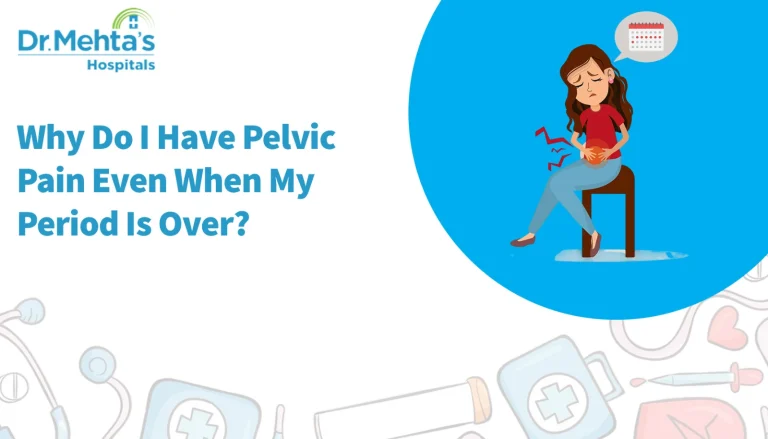
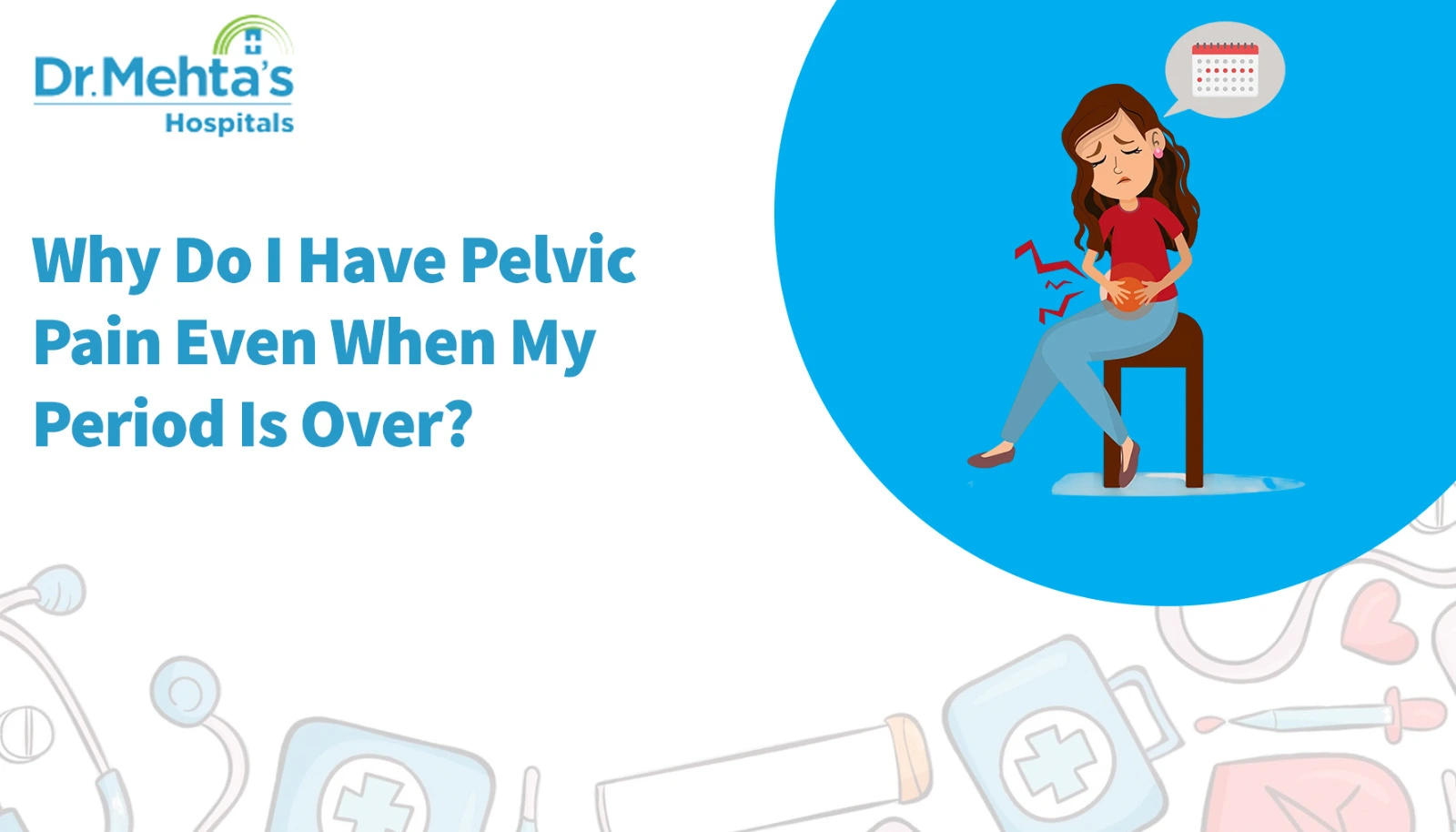
Pelvic pain after your period often comes from ovulation, mild leftover cramps or a gut problem like constipation.
In some women, it can also point to a condition such as an ovarian cyst, an infection or endometriosis.
Most of the time, the cause is mild and easy to manage. The key is to notice when the pain starts, where you feel it and what comes with it. These clues help your doctor find the reason faster.
Mild cramps for a day or two after your period ends are common and usually ease on their own. Short-lived cramps like these are rarely a cause for worry.
Pain that lasts longer, keeps returning every month or feels stronger than your usual period cramps needs a closer look. So does pain that comes with fever, unusual discharge or heavy bleeding.
An ache that spreads to the back at night may share causes with lower back pain in women while sleeping.
These everyday reasons are usually harmless.
As reported by the NHS, ovulation pain lasts from a few minutes to 1 or 2 days and usually shows up about two weeks before your next period.
Sometimes the pain comes from a condition that needs a doctor’s care, and most of these respond well to treatment.
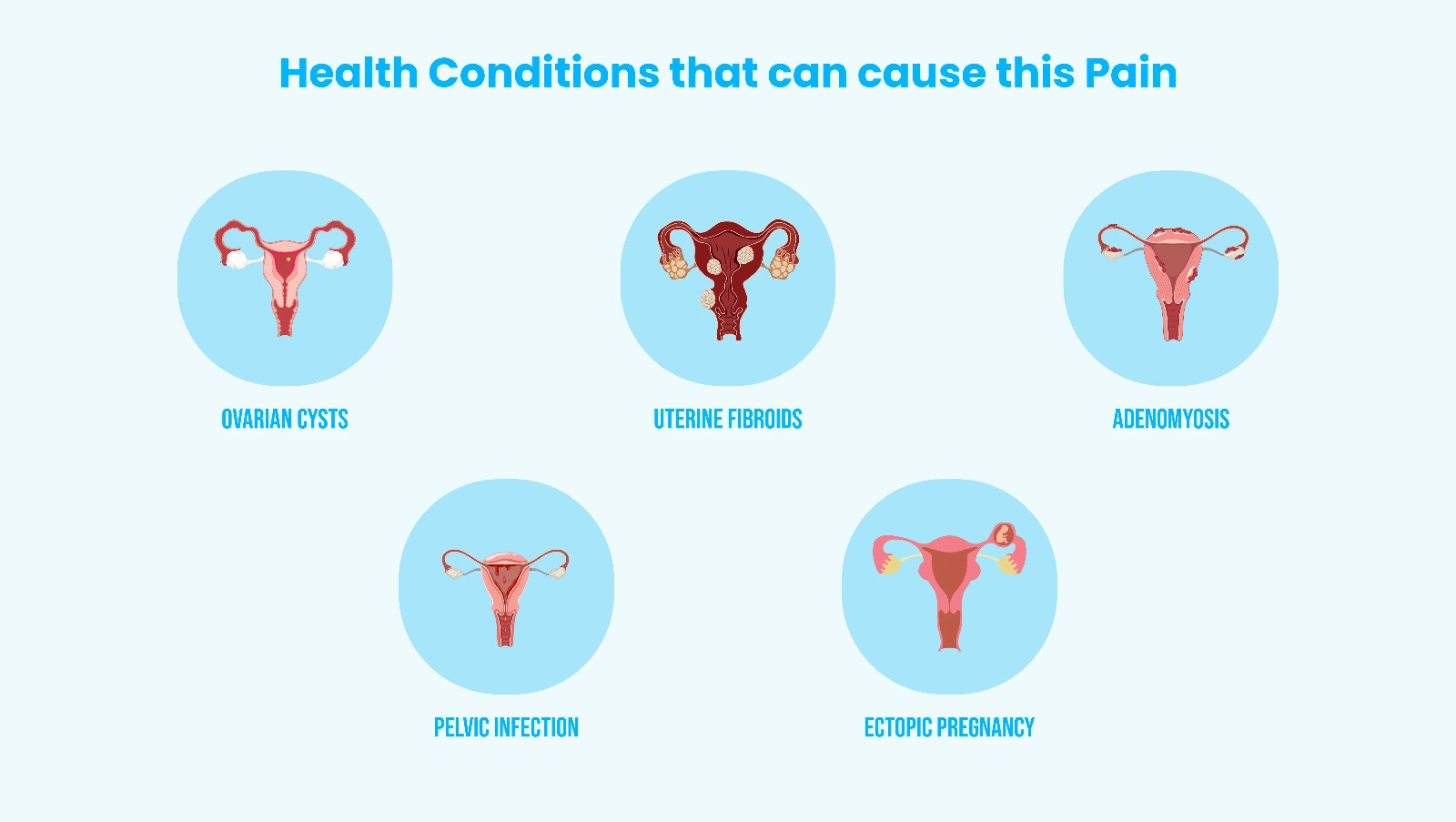
Many ovarian cysts fade on their own within a few cycles, though some need monitoring or treatment.
The timing of the pain and the symptoms that come with it often point to the likely cause.
|
When it happens or how it feels |
What it may point to |
| 1 to 2 days after your period, mild cramps |
Mild leftover cramps |
|
Mid-cycle, on one side |
Ovulation pain |
| With bloating or hard stools |
Constipation or gas |
|
With burning while passing urine |
Bladder infection |
| With fever or unusual discharge |
Pelvic infection |
|
Worse every month, pain during sex |
Endometriosis or adenomyosis |
| After a missed period, sharp one-sided pain |
Possible ectopic pregnancy |
A doctor at the best gynecology hospital in Chennai can confirm the exact cause with a simple check.
It could be, if your pelvic pain shows up before, during and after your periods and gets worse over the months.
In endometriosis, tissue similar to the uterine lining grows outside the uterus, often on the ovaries or pelvic walls.
Other signs include very painful periods, pain during sex, pain while passing stools and trouble getting pregnant. Many women live with these signs for years, thinking it is just bad period pain.
As reported by the Australian Government Department of Health, endometriosis affects at least one in 7 girls and women.
For mild pain, simple home care often helps.
Stress can tighten the pelvic muscles, and knowing how stress affects hormonal changes in women helps explain why calm routines ease cramps.
Your gynecologist will start with a pelvic check and add tests only if needed.
Pelvic ultrasound and other scans are done under one roof through the radiology and imaging services in Chennai at Dr. Mehta’s Hospitals.
Book a visit with a gynecologist if:
Get emergency help straight away for sudden severe pain, fainting, heavy bleeding or pain with a missed period. Ongoing pain from fibroids or endometriosis can be treated by our OB/GY specialists in Chennai.
Pelvic pain after a period is often linked to simple reasons such as ovulation, constipation or mild cramps that fade quickly.
When it lasts longer, returns every month or comes with fever or discharge, a timely check helps find the cause early and keeps treatment simple.
Our team includes an experienced gynecologist in Chennai who listens to your concerns and plans gentle, clear care. As a trusted multispeciality hospital in Chennai, we bring gynecology, scans and lab tests under one roof so you can feel at ease again.
Yes, stress can tighten the pelvic muscles and make cramps feel stronger.
2. Is it normal to have cramps but no bleeding?
Mild cramps without bleeding can happen around ovulation, but repeated pain needs a check.
3. Can a copper T cause pelvic pain after periods?
It can cause cramps in the first few months, but ongoing pain needs a review.
4. Does pelvic pain after a period mean I am pregnant?
Not always, but a home test helps rule it out if your period was light or late.
5. Can PCOD cause pelvic pain?
PCOD does not usually cause pelvic pain, so ongoing pain needs a check for other causes.
6. Can sex cause pelvic pain after a period?
Dryness, infection or endometriosis can cause pain during sex, so mention it to your doctor.
7. Can pelvic pain affect my chances of getting pregnant?
Conditions like endometriosis or pelvic infection can, so early treatment helps protect fertility.
8. Which side does ovulation pain usually occur on?
It occurs on the side of the ovary releasing the egg, which can change each month.
9. Can a urine infection feel like period cramps?
Yes, a bladder infection can cause a cramp-like ache low in the tummy.
10. Where can I see a gynecologist for pelvic pain in Chennai?
You can consult our gynecologists in Velappanchavadi or Chetpet at Dr. Mehta’s Hospitals.