


Yes, kidney disease can cause itchy skin, especially when it reaches a later stage or when a person is on dialysis. Doctors call this kidney-related itch CKD-associated pruritus, and it often feels deep, constant and hard to relieve by scratching.
The itch can show up even when your skin looks normal, which is why many people do not link it to their kidneys at first. Knowing the signs helps you get care sooner.
Kidney disease makes the skin itch through several changes that follow when weak kidneys cannot clear waste and balance minerals. As reported by Kidney Care UK, itching affects around half of people with advanced kidney disease.
Doctors link the itch to several changes working together:
It usually feels like a deep, crawling itch that does not settle even after you scratch. Many people feel it on the back, arms, legs and face, and it often affects both sides of the body.
The itch tends to get worse at night, in hot weather and after a warm bath. If the itch keeps you awake for several nights, a nephrology hospital in Chennai can check whether your kidneys are the cause.
Kidney-related itch is usually long-lasting, shows no rash at first and often responds less to allergy tablets.
| Feature | Kidney-related itch | Dry skin or allergy |
| Rash | Usually none, except marks from scratching | Hives or red patches are common |
| Timing | Daily, often worse at night | Comes after a trigger and fades |
| Allergy tablets | Often give limited relief | Often help, though not always |
| Other signs | Swollen feet, tiredness, less urine | Usually none of these |
| Areas | Back, arms and both sides of the body | Often where the trigger touched the skin |
If you are not sure which one it is, our skin specialists in Chennai can examine the skin and work with your kidney doctor.
It often helps, though itching can continue even when dialysis is working well. When itching continues, your doctor may change how long or how often you have dialysis, or suggest a switch between the types of dialysis.
Some people notice the itch more during or right after a session. Even so, never skip or shorten a session because of it. Tell your dialysis team instead, as small changes can bring real relief.
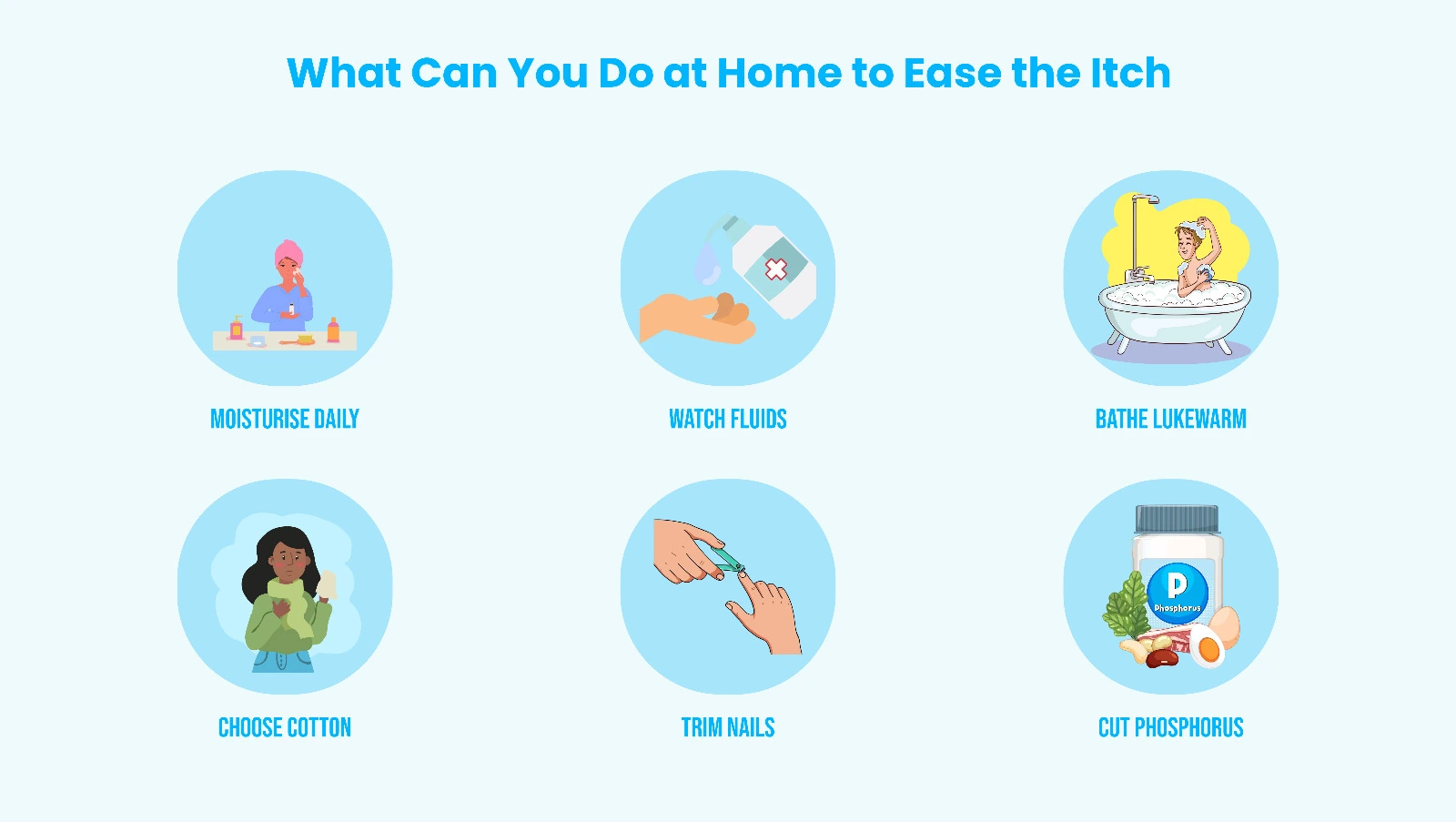
Gentle skin care and a few daily habits can calm the itch while your treatment works.
Simple blood tests usually show whether your kidneys are behind the itch. As reported by the National Kidney Foundation, a normal phosphorus level is 2.5 to 4.5 mg/dL, though this level alone does not show whether you will itch.
Your doctor may also check:
Treatment works on the cause and the skin at the same time. Your doctor may prescribe phosphate binders (medicines taken with meals to lower phosphorus), correct calcium and PTH levels and fine-tune dialysis.
A top nephrologist in Chennai at Dr. Mehta’s Hospitals can bring these steps together into one plan that suits your stage of kidney disease.
For stubborn itch, doctors may add medicines that calm itch signals from the nerves or suggest UVB light therapy, a gentle treatment using controlled light. Skin creams for dryness are used alongside.
Book a regular kidney check-up if:
Itching on its own is rarely an emergency. Go to the emergency medicine department in Chennai straight away if you have breathlessness, chest pain, confusion, very little urine or sudden swelling of the face or legs.
Itchy skin can be one of the quieter signs that the kidneys need attention. With the right tests, steady dialysis where needed, careful diet and good skin care, the itch often becomes much easier to live with. Telling your doctor about it early makes a real difference.
Our kidney and skin teams work side by side to find the cause and ease your discomfort. As a top multispeciality hospital in Chennai, we bring nephrology, dermatology and lab tests together under one roof so you can feel comfortable in your own skin again.
It is more common in later stages, though some people notice it earlier.
2. Can a kidney transplant stop the itching?
Itching often improves after a successful transplant, though it may not fully clear for everyone.
3. Why does my skin itch more after dialysis?
Heat, dry skin or certain dialysis materials can trigger it, so tell your dialysis team.
4. Can kidney itching cause a rash?
It usually does not, though heavy scratching can leave marks.
5. Does coconut oil help with kidney-related itching?
Fragrance-free moisturisers or emollients are a better choice for easing dryness.
6. Can high creatinine cause itching?
High creatinine itself does not cause itch, but the waste build-up that comes with it can.
7. Which foods should I avoid if my kidneys make me itch?
Limit foods high in phosphorus, such as packaged snacks, colas and processed meats.
8. Can stress make kidney itching worse?
Yes, stress and poor sleep can make the itch feel stronger.
9. Is kidney-related itching contagious?
No, it cannot spread from one person to another.
10. Where can I get treatment for kidney-related itching in Chennai?
You can consult the nephrology and dermatology teams at Dr. Mehta’s Hospitals in Chennai.