
A lump in the testicle can develop for several reasons, including fluid-filled cysts, infections, inflammation, enlarged veins, or, less commonly, testicular cancer. While discovering one can understandably cause worry, not every lump is cancerous, and many causes are treatable.
The important thing is not to ignore a new or unusual change. Understanding what may be behind the lump, which symptoms can accompany it, and how doctors identify the cause can help you know what to do next.
This guide explains the common causes, warning signs, diagnostic tests, and when it is important to seek medical attention.
A lump in the testicle means there is an unusual swelling, growth, or change in the tissue of the testicle or surrounding structures, and it may be caused by conditions ranging from harmless cysts and infections to testicular cancer.
Importantly, not every testicular lump is cancerous, so finding one does not automatically mean you have cancer. Testicular cancer is also relatively uncommon in India.
As reported by the Times of India, India has one of the lowest incidences of testicular cancer, with fewer than 1 case per 100,000 men. A doctor can identify the underlying cause through examination and appropriate tests, after which testicular swelling treatment can be planned based on the diagnosis.
| Causes of Testicular Lump | How the lump or swelling may appear |
| Epididymal cyst / Spermatocele | A small, smooth lump that usually develops near the top or back of the testicle. |
| Hydrocele | A soft, often painless swelling caused by fluid collecting around the testicle. |
| Varicocele | Enlarged veins that can feel like a soft, uneven or “bag of worms” swelling. |
| Epididymitis | Swelling and tenderness around the testicle, often accompanied by pain or warmth. |
| Inguinal hernia | A bulge from the groin that can extend down towards the scrotum and may become more noticeable when standing or straining. |
| Testicular cancer | A firm lump or a noticeable increase in the size, shape or feel of one testicle. |
Lumps can vary in appearance and feel, so a doctor may need an examination and ultrasound to identify the cause accurately. Enlarged prostate vs prostate cancer is a separate concern from most testicular lumps, as both conditions affect the prostate rather than the testicle and generally cause different symptoms.
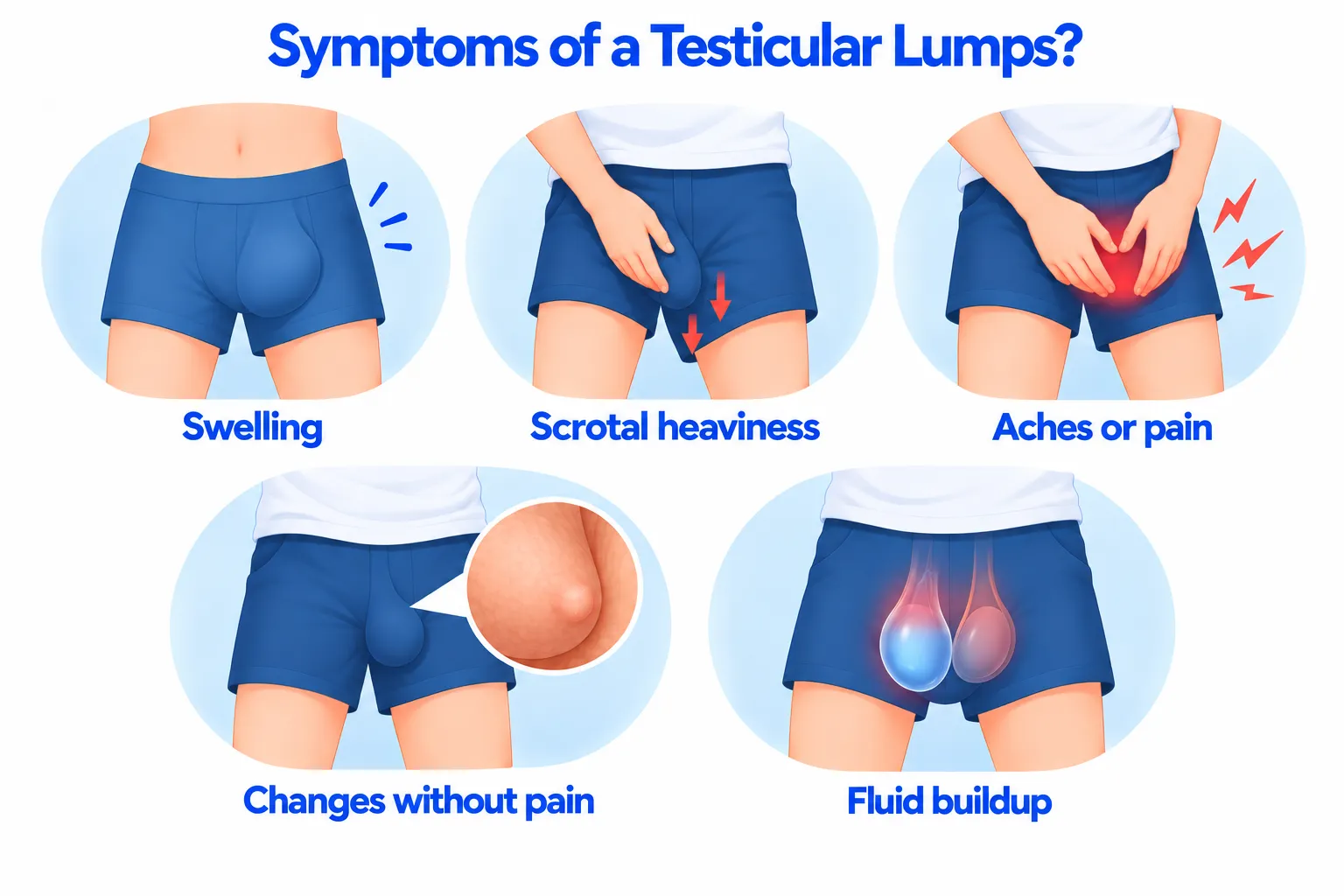
Doctors diagnose a testicular lump by examining the testicle and scrotum, followed by an ultrasound and, when needed, blood tests or other investigations. These tests help identify whether the lump is caused by fluid, infection, swollen veins or a solid growth.
Further tests are taken if cancer is suspected, surgery and scans may be recommended to confirm the diagnosis and check whether it has spread.
For expert evaluation, visit our urologist hospital in Vellapanchavadi. Our specialists can assess your symptoms and guide you towards the right diagnosis and treatment.
See a urology doctor within a few days of noticing a new testicular lump or swelling, because even painless changes should be checked to identify the cause early.
Seek immediate medical attention if the lump comes with sudden, severe testicular pain, nausea, vomiting or rapidly increasing swelling, as some conditions need urgent treatment.
You should also arrange a check-up if one testicle becomes larger, feels harder than usual, or you notice a change that does not go away. Many causes are treatable, but it is better not to guess what a lump means at home.
For proper evaluation and guidance, visit the best urology hospital in Chennai and get the change assessed promptly.
A testicular lump should not be ignored, even if it is painless or causes no other noticeable symptoms. Different conditions can cause these changes, and many can be treated once the underlying cause is identified. If you notice a new lump, swelling, pain, or change in your testicle, seek immediate medical advice.
Dr. Mehta’s Hospitals provides specialist evaluation and diagnostic care for men experiencing testicular concerns. Timely medical attention can help you understand the cause and receive appropriate treatment without unnecessary delay.
No, testicular lumps can have several causes, including cysts, infections, fluid buildup and swollen veins.
2. Can a testicular lump be painless?
Yes, some testicular lumps may not cause pain or other noticeable symptoms.
3. What is the most common cause of a testicular lump?
Common causes include epididymal cysts, hydroceles, varicoceles, infections and, less commonly, testicular cancer.
4. Can an infection cause a lump in the testicle?
Yes, infections such as epididymitis can cause swelling, tenderness and pain around the testicle.
5. Can a testicular lump go away on its own?
Some causes may settle with time or treatment, but a new lump should still be checked by a doctor.
6. How do doctors check a testicular lump?
Doctors usually examine the area and may use an ultrasound to determine what is causing the lump.
7. When is a testicular lump an emergency?
A lump with sudden, severe testicular pain, especially with nausea or vomiting, needs immediate medical attention.
8. Can a testicular lump affect fertility?
Some conditions linked to testicular lumps, such as varicocele, can affect fertility, although this does not happen in every case.
9. Can testicular cancer be treated?
Yes, testicular cancer is treatable, particularly when it is detected and treated early.
10. Which doctor should I see for a testicular lump?
A urologist is the appropriate specialist to evaluate a new lump, swelling or other changes in the testicle.