

We’ve all heard the saying that too much of a good thing can be bad. Whether it’s food, exercise, or even sleep, moderation is often considered the key to good health. But does the same apply to water?
Since water is essential for life and plays a major role in keeping the body functioning properly, many people assume that drinking more is always better, especially when it comes to kidney health.
The kidneys rely on adequate hydration to filter waste, balance fluids, and support several important bodily functions. However, for people living with kidney disease, the relationship between water intake and kidney health is not always straightforward. While staying hydrated is important, drinking excessive amounts of water may not be beneficial for everyone and, in some cases, could even create additional challenges.
So, is drinking lots of water actually good for kidney disease? Let’s find out.
No, increasing water intake is not always beneficial for individuals with kidney disease. While adequate hydration supports kidney function, the ideal amount of water depends on the stage of kidney disease, overall health, medications, and whether fluid retention is present.
For people with early-stage kidney disease, maintaining proper hydration may help the kidneys filter waste and support overall kidney health. However, individuals with advanced kidney disease may be advised to limit fluid intake because damaged kidneys can struggle to remove excess fluid from the body, increasing the risk of swelling, high blood pressure, and other complications.
A recent Times of India report highlighted that the kidneys filter nearly 50 gallons (around 190 litres) of blood every day, demonstrating the significant workload these organs perform. Rather than focusing on drinking as much water as possible, the goal should be maintaining the right level of hydration based on individual kidney function and medical guidance.
Why Is Water Important for Kidney Health?
Maintaining proper hydration supports healthy kidney function by helping the kidneys remove waste, balance fluids, and perform their essential roles efficiently. Without enough water, the kidneys have to work harder, which can affect their ability to perform these important functions efficiently.
Here are some of the key ways water supports kidney health:
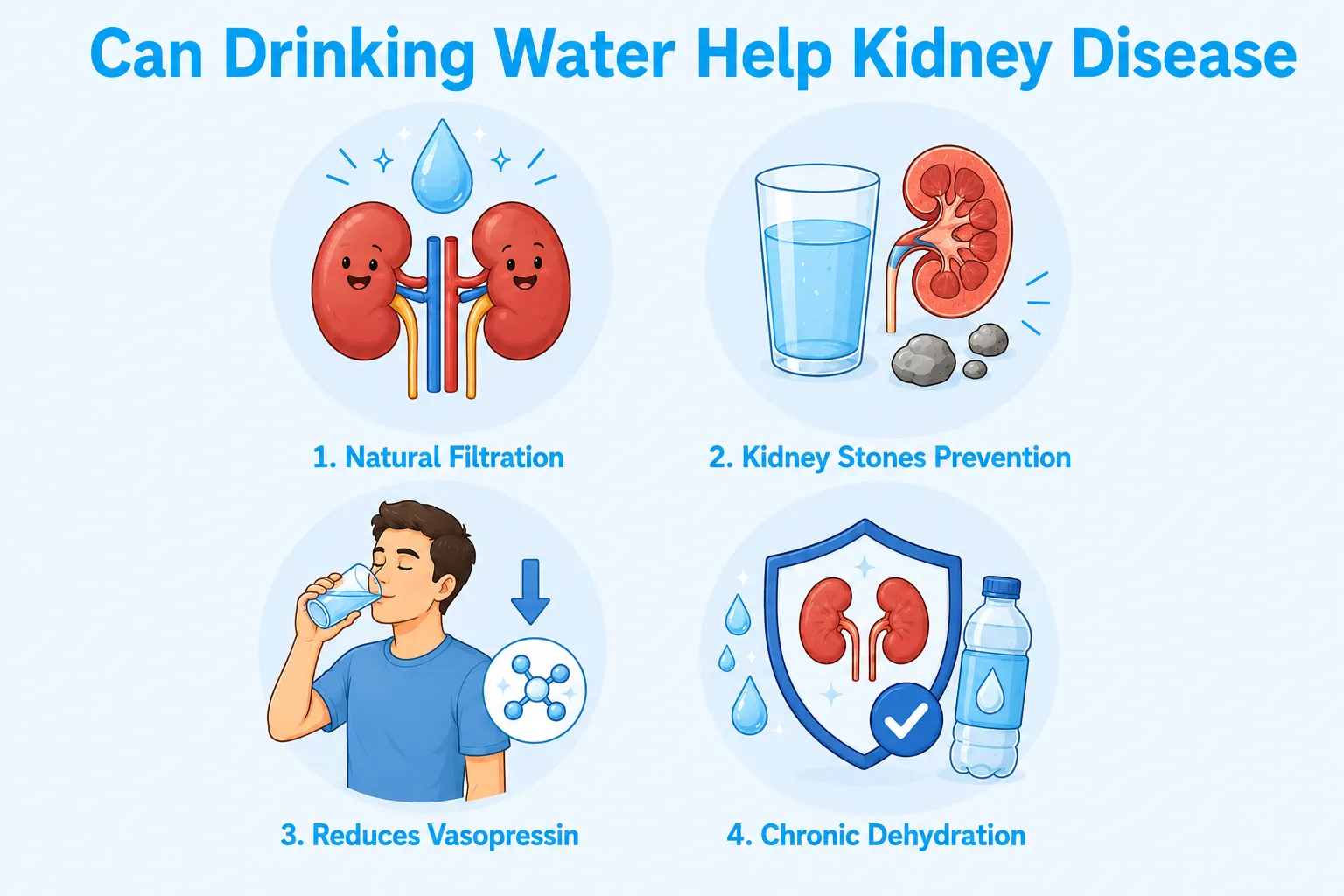
Yes, drinking more water may help some people with kidney disease, but it is not beneficial for everyone. In the early stages of kidney disease, adequate hydration can support normal kidney function and may help reduce certain kidney-related complications. However, as kidney disease progresses, fluid intake often needs to be carefully managed under medical supervision.
One of water’s key roles is supporting the kidneys as they filter waste and unwanted substances from the blood before eliminating them through urine. When the body is adequately hydrated, the kidneys can generally perform this filtration process more effectively.
In individuals with early-stage kidney disease, staying adequately hydrated may help support normal kidney performance and promote healthier filtration processes.
Drinking enough water helps keep urine diluted, reducing the concentration of minerals and salts that can contribute to kidney stone formation. When the body does not get enough fluids, urine contains less water and higher concentrations of these substances, making it easier for them to clump together and form stones.
By keeping the urinary system flushed and reducing mineral buildup, adequate hydration can help lower the risk of kidney stone formation and recurrence. However, if kidney stones or bladder stones have already developed, medical evaluation and timely treatment may be necessary.
A review published through the National Library of Medicine reported that increased water intake can suppress vasopressin, a hormone involved in regulating the body’s water balance. Chronically elevated vasopressin levels have been associated with kidney damage, chronic kidney disease progression, and polycystic kidney disease. While more clinical research is needed, this may explain why hydration is being explored as a potential supportive strategy for kidney health.
When the body does not receive enough fluids, the kidneys may have to work harder to conserve water and produce concentrated urine. Over time, repeated dehydration can place additional stress on the kidneys and may contribute to kidney damage in some individuals. Maintaining adequate hydration helps support healthy blood flow to the kidneys and creates a more favorable environment for long-term kidney health.
There is no single water intake recommendation for everyone with kidney disease. The right amount depends on factors such as the stage of kidney disease, urine output, medications, dialysis status, and the presence of swelling or fluid retention.
Knowing how much water is good for your kidneys is just as important as staying hydrated.
The right amount of water varies from person to person and is usually determined by your healthcare provider based on several factors:
Your nephrologist will consider these factors to recommend a fluid intake that supports hydration while helping prevent fluid overload and related complications.
Fluid requirements are not the same for everyone with kidney disease. As kidney function declines, the body’s ability to remove excess fluid may decrease, making personalized hydration plans increasingly important.
|
Hydration Consideration |
Early Kidney Disease |
Advanced Kidney Disease |
|
Fluid Intake Goals |
Maintain adequate hydration to support kidney function and waste removal. | Prevent fluid overload while meeting essential hydration needs. |
| Daily Water Needs | Usually more flexible and based on age, activity level, and overall health. |
Often restricted based on kidney function, urine output, and treatment plan. |
|
Fluid Monitoring |
General attention to hydration status and urine color is usually sufficient. | Regular monitoring of fluid intake, body weight, and symptoms may be required. |
| Swelling or Fluid Retention | Less common when kidney function is relatively preserved. |
More likely to occur, especially in the legs, feet, hands, or lungs. |
|
Kidney Function Considerations |
Kidneys can usually regulate fluid balance effectively. | Reduced kidney function may make it difficult to remove excess fluid from the body. |
| Medical Supervision | Periodic guidance from a healthcare provider is recommended. |
Close supervision by a nephrologist is often necessary to manage fluid intake safely. |
Staying hydrated is important for kidney health, but drinking more water is not always the right solution for every patient. The safest approach is to balance fluid intake according to your kidney function, symptoms, and your doctor’s recommendations.
If you have any of the following signs or symptoms, it may be time to consult a nephrologist:
People living with diabetes, high blood pressure, or a family history of kidney disease should also consider regular kidney health evaluations, even if symptoms are not currently present. The best nephrologist in Chennai can help detect issues early.
Conclusion
Water is essential for kidney health, but more is not always better when kidney disease is present. The right fluid intake depends on your kidney function, disease stage, and overall health.
Maintaining proper hydration can support kidney function and help prevent certain complications, while excessive fluid intake may create problems for some patients.
If you have concerns about your water intake or kidney health, consult an experienced nephrologist for personalized guidance. Contact our expert doctors today to schedule your consultation at the best multispeciality hospital in Chennai.
Not always. While adequate hydration supports kidney health, the ideal amount of water depends on the stage of kidney disease, kidney function, and whether fluid restrictions have been recommended by a healthcare professional.
2. How much water should a person with kidney disease drink daily?
There is no universal recommendation. Fluid requirements vary based on kidney function, urine output, medications, dialysis status, and the presence of swelling or fluid retention.
3. Can drinking more water improve kidney function?
Drinking enough water helps the kidneys perform their normal functions, but it cannot reverse kidney damage. In some cases, proper hydration may help support overall kidney health and reduce certain complications.
4. Can too much water be harmful to patients with kidney disease?
Yes. Excessive fluid intake may lead to fluid overload, swelling, elevated blood pressure, breathing difficulties, and electrolyte imbalances, particularly in advanced kidney disease.
5. Does drinking more water help prevent kidney stones?
Yes. Adequate hydration increases urine volume and helps dilute minerals in the urine, reducing the likelihood of kidney stone formation and recurrence.
6. What are the signs of dehydration in people with kidney disease?
Common signs include persistent thirst, dark-colored urine, dry mouth, fatigue, dizziness, headaches, and reduced urine output. Severe dehydration may require medical attention.
7. Should dialysis patients limit their fluid intake?
In many cases, yes. Since dialysis patients often have reduced or no kidney function, fluid intake is usually restricted to prevent fluid accumulation between treatment sessions.
8. Does water help lower creatinine levels?
Drinking enough water may help prevent temporary increases in creatinine caused by dehydration. However, hydration alone does not treat the underlying causes of chronically elevated creatinine levels.
9. Can dehydration worsen kidney disease?
Yes. Prolonged or repeated dehydration can reduce blood flow to the kidneys, increase kidney stress, and potentially contribute to worsening kidney function over time.
10. When should someone with kidney disease consult a nephrologist about hydration?
A nephrologist should be consulted if there are concerns about fluid intake, swelling, changes in urination, uncontrolled blood pressure, dialysis-related fluid management, or worsening kidney function test results.