Diabetes does not always begin with obvious symptoms, but changes such as frequent urination, unusual thirst, tiredness, unexplained weight loss and blurred vision can be early warning signs.
Some people may notice these changes within a short period, while others may have mild symptoms that are easy to overlook. The pattern can also vary depending on whether the person has Type 1 or Type 2 diabetes.
Paying attention to these changes matters because high blood sugar can affect the body gradually, sometimes before a person realises there is a problem. Knowing what to look for can make it easier to seek testing at the right time.
A report published in the Indian Journal of Medical Research and indexed on PubMed reports that, in India, Type 2 diabetes accounts for around 85%–95% of all diabetes cases, while Type 1 diabetes represents a smaller share.
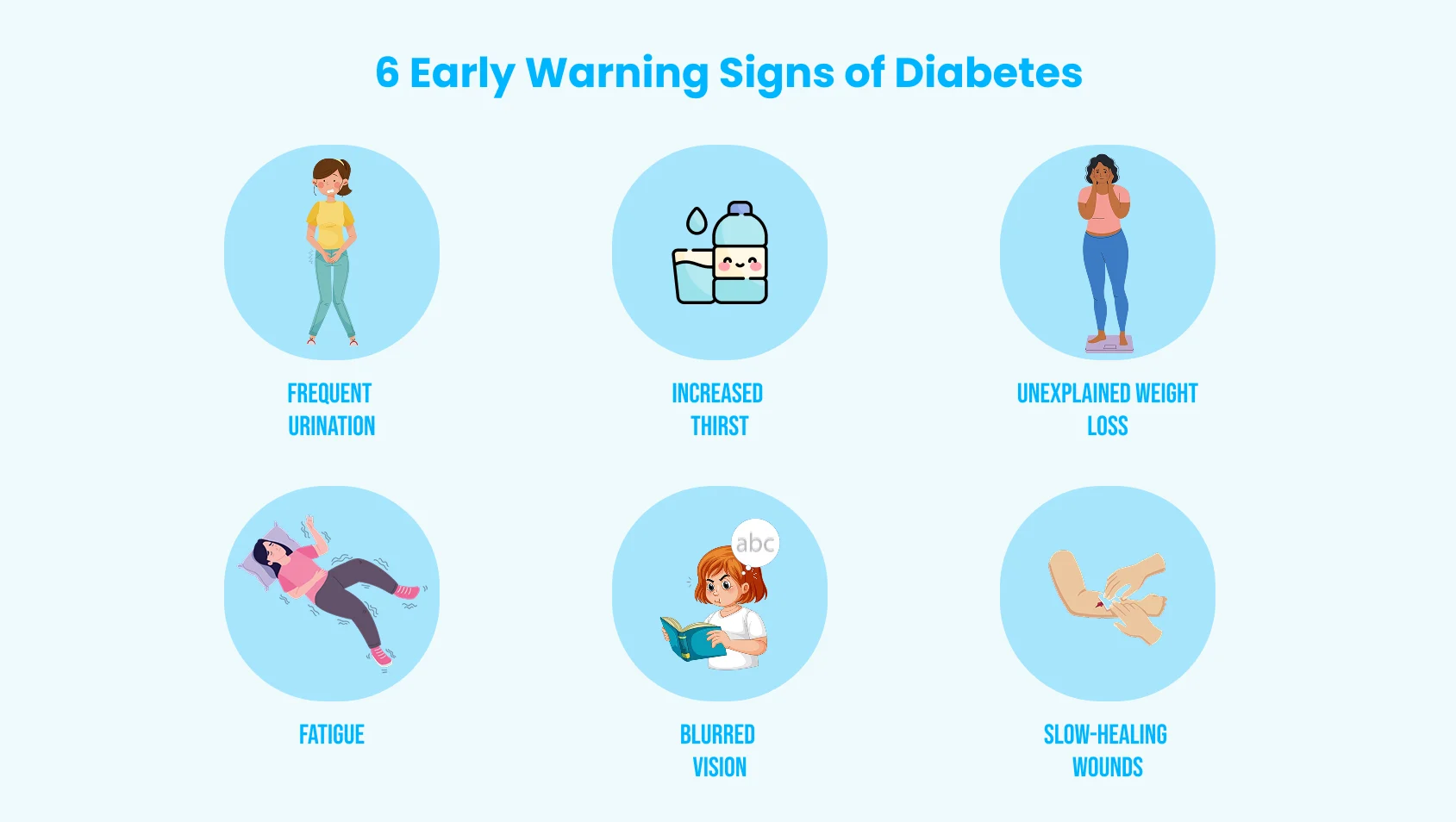
Needing to urinate more often than usual can be an early sign of diabetes. When blood sugar stays high, the kidneys work harder to remove the excess glucose, which can increase urine production. You may also notice that you wake up several times at night to urinate.
Constant thirst can go beyond simply needing more water after a hot day or exercise. Frequent urination can cause your body to lose more fluid, leaving you feeling thirsty again and again. If this change continues without an obvious reason, it is worth getting your blood sugar checked.
Losing weight without changing your diet or activity level can sometimes signal diabetes. When the body cannot use glucose properly for energy, it may start using stored fat and muscle instead. A noticeable drop in weight without a clear reason should not be ignored.
Feeling unusually tired, even after getting enough rest, can occur when blood sugar remains high. Your body may have glucose available in the bloodstream but still struggle to use it effectively for energy. Lack of sleep and high blood sugar can both contribute to tiredness, so persistent fatigue deserves attention.
Changes in blood sugar levels can temporarily affect the shape of the eye’s lens, making your vision appear blurry. You may notice difficulty focusing on objects or reading clearly. New or persistent changes in vision should be discussed with a doctor rather than simply being attributed to tiredness.
A small cut or wound that takes longer than expected to heal can sometimes be linked to high blood sugar. Diabetes can affect circulation and the body’s ability to fight infection, which may slow the healing process. Repeatedly slow-healing wounds should be medically evaluated.
These symptoms can stem from other conditions too, but understanding how diabetes increases risk of heart disease highlights why recognising the signs early and getting tested matters.
Yes. Type 1 diabetes often appears suddenly, while Type 2 diabetes usually develops more slowly and may cause few noticeable symptoms at first. Some clues can also differ between the two, although symptoms alone cannot confirm which type of diabetes a person has.
|
What to Look For / Symptoms |
Type 1 Diabetes | Type 2 Diabetes |
| Symptom onset | Usually develops quickly, over days or weeks. |
Usually develops gradually, over months or years. |
|
Thirst and urination |
Often it becomes noticeable quickly. | Often increase slowly and go unnoticed at first. |
| Unexplained weight loss | Weight loss can happen over a short period. |
Unplanned weight loss is less typical during the early stages. |
|
Fatigue |
Tiredness often appears as blood sugar rises. | Tiredness is a common early complaint. |
| Slow-healing wounds | Not usually an early sign. |
Slow healing is more commonly seen. |
|
Severe onset |
Diagnosis can occur after diabetic ketoacidosis (DKA). |
DKA is less common at diagnosis. |
Arrange a medical check within a few days if unusual thirst, frequent urination, unexplained weight loss or persistent tiredness continues without an obvious cause.
There can be several reasons behind these changes, but symptoms that continue without an obvious cause should be checked by a doctor. Seek medical attention sooner, particularly if you experience vomiting, confusion or extreme weakness.
Blood glucose testing can help determine whether elevated sugar levels are behind these symptoms. If you are concerned about diabetes, consulting the Top diabetes doctors in Vellapanchavadi can help with timely testing, diagnosis and appropriate care.
At Dr. Mehta’s Hospitals, we believe recognising diabetes early can make a meaningful difference to long-term health. Diabetes management goes beyond controlling blood sugar. Regular medical reviews, appropriate treatment, balanced nutrition and healthy daily habits all play a role in protecting your overall health.
When you need comprehensive support under one roof, we bring together the expertise and facilities expected from the Best private multispeciality hospital in Chennai, helping patients receive timely evaluation, treatment and ongoing care.
Yes, particularly Type 2 diabetes, which can develop gradually with few noticeable changes.
2. What is one unusual sign of diabetes?
Darkened skin in body folds, especially around the neck, can be linked to insulin resistance.
3. Does diabetes make you hungry all the time?
Increased hunger can occur when the body cannot use glucose effectively for energy.
4. Can diabetes cause changes in vision?
Yes, fluctuating blood sugar levels can temporarily affect how clearly you see.
5. Can diabetes cause skin problems?
High blood sugar can contribute to dry skin, itching and slower healing.
6. Are diabetes symptoms the same for everyone?
No, symptoms vary depending on the type of diabetes, blood sugar levels and how quickly they rise.
7. How is diabetes confirmed?
A doctor uses blood glucose tests, such as fasting glucose or HbA1c, to confirm diabetes.
8. Can young adults develop Type 2 diabetes?
Yes, Type 2 diabetes can affect younger people, particularly when risk factors are present.
9. Can stress cause diabetes symptoms?
Stress can temporarily affect blood sugar, but ongoing symptoms should be checked rather than attributed to stress alone.
10. Can early diabetes be managed successfully?
Yes, early diagnosis followed by appropriate treatment and lifestyle changes can significantly improve blood sugar control.