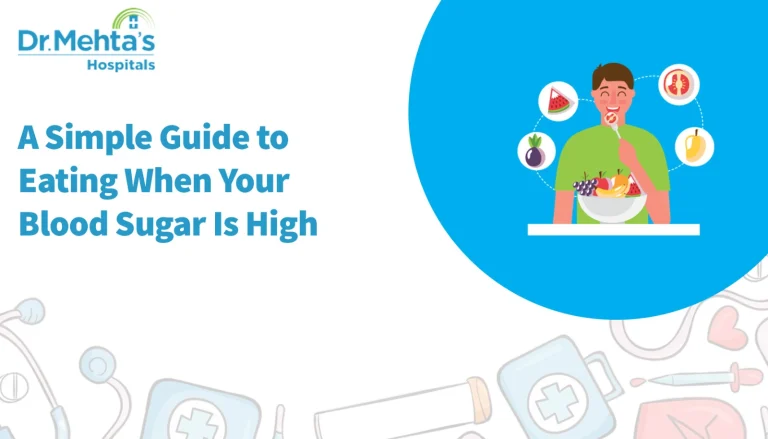

If your blood sugar is high, build your meals around vegetables, dals, whole grains, and lean protein, and cut back on sweets, white rice, and sugary drinks. Small swaps in your usual Indian meals can make a clear difference to your readings.
You do not need special foods or a strict diet chart to start. What matters most is the type of carbohydrate you eat, how much of it lands on your plate, and when you eat.
You can keep most of your favourite dishes and simply swap the ingredients that raise sugar fast.
|
Instead of |
Try this | Why it helps |
| White rice in large portions | Less rice, more vegetables |
More fibre slows the sugar rise |
|
White bread or maida paratha |
Whole wheat chapati or multigrain dosa | Whole grains digest more slowly |
| Sweet coffee or tea | Coffee or tea without sugar |
Less added sugar |
|
Fruit juice |
A whole guava, apple or orange | Fibre keeps sugar steadier |
| Fried snacks at tea time | Roasted chana or nuts |
Protein keeps you full |
Our diabetes specialists in Chennai can help you choose swaps that suit you.
Fill half your plate with non-starchy vegetables, a quarter with protein such as dal, eggs, fish or paneer, and the last quarter with rice, chapati or millets. This simple split, often called the plate method, keeps carbohydrates in check without making you count every gram.
Vegetables and dals also add fibre, which slows how quickly sugar enters your blood. As reported by the NHS, adults should aim for 30g of fibre a day, yet most people eat only around 20g.
Starting your meal with the vegetables and protein before the rice is another easy habit that helps keep after-meal sugar lower.
Balanced meals that combine millets, dals, greens, whole fruits, and healthy fats with modest carbohydrate keep sugar steadier.
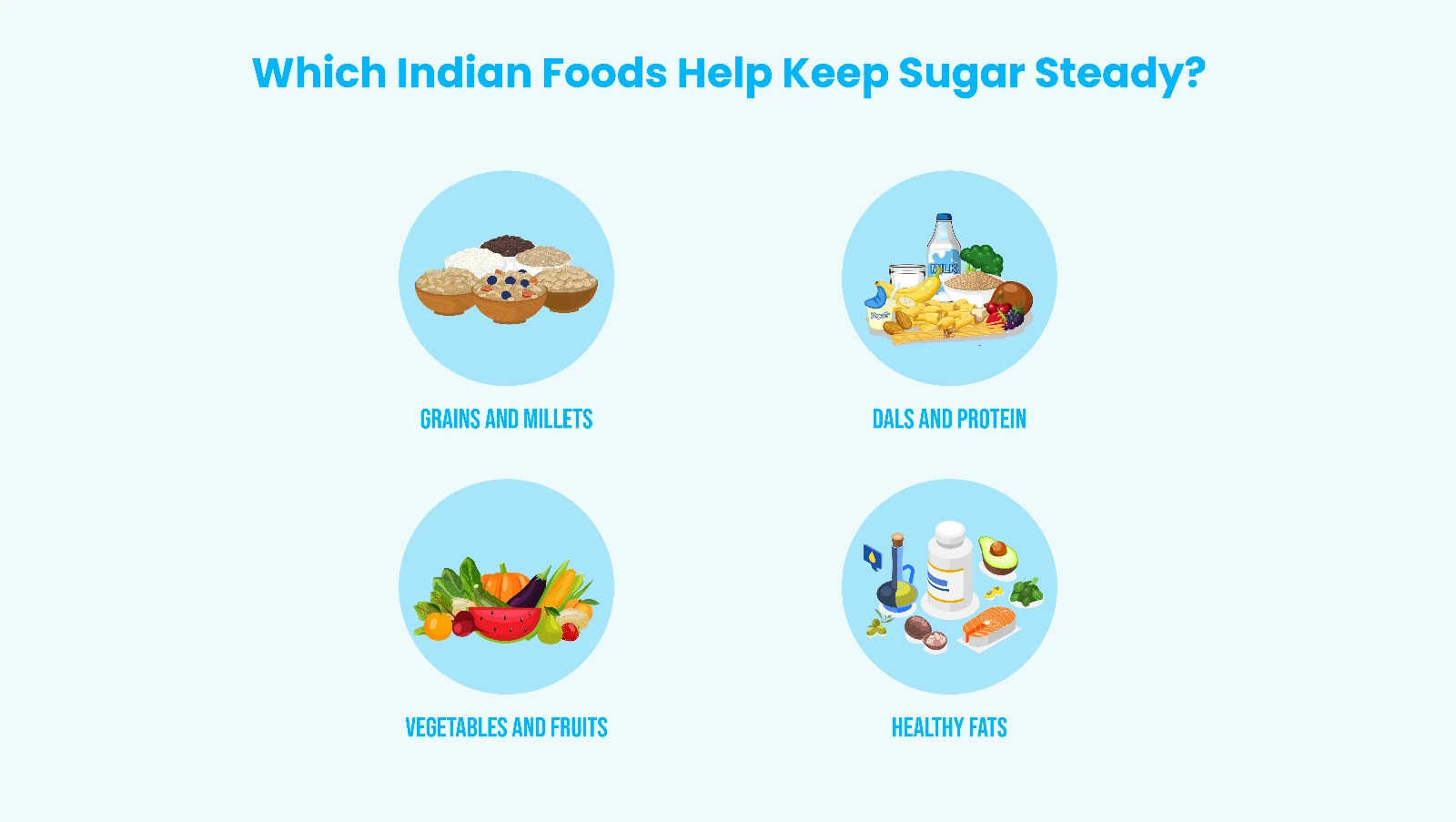
Pearl millet, foxtail millet, kodo millet and hand-pounded rice add more fibre than white rice, but their effect varies with variety and cooking. Keep portions small, since all grains still raise sugar.
Moong dal, chana, rajma, eggs, fish, chicken and paneer keep you full and work best alongside vegetables and modest grains.
Spinach and other greens, beans, bhindi, cabbage, and bitter gourd are great everyday picks. Whole fruits, including mango and chikoo, can fit in when portions stay small.
Use a little groundnut or sesame oil and enjoy a small handful of nuts. Good fats matter here because of the close link between diabetes and heart disease.
Yes, eating at regular times helps your body handle sugar better than skipping meals and then overeating later. The right schedule depends on your routine and medicines, especially insulin, so plan it with your doctor.
A short 10 to 15 minute walk after lunch or dinner also helps your muscles use up sugar. Sleep matters too, as the link between lack of sleep and high blood sugar is stronger than most people expect.
Water is the best choice, and a few other drinks fit in well too.
If you are unsure which drinks suit your medicines, our diabetologists in Chetpet can guide you.
These foods raise sugar quickly, so keep them for rare occasions.
For some people, yes. Lasting changes in food, activity and weight can put type 2 diabetes into remission, bringing sugar to a healthy range without medicines. Many others still need medicines, and that is normal.
Never stop or change your medicines without your doctor’s advice. A yearly master health checkup also gives a wider picture of your health.
If readings stay high on repeated checks, see a doctor soon. Look out for constant thirst, passing urine often, blurred vision, tiredness, sudden weight loss or wounds that heal slowly.
An internal medicine doctor in Chennai can find the cause and plan the next step. Very high readings with vomiting, difficulty breathing, fruity-smelling breath, confusion or heavy drowsiness need emergency care straight away, as they may signal diabetic ketoacidosis (an acid build-up in the blood).
Bringing down high blood sugar starts with your plate. More vegetables, dals and whole grains, smaller rice portions, fewer sweets and drinks without sugar can steady your readings over time.
Regular meals, a short walk after eating, and good sleep add to the benefit. We know that changing food habits takes time, so begin with one or two swaps and build from there.
At Dr. Mehta’s Hospitals, a multispeciality hospital in Chennai that has cared for families for over 90 years, we help you manage your sugar with simple, practical guidance.
Yes, in smaller portions, paired with plenty of vegetables and dal.
2. Is ragi good for people with high sugar?
Yes, as ragi roti or dosa in small portions, rather than thin porridge.
3. Are dates and jaggery safe instead of sugar?
They still raise blood sugar, so use them only in small amounts.
4. How often should I check my HbA1c?
Every three months if treatment changes or sugar is above target, and every six months once stable.
5. Can I eat fruits if I have diabetes?
Yes, one or two whole fruits a day are fine, but skip fruit juices.
6. Is idli or dosa better for diabetes?
Both are fine in moderate portions, especially with sambar and extra vegetables.
7. Does bitter gourd juice cure diabetes?
No, though bitter gourd is a healthy vegetable to include in meals.
8. Can I fast during festivals if my sugar is high?
Talk to your doctor first, as fasting can cause sugar to drop or rise sharply.
9. Is brown rice better than white rice for diabetes?
It has more fibre, but keep portions small and pair it with dal and vegetables.
10. Where can I see a diabetologist in Chennai?
You can consult a diabetologist at Dr. Mehta’s Hospitals for diabetes care and diet advice.