Experiencing changes in your mood, energy levels, or menstrual cycle can feel worrying, but it is important to know that many women go through hormonal changes at different stages of life. Stress is one of the factors that can influence how your body functions, especially when it continues for a long time.
Hormonal changes linked to stress may affect menstrual health, sleep, emotions, and overall well-being. While these changes can feel confusing, understanding how stress affects hormones can help you recognise your body’s signals and take the right steps. With proper awareness, lifestyle support, and medical guidance when required, stress-related hormonal changes can often be managed effectively. In this blog, we will explore how stress impacts hormones in women and ways to support better hormonal health.
Stress affects hormones by activating the body’s stress response, which can influence the balance of different hormones involved in mood, metabolism, sleep, and reproductive health. When the body experiences stress, the brain signals the release of cortisol, a hormone that helps manage stressful situations.
While short-term stress responses are normal, ongoing stress may affect the communication between the brain and hormone-producing glands. In women, this can sometimes contribute to changes in menstrual cycles, energy levels, emotions, and overall well-being. The impact may vary from person to person depending on stress levels, lifestyle, and existing health factors. Research published in the National Center for Biotechnology Information (NCBI) suggests that stress can influence the body’s hormonal system and affect reproductive hormone activity, which may contribute to menstrual changes.
Stress can influence several hormones that help control reproductive health, metabolism, mood, and other important body functions. Here are the hormones that get affected:
|
Hormone |
How Stress May Affect It |
| Cortisol |
Stress can increase cortisol levels, which may affect sleep, energy, metabolism, and overall hormonal balance. |
|
Estrogen |
Long-term stress may influence estrogen balance, which can contribute to menstrual changes and other symptoms. |
| Progesterone |
Stress-related hormonal changes may affect progesterone levels and impact menstrual cycle regularity. |
|
Thyroid Hormones |
Ongoing stress may interfere with normal thyroid function, affecting energy levels, weight, and metabolism. |
| Insulin |
Increased stress hormones can influence how the body manages blood sugar and insulin response. |
|
Prolactin |
Stress may contribute to changes in prolactin levels, which can affect periods and reproductive health. |
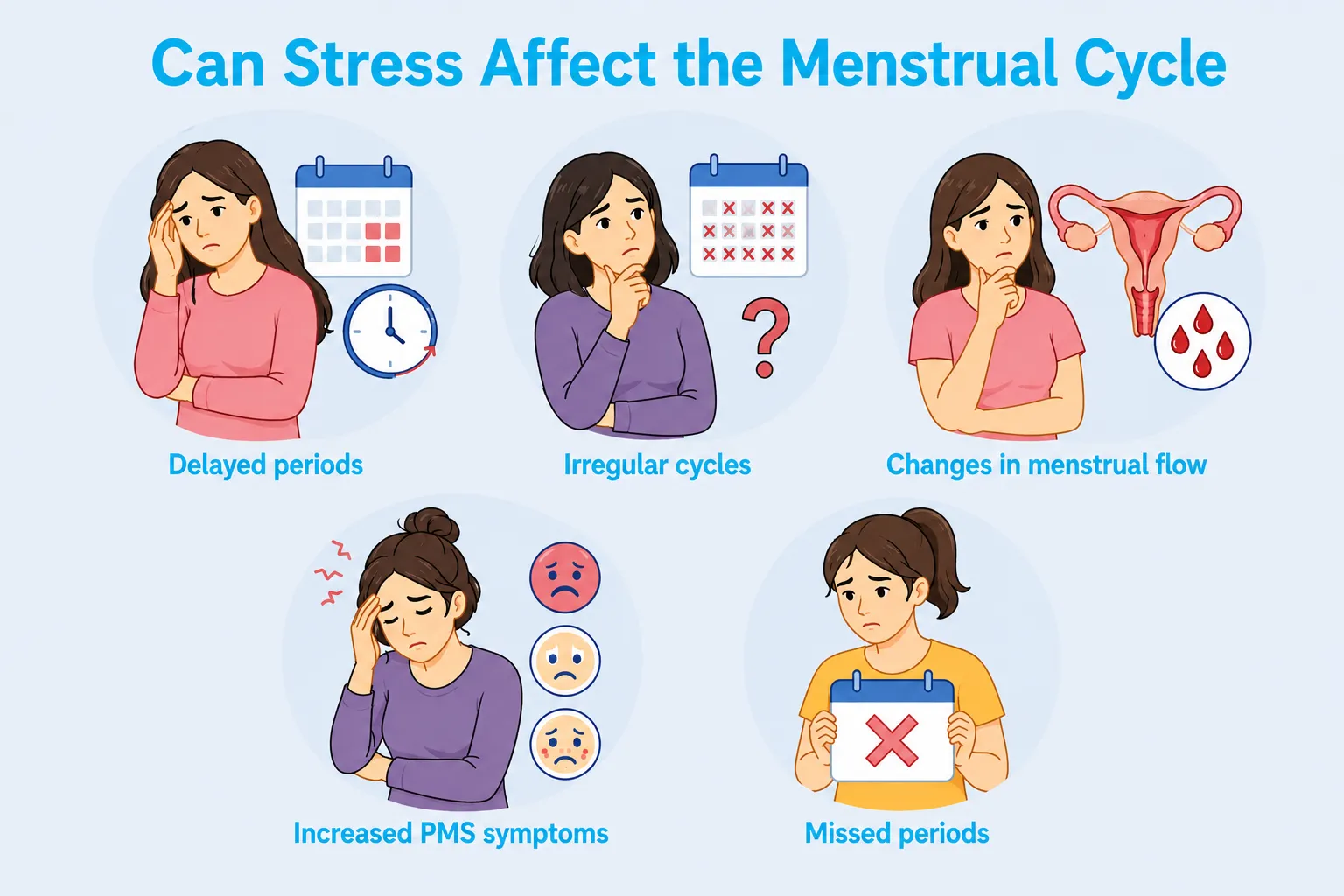
Yes, stress can affect the menstrual cycle by influencing hormones involved in ovulation and periods. Prolonged stress may affect reproductive hormone signals, leading to changes in menstrual patterns. Common stress-related menstrual changes may include:
Understanding whether stress can affect your periods can help you recognise cycle changes better and know when additional care may be needed.
Stress-related hormonal changes usually develop when prolonged stress affects the body’s normal hormone regulation process. Here is how stress can lead to hormonal changes in women:
When the body experiences stress, it activates a natural response system to help manage the situation. Frequent or prolonged activation of this response may start affecting normal hormonal patterns.
Stress can increase cortisol levels in the body. When cortisol remains high for a long time, it may influence other hormones involved in metabolism, sleep, and reproductive health.
Long-term stress may affect the signals responsible for regulating estrogen, progesterone, and menstrual cycles. A woman’s health specialist can help evaluate these changes when symptoms continue.
Hormonal changes linked to stress may contribute to irregular periods, sleep difficulties, mood changes, tiredness, or changes in energy levels.
If symptoms continue, proper hormonal health care can help identify the underlying cause and provide personalised support for restoring hormonal balance.
Noticing changes in your periods, mood, energy levels, or overall health does not always mean there is a serious concern. If you suspect hormonal changes, you can:
For ongoing symptoms or concerns, consulting an experienced gynaecologist in Chetpet can help you receive proper evaluation, guidance, and personalised care for hormonal health.
Effective stress management for women may include lifestyle adjustments, healthy routines, and medical support, depending on individual symptoms and health needs. Some ways to manage stress-related hormonal changes include:
The American Psychological Association’s 2023 Stress in America study highlights that women report higher stress levels, reinforcing the importance of healthy routines, stress management, and proper care in supporting overall hormonal well-being.
Occasional changes in mood, energy levels, or menstrual patterns can happen, but symptoms that continue for more than 2–3 menstrual cycles may need medical attention. Consulting an obstetrician and gynaecologist in Chennai can help identify whether stress, hormonal changes, or other health factors are contributing to these concerns.
Medical guidance may be needed if you experience irregular or missed periods, sudden changes in menstrual flow, unexplained weight changes, ongoing tiredness, sleep difficulties, or symptoms affecting your daily routine. A proper evaluation helps understand the cause and decide the right approach to support hormonal and overall health.
Stress can affect women’s hormones in different ways, influencing menstrual health, mood, sleep, and overall well-being. While occasional changes can happen, symptoms that continue should receive the right attention. At Dr. Mehta’s Hospitals Chennai, we focus on understanding individual health concerns and providing personalised support for women experiencing hormonal changes.
Taking care of hormonal health involves awareness, healthy lifestyle choices, and timely medical guidance when needed. As the best private multispeciality hospital in chennai, we offer comprehensive care to help women manage their health concerns and improve their overall well-being.
Yes, prolonged stress can affect hormone regulation and may contribute to changes in periods, mood, sleep, and energy levels.
2. Which hormone is most affected by stress?
Cortisol is the main stress hormone, but ongoing stress may also influence reproductive and metabolic hormones.
3. Can stress delay or affect periods?
Yes, high stress levels may affect hormonal signals involved in ovulation and cause delayed or irregular periods.
4. What are common signs of hormonal changes in women?
Common signs may include menstrual changes, mood fluctuations, tiredness, sleep issues, and changes in body patterns.
5. When should women seek help for hormonal changes?
Women should seek medical advice if symptoms continue for several cycles or start affecting daily activities.
6. How can women manage stress-related hormonal changes?
Healthy routines, lifestyle changes, and proper hormonal health care in Chennai can help manage stress-related hormonal concerns.
7. Can lifestyle changes improve hormonal balance?
Healthy sleep habits, regular physical activity, nutrition, and stress control can support better hormonal balance.
8. Who should I consult for women’s hormonal problems?
A woman’s health specialist in Chennai can evaluate symptoms, identify possible causes, and recommend suitable care.
9. Are stress-related hormonal changes permanent?
No, many stress-related hormonal changes can improve with proper management, lifestyle support, and medical guidance.
10. How are hormonal changes diagnosed?
Hormonal changes are diagnosed through symptom evaluation, medical history, and recommended tests based on individual concerns.