Weight gain puts extra pressure on a man’s knees, hips, back and feet, and over time this can lead to joint pain and stiffness. Belly fat also keeps the body slightly swollen on the inside, which makes joints ache more easily.
Many men notice the first signs as sore knees on the stairs or a stiff back in the morning. The good news is that even a small drop in weight can make your joints feel better. Here is what happens and what you can do.
Extra weight affects joints in two ways. It presses harder on the cartilage (the soft cushion at the ends of bones), and body fat causes mild swelling inside the joints. Every step, climb or squat puts more force on the knees, so the cartilage wears down sooner, and osteoarthritis
(wear-and-tear arthritis) can set in earlier.
Fat around the waist releases substances that trigger swelling, which is why even finger joints may ache. Long sitting hours weaken the thigh and core muscles that protect the knees and back. So knee pain while climbing stairs is often the first thing men notice.
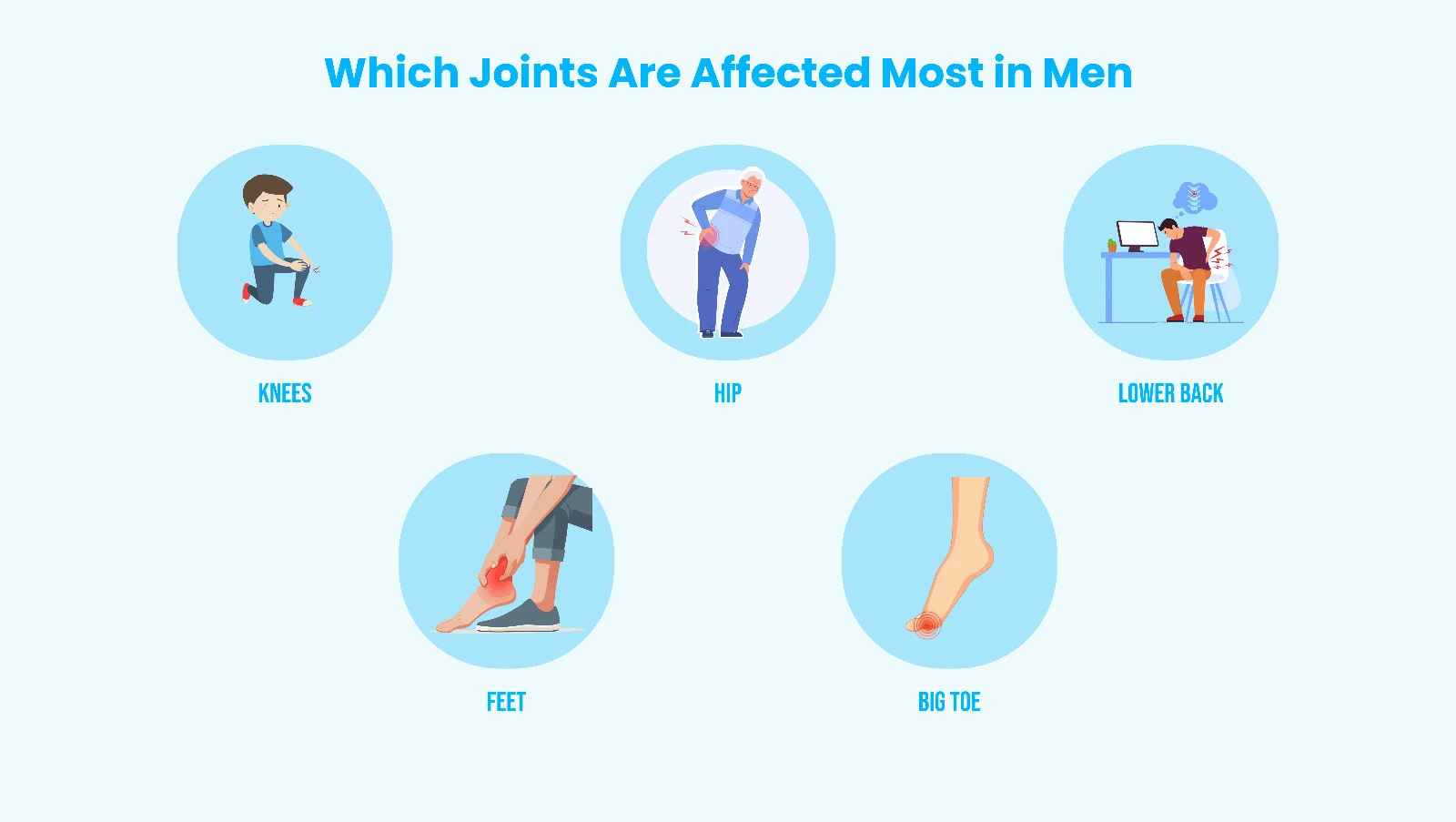
The joints that carry your body weight feel it first, and the knees are usually hit the hardest.
As a trusted orthopaedic hospital in Chennai, Dr. Mehta’s Hospitals checks each painful joint along with the weight pattern behind it.
Yes. Extra weight can raise uric acid in the blood, and when it forms crystals inside a joint, it causes a gout attack, most often in the big toe.
An attack often follows a heavy meal with meat, a few drinks or a day of drinking too little water. Mutton, liver, prawns, crab, beer and sugary soft drinks are common triggers.
As reported by Healthdirect Australia, the sudden pain and swelling of gout can last for 1 to 2 weeks, and slow, steady weight loss helps lower the chance of another attack.
Crash diets and long fasts can also trigger gout, so it is better to lose weight gradually.
Early signs are usually mild and come and go, so they are easy to ignore.
Gentle movement often helps at this stage, and the best exercises for joint pain can ease stiffness before it gets worse.
For most men, losing 5 to 10 percent of their body weight can ease knee pain and make daily movement easier.
For a man who weighs 90 kg, that means a first goal of about 4.5 to 9 kg, spread over a few months. Losing weight also reduces swelling across the body, which helps joints that do not carry any weight.
As reported by Arthritis Foundation, losing one pound takes about four pounds of pressure off the knees, so dropping 5 kg saves your knees nearly 20 kg of load with every step.
Choose gentle exercise, build leg and core strength, and make small food changes you can stick to.
If exercise still feels painful, guided physiotherapy services in Chennai can plan a routine that suits your weight, age and joints.
A doctor usually starts with a physical check and simple measurements, and adds blood tests or scans only if needed.
You can finish most of these blood tests in a single visit with our comprehensive lab tests in Chennai.
Book a visit with an orthopaedic specialist if:
If a joint suddenly turns hot and swollen with fever, or you have severe pain after a fall, reach 24/7 emergency care in Chennai right away.
Weight gain puts steady pressure on a man’s knees, hips, back and feet, but joints often feel lighter once even a few kilos come off. Small daily changes in food, exercise and sleep can ease pain and protect your joints for years to come.
At Dr. Mehta’s Hospitals, we offer joint pain treatment in Chennai that looks at your weight, lifestyle and joint health together. As the best private multispeciality hospital in Chennai, we bring orthopaedic doctors, physiotherapists and modern tests under one roof to help you move freely again.
It cannot rebuild worn cartilage, but it can ease pain, improve movement and slow further wear.
2. Does belly fat cause back pain in men?
Yes, a large belly pulls the body forward, which can strain the lower back over time.
3. Is running safe for overweight men with knee pain?
Start with walking or cycling, and try running only after your knees and thigh muscles get stronger.
4. How soon will my joints feel better after losing weight?
Many men feel easier movement within a few weeks to months of steady weight loss and regular exercise.
5. Can gym workouts hurt the joints of overweight men?
Poor form or very heavy weights can, so start light and learn the right technique first.
6. Do knee braces help overweight men with knee pain?
A brace can support the knee during activity, but it works best with strength exercises and weight control.
7. Does high uric acid always mean gout?
No, many people with high uric acid never get gout, but their levels should be checked regularly.
8. Can men in their 20s and 30s get joint pain from weight gain?
Yes, quick weight gain and long sitting hours can cause knee and back pain even at a young age.
9. Which doctor should I see for joint pain caused by weight gain?
You can meet our orthopaedic doctors in Chetpet, who treat bone, joint and muscle problems.
10. Where can I get knee pain treatment in Chennai?
You can visit Dr. Mehta’s Hospitals in Chetpet or Velappanchavadi for complete knee pain treatment in Chennai.