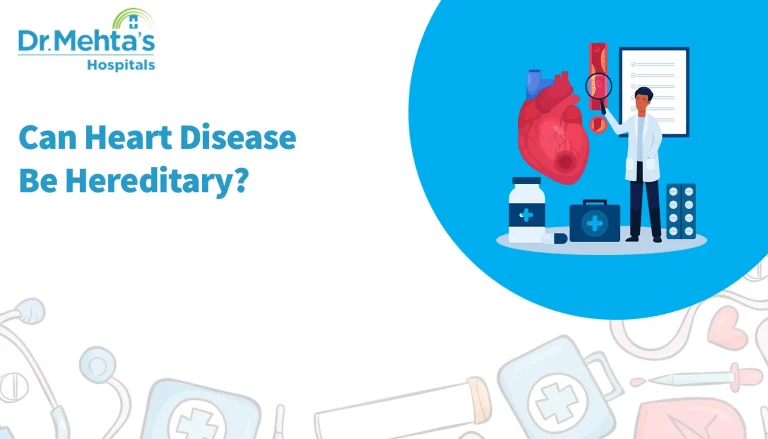

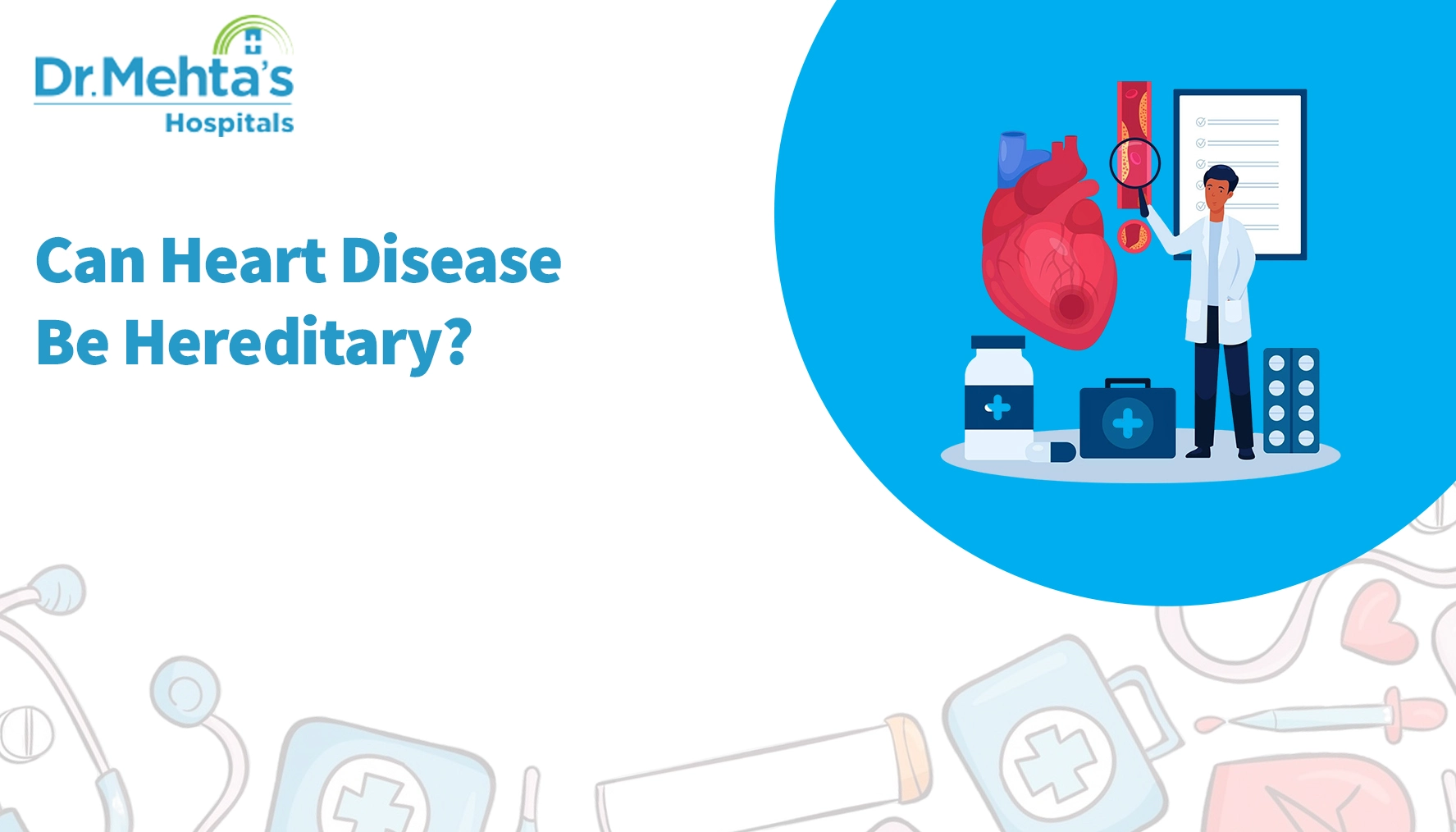
Yes, heart disease can be hereditary. Some heart conditions pass directly through genes, while others run in families because relatives share genes that raise blood pressure or cholesterol, along with similar food and lifestyle habits.
Having a parent or sibling with heart disease does not mean you will get it too. It simply means your heart deserves attention a little earlier. Here is how family history affects your heart and what you can do about it.
In most families, it is both. Genes can raise your chances of high blood pressure, cholesterol, or diabetes, while daily habits decide how strongly these show up.
You cannot change your genes, but you can change most of the habits that add to them.
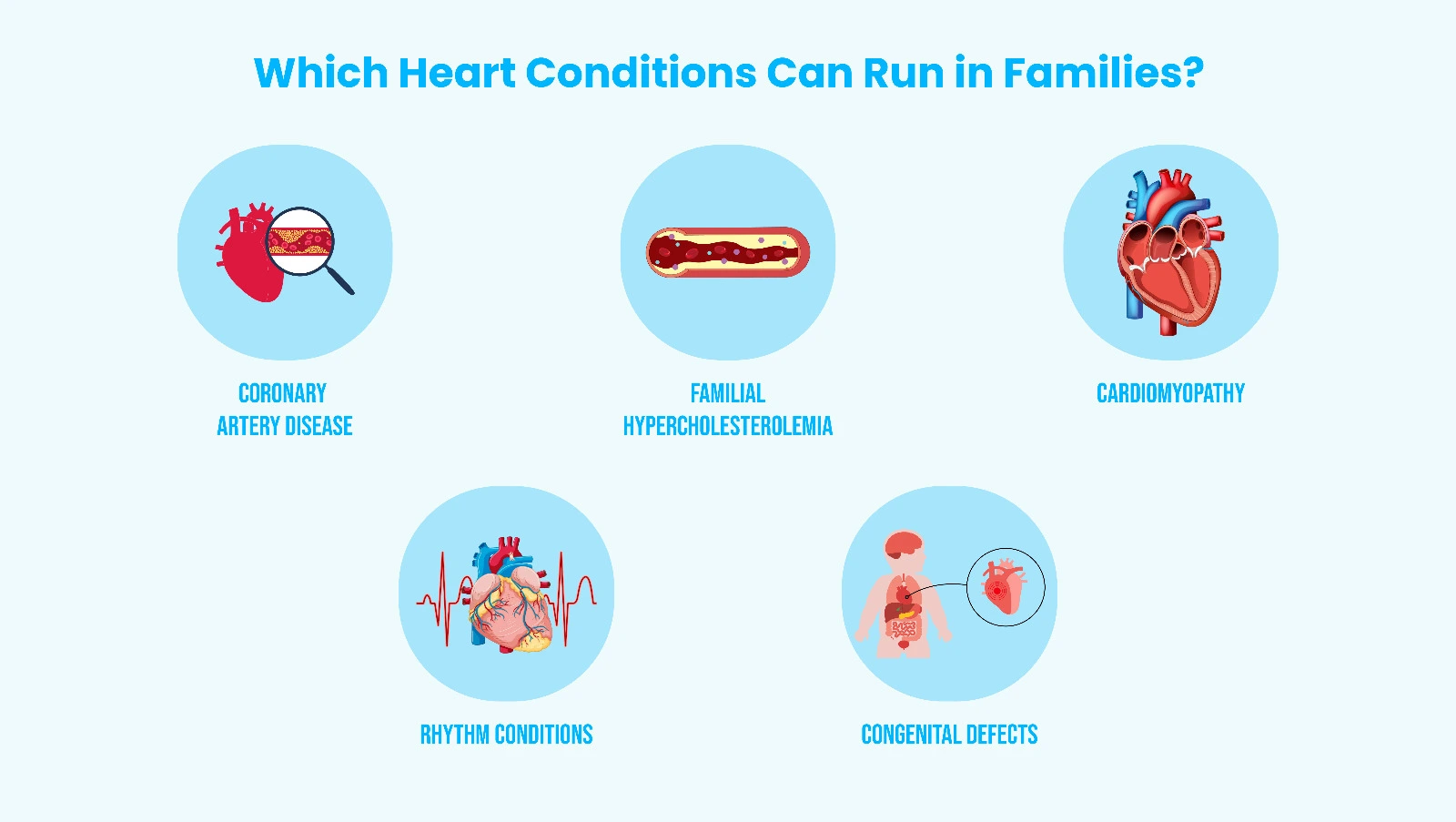
The heart conditions that most often run in families include:
Family history matters most when heart disease appears in close relatives at a younger age. Ask your family about these details:
Share these details with your doctor at a trusted cardiology hospital in Chennai to decide when your heart checks should begin.
Family history adds to your risk, but everyday choices can still lower it:
With a family history, it helps to start heart checks earlier. As reported by Indian Heart Association, heart disease among Indians tends to appear almost 33% earlier than in other groups. Your doctor may suggest:
You can plan these through a master health checkup, and choosing the best cardiac health checkup package in Chennai keeps all your heart numbers in one place.
Book a consultation with a cardiologist if:
It also helps to know the common heart attack symptoms so you can act quickly.
For chest pain or pressure that spreads to the arm or jaw, or sudden breathlessness, reach 24/7 emergency care in Chennai straight away.
Our cardiologists in Velappanchavadi can review your family history and plan the checks that suit you.
Heart disease can run in families, but a family history is a reason to start early, not a reason to worry. Knowing who in your family had heart problems, and at what age, helps you begin checks sooner and make changes that protect your heart.
At Dr. Mehta’s Hospitals, a trusted heart specialist hospital in Chennai, we help families understand their heart risk through careful evaluation, timely tests and practical guidance.
As the best private multispeciality hospital in Chennai, we bring cardiologists, diagnostics and other specialists together under one roof for you and your loved ones.
Both sides matter equally, so share both parents’ family history with your doctor.
2. Can I inherit heart disease from my grandparents?
Grandparents’ history adds some information, but heart disease in parents and siblings matters more.
3. At what age should I start heart checks if heart disease runs in my family?
Blood pressure and cholesterol checks can start in your 20s, with further tests as your doctor advises.
4. Should children be checked if a parent has familial hypercholesterolemia?
Yes, their cholesterol can be checked early in childhood, as your doctor advises.
5. Does everyone with a family history need genetic testing?
No, genetic testing is usually advised only when a specific inherited heart condition is suspected in the family.
6. Can women inherit heart disease risk too?
Yes, women inherit the same risks as men, and their risk rises further after menopause.
7. Can regular exercise make up for a family history of heart disease?
It cannot change your genes, but it lowers blood pressure, cholesterol and weight, reducing your overall risk.
8. Is my risk higher if my brother or sister has heart disease?
Yes, a sibling with heart disease, especially at a young age, can raise your risk.
9. Are high cholesterol and high blood pressure hereditary?
Both can run in families, which is why relatives should get them checked regularly.
10. Where can I get a heart screening in Chennai?
Consult a cardiologist at Dr. Mehta’s Hospitals, a leading cardiac hospital in Chennai, for heart screening based on your family history.