
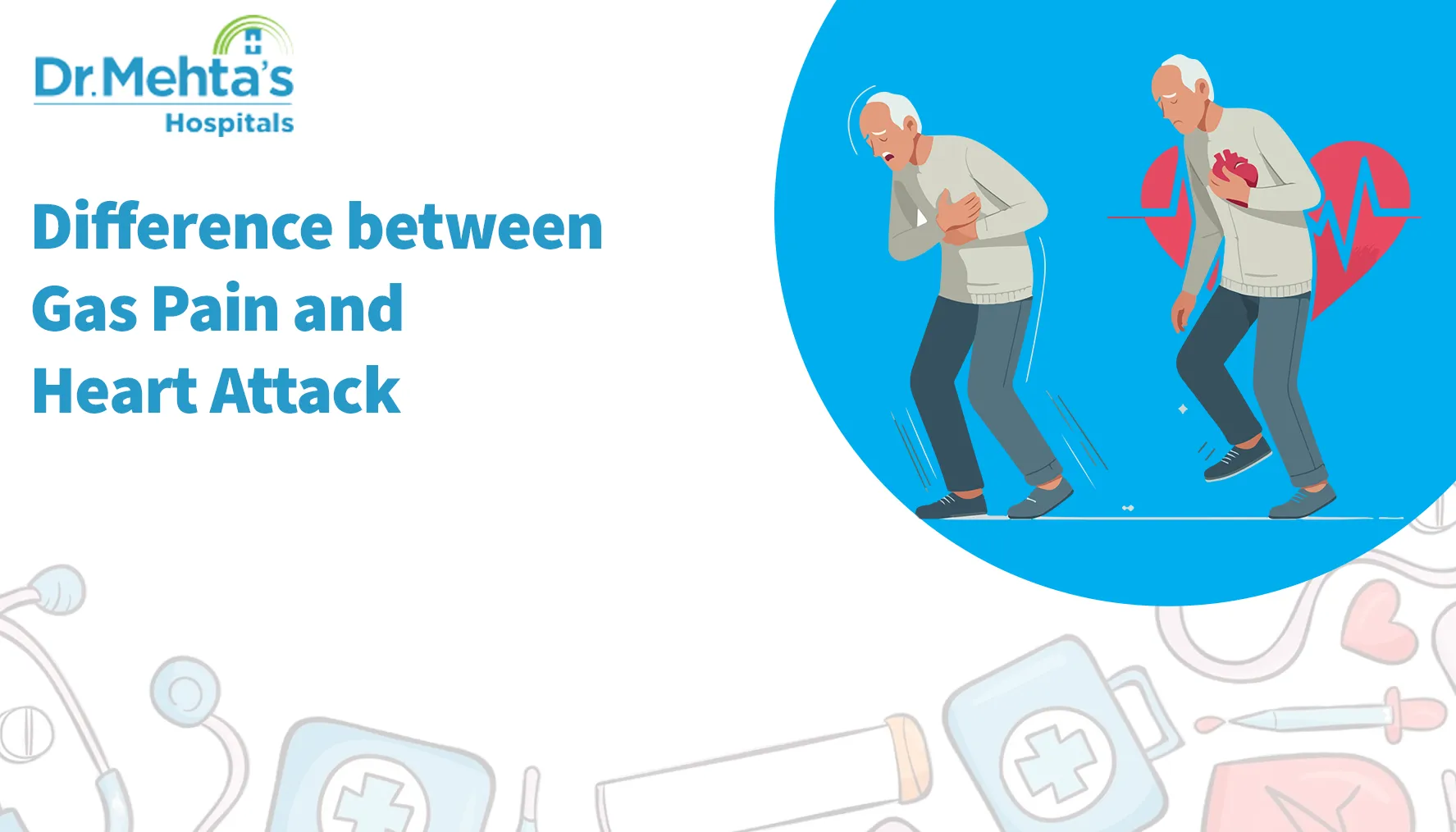
Chest pain is a common concern for many people. Sometimes it happens because of gas formation after eating certain foods or due to digestion problems. However, chest pain should not always be considered as gas pain because heart attack symptoms can also feel similar in some cases.
Understanding the difference between gas pain and heart attack pain helps you identify warning signs and take the right action at the right time. In this blog, we will explain how gas pain differs from heart attack pain, their symptoms, and when you should seek medical help.
|
Difference |
Gas Pain | Heart Attack |
| Cause | Happens due to gas build-up in the stomach or digestive issues |
Happens when blood flow to the heart is reduced or blocked |
|
Location of Pain |
Usually felt in the stomach, upper abdomen, or chest area | Commonly felt in the chest and may spread to the left arm, shoulder, jaw, neck, or back |
| Type of Pain | May feel like bloating, pressure, or a burning sensation |
May feel like heaviness, tightness, squeezing, or severe pressure in the chest |
|
Duration |
Usually reduces after passing gas or with digestion | Can last longer and may not improve with rest |
| Triggers | Often linked to food habits, overeating, or digestion problems |
Can happen during physical activity, stress, or sometimes even at rest |
|
Associated Symptoms |
Burping, bloating, stomach discomfort, or acidity | Sweating, breathing difficulty, dizziness, nausea, or extreme tiredness |
| Medical Attention | Usually improves with lifestyle changes or basic treatment |
Requires immediate medical attention as it can be life-threatening |
Understanding the key differences in gas vs heart attack chest pain can help you identify symptoms and seek timely medical support.
Gas pain is discomfort that happens when excess gas gets trapped in the stomach or intestines. It is a common digestive issue that can create pressure, bloating, cramps, or pain around the abdomen and chest area.
Gas usually forms when the digestive system breaks down food or when extra air enters the body while eating or drinking. Certain food habits, eating too quickly, and digestive conditions can increase gas formation. While gas pain is usually temporary, chest discomfort caused by gas can sometimes feel similar to other health concerns.
According to a report published in The Economic Times, maintaining eating healthy habits and lifestyle changes can help manage gas and bloating concerns. Understanding the symptoms can help you know when medical advice is needed.
Here are the major warning signs of gas pain that can help you understand if the discomfort is related to digestive issues:
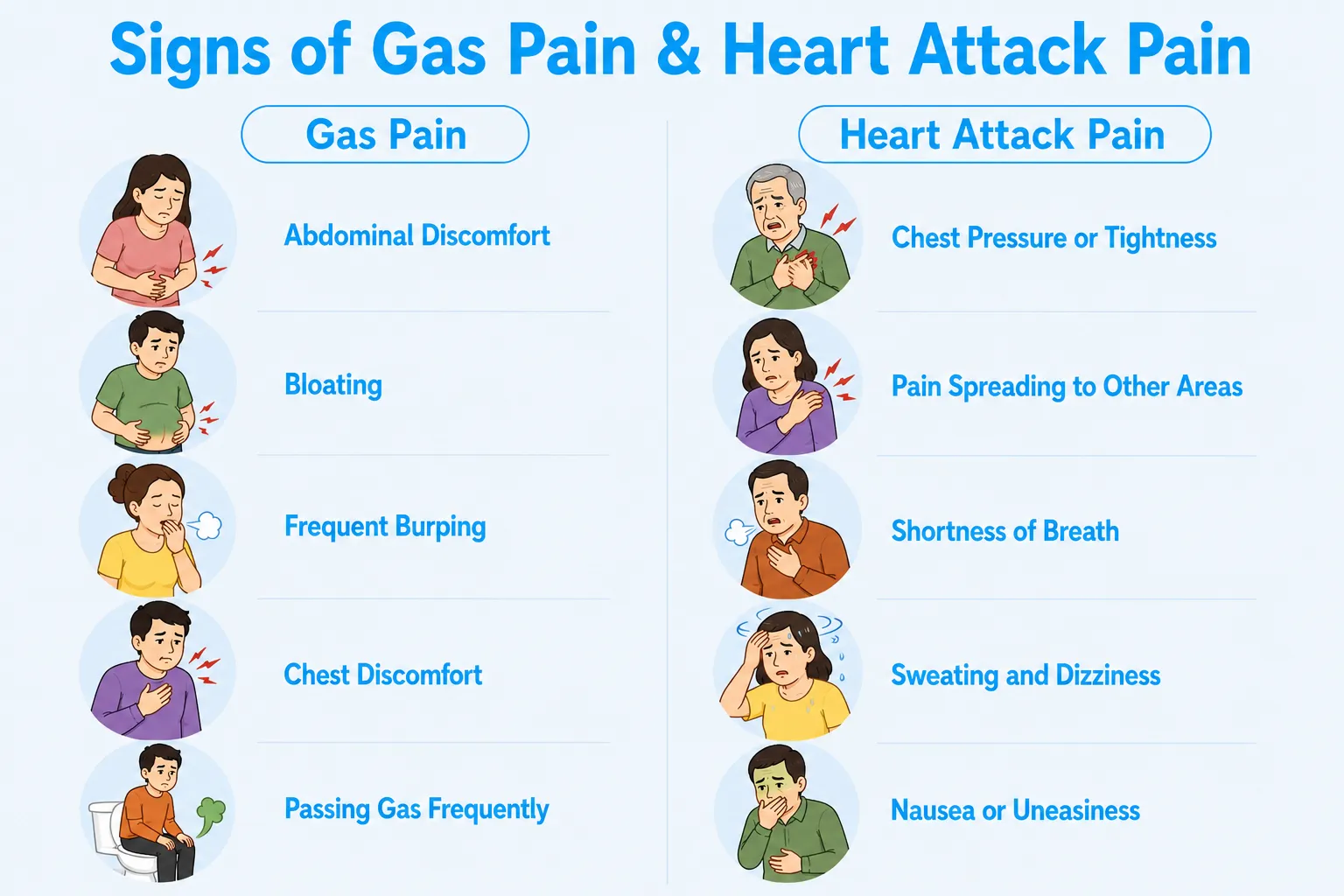
If you notice these symptoms, it is important to get timely medical care from expert cardiologists in chennai for proper diagnosis and treatment.
Heart attack pain is a discomfort that happens when the heart does not receive enough blood and oxygen due to reduced or blocked blood flow. It is often felt as pressure, tightness, heaviness, or squeezing pain in the chest.
The pain may spread from the chest to areas like the left arm, shoulder, neck, jaw, or back. Some people may also experience breathing difficulty, sweating, dizziness, or nausea. Heart attack symptoms can vary from person to person and may not always appear as severe chest pain.
According to the World Health Organization (WHO), cardiovascular diseases are among the leading health concerns worldwide. Since chest discomfort can happen due to different reasons, understanding the difference between gas pain and heart attack symptoms can help individuals make informed decisions and seek medical care when needed.
Heart attack symptoms can appear differently for each person. While some people experience intense chest pain, others may notice mild but serious warning signs. Here are the common signs of heart attack pain:
Recognising the symptoms of heart attack that you should not miss can help you take timely action and get the right medical support when needed.
Chest pain should be checked by a doctor when it feels unusual, severe, or different from regular discomfort.
Chest pain lasting more than a few minutes or becoming worse over time should be treated as a warning sign. Consult with our cardiology experts in Chetpet for timely diagnosis and medical care.
Gas pain and heart attack pain can sometimes feel similar, but understanding the differences can help you make better decisions about your health. Gas pain is usually connected to digestion and may improve with time. However, heart attack pain requires immediate medical attention as early treatment plays an important role in recovery.
If you experience unusual chest pain, breathing difficulty, or symptoms that do not feel normal, it is always better to consult a doctor. Dr. Mehta’s Hospitals, A trusted multispeciality hospital in Chennai, provides 24/7 expert cardiac care with advanced diagnosis and treatment support.
Gas pain is usually linked with bloating, burping, or digestive discomfort. Heart attack pain may cause chest pressure, breathing difficulty, sweating, or pain spreading to other body areas.
2. Can gas pain feel similar to heart attack pain?
Yes, gas pain can sometimes create pressure or discomfort in the chest area. However, persistent or unusual chest pain should always be checked by a doctor.
3. Where is gas pain usually felt?
Gas pain is commonly felt in the stomach, upper abdomen, or chest area. The location can change as trapped gas moves through the digestive system.
4. What does heart attack pain feel like?
Heart attack pain may feel like heaviness, squeezing, tightness, or strong pressure in the chest. It can also spread to the arm, jaw, neck, or back.
5. How long does gas pain usually last?
Gas pain often improves within a short time after the trapped gas is released. Pain that continues or becomes severe needs medical evaluation.
6. What are the early signs of a heart attack?
Early signs can include chest discomfort, shortness of breath, sweating, dizziness, nausea, and unusual tiredness.
7. Can acidity and digestion problems cause chest pain?
Yes, acidity and digestive problems can sometimes cause chest discomfort. A proper diagnosis helps confirm the exact reason behind the pain.
8. When should I visit a doctor for chest pain?
You should visit a doctor if chest pain lasts for more than a few minutes, keeps returning, or appears with other symptoms like breathing difficulty.
9. Which doctor should I consult for heart-related chest pain in Chennai?
You can consult experienced heart specialists in Chennai for diagnosis and treatment of heart-related chest pain.
10. Why is it important to identify the difference between gas pain and heart attack?
Knowing the difference helps you take the right action. Heart-related symptoms need quick medical attention to prevent serious complications.