Speech delay in children can appear as difficulty saying words, forming sentences, or expressing their needs at an age when these skills are typically developing. While children learn to communicate at different rates, persistent difficulties may require professional assessment.
Recognising the signs of speech delay, knowing how communication develops with age, and understanding when to consult a specialist can help parents take informed steps towards supporting their baby’s development milestones.
Language delay affects an estimated 2.3%–19% of children aged 2–7 years, highlighting the importance of recognising communication difficulties early and seeking appropriate assessment.
|
Child’s age |
Communication milestones | Possible signs of delay |
| 6–12 months | Babbling and responding to familiar voices. |
Little babbling or response to sounds. |
|
12–18 months |
Saying familiar words and following simple instructions. | Few meaningful words or gestures. |
| 18–24 months | Learning new words and combining two words. |
Limited vocabulary or no two-word phrases. |
|
2–3 years |
Using short sentences and asking questions. | Difficulty forming phrases or unclear speech. |
| 3–4 years | Speaking in longer sentences and answering questions. |
Difficulty expressing ideas or holding conversations. |
|
4–5 years |
Describing events and telling simple stories. |
Difficulty explaining experiences or sharing stories. |
Children acquire communication skills at their own pace. If you notice ongoing difficulties, speak with a pediatrician to understand whether further assessment is needed. Mention any significant health concerns from infancy, including severe jaundice in newborns, as these may be relevant when checking hearing and development.
Parents concerned about unclear speech can consult a doctor in Velappanchavadi for an assessment and guidance on suitable support.
Language delay affects 2.3% to 19% of children aged 2 to 7 years, which is why early identification, proper assessment, and timely help matter.
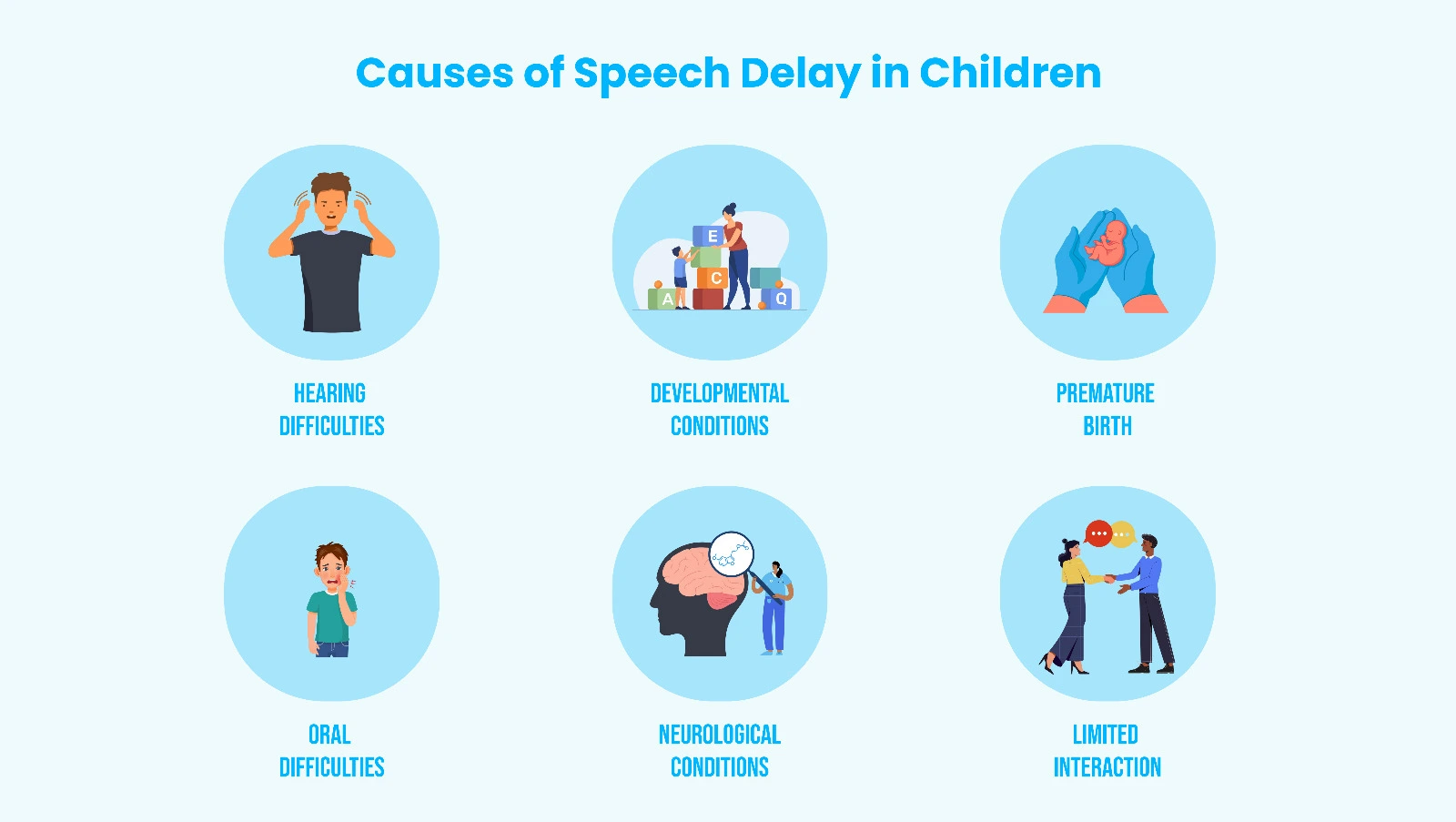
A top pediatrician in Chennai or child development specialist can assess your child’s needs and recommend appropriate support.
Our doctors encourage you to consult if your child isn’t communicating like other children their age. Early assessment can help identify developmental concerns and guide timely support. Seek medical advice if your child rarely responds to sounds, struggles to follow simple instructions, uses fewer words than expected for their age, or finds it difficult to form short phrases.
You should also seek an evaluation if your child loses words or communication skills they previously developed. As a top pediatric hospital in Chennai, we help families access appropriate assessment and support tailored to their child’s needs.
Parents, don’t panic if your child takes a little longer to start speaking. A qualified speech therapist can guide your child through suitable exercises and personalised therapy.
At Dr. Mehta’s Hospitals, we help families understand their child’s speech and language needs and access appropriate care.
As one of the best multispeciality hospitals in Chennai, we are committed to supporting children’s development and helping parents take informed, confident steps towards their child’s well-being.
1. At what age should a child start saying their first words?
Many children say their first meaningful words around 12 months, although communication develops at different rates.
2. Can a child understand words but struggle to speak?
Yes, some children understand language well but have difficulty expressing themselves through spoken words.
3. Does speech delay always mean autism?
No, speech delay has several possible causes, and an assessment is needed to identify the reason.
4. Can hearing problems lead to speech delay?
Yes, reduced hearing can make it harder for children to learn speech sounds and develop spoken language.
5. Can excessive screen time affect a child’s speech development?
Spending too much time on screens may leave children with fewer chances to practise speaking and interacting with others.
6. Will a child with speech delay eventually catch up?
Progress varies from child to child, and an assessment can help determine whether speech support would be beneficial.
7. Can speech delay affect a child’s learning at school?
Speech and language difficulties may affect classroom communication, following instructions, and early reading skills.
8. Which specialist should parents consult for speech delay in Chennai?
Parents can begin with a pediatrician, who may recommend a hearing assessment or referral to a speech-language therapist.
9. What Can Parents Expect From Speech Therapy for Children?
A speech therapist works with children through guided activities that encourage clearer speech and stronger communication skills.
10. When should parents worry about a child’s speech development?
Parents should seek professional advice if milestones are missed consistently or a child loses previously acquired communication skills.