Snoring can sometimes be a sign of a breathing problem, especially when it is loud, frequent, or accompanied by other symptoms during sleep.
While occasional snoring is common and may not be a cause for concern, persistent snoring can sometimes indicate that airflow is being restricted while you sleep. Some people may also experience disturbed sleep, morning tiredness, or unusual breathing patterns at night.
Understanding when snoring is simply a common sleep habit and when it may point to an underlying breathing issue can help you know when it is worth seeking medical advice.
Yes, snoring can be related to a breathing problem, particularly when the airway becomes partly blocked during sleep. As the throat muscles relax, the tissues can narrow the airway and vibrate as air passes through, producing the sound of snoring.
Occasional snoring may simply be temporary, while frequent or loud snoring can sometimes indicate an underlying breathing disorder.
Obstructive sleep apnea (OSA) is one such condition, causing repeated interruptions in breathing during sleep. A PubMed review estimates that 104 million working-age Indians have OSA.
| Snoring | Sleep Apnea |
| Airflow becomes partly restricted, causing the throat tissues to vibrate. | Breathing may pause or become severely reduced at different points during sleep. |
| Mainly produces a loud or rough breathing sound. | May cause loud snoring, followed by pauses, gasping or choking. |
| It can happen occasionally or regularly. | Usually occurs repeatedly throughout the night. |
| Does not always affect breathing or sleep quality. | Can repeatedly disturb sleep and reduce normal airflow. |
| May occur due to sleeping position, nasal congestion or relaxed throat tissues. | It commonly happens when the upper airway closes off repeatedly while you sleep. |
| Occasional snoring without other symptoms may not require treatment. | Should be medically evaluated, particularly when symptoms are noticeable. |
Understanding how sleep position affects your spine can also help you choose a comfortable sleeping position that supports proper alignment and easier breathing.
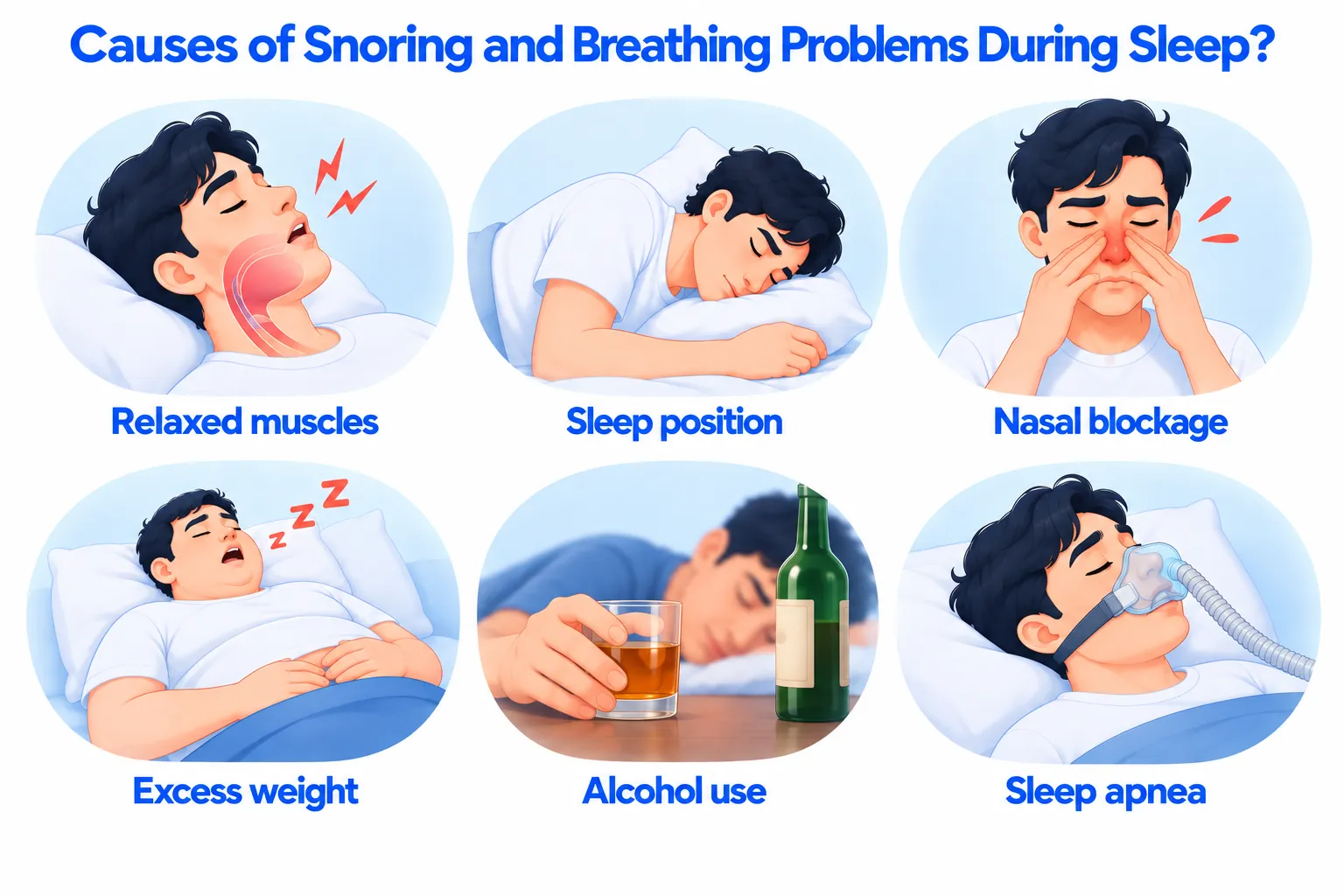
Treatment for snoring depends on what is causing it. While mild snoring may improve with simple changes, persistent snoring linked to a breathing disorder may need medical treatment.
If snoring continues despite these measures, a doctor may recommend a sleep study to identify the underlying problem.
If your snoring persists or is accompanied by breathing difficulties, pulmonology treatment in Chetpet can help identify and manage the underlying cause.
If snoring continues for 2–3 weeks or occurs on most nights, it is worth speaking to a doctor, especially if it is becoming louder or affecting your sleep.
Seek medical attention sooner if you notice pauses in breathing, choking or gasping during sleep, morning headaches, or excessive daytime tiredness. These signs may indicate an underlying breathing disorder that needs evaluation.
Consult our leading pulmonologists doctors in Chennai for appropriate evaluation and treatment based on your symptoms.
Snoring is common, but persistent or unusually loud snoring should not be ignored, particularly when it is accompanied by disturbed breathing or daytime tiredness. Identifying the cause early and taking the right measures can support better breathing at night.
At Dr. Mehta’s Hospitals, we can assess your symptoms and guide you towards suitable treatment based on the underlying cause.
If you have been experiencing persistent snoring or other sleep-related breathing issues, consult our pulmonology specialists for appropriate evaluation and care.
1. Is snoring always a sign of a breathing problem?
No, occasional snoring is common, but persistent snoring can sometimes indicate restricted airflow or an underlying sleep disorder.
2. What does loud snoring indicate?
Loud or frequent snoring may indicate narrowing of the airway during sleep.
3. Can snoring be linked to sleep apnea?
Yes, persistent snoring is a common symptom of obstructive sleep apnea.
4. What are the warning signs of sleep apnea?
Breathing pauses, gasping, choking during sleep, morning headaches, and daytime sleepiness are common warning signs.
5. Can sleeping position affect snoring?
Yes, sleeping on your back can make snoring worse by allowing the tongue and soft tissues to narrow the airway.
6. Does being overweight cause snoring?
Excess weight can increase pressure around the upper airway and contribute to snoring.
7. Can nasal congestion make snoring worse?
Yes, a blocked nose can make airflow more difficult and increase the likelihood of snoring.
8. When does snoring require medical attention?
Persistent snoring, particularly with breathing pauses or daytime sleepiness, should be medically evaluated.
9. Which doctor treats snoring and sleep-related breathing problems?
A pulmonologist or sleep medicine specialist can evaluate and treat snoring linked to breathing disorders.
10. How is sleep apnea diagnosed?
A doctor may recommend a sleep study to monitor breathing and other sleep-related changes overnight.