Watching your little one grow, smile, and discover the world around them is one of the most beautiful experiences for every parent. As your baby reaches new developmental milestones, one important question naturally comes up: “When is the right time to introduce solid foods?” Starting solids is an exciting stage, but it is important to begin when your baby is physically ready.
Introducing foods at the right time supports healthy growth, nutrition, and eating habits. Understanding your baby’s readiness signs and following safe feeding practices can help make this transition smoother and more comfortable for both you and your child.
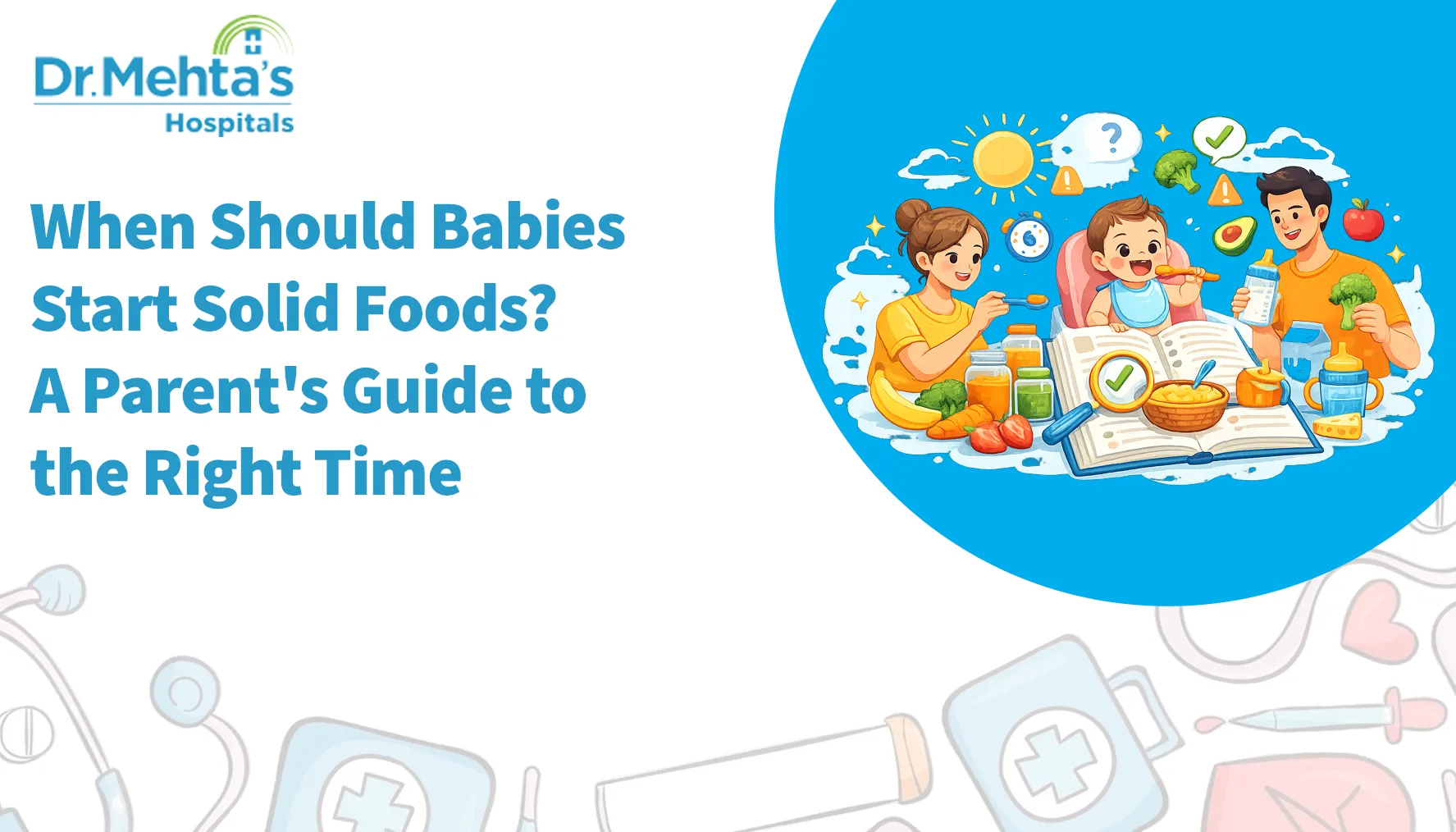
Babies should generally start solid foods around 6 months of age when they show signs of developmental readiness. While breast milk or formula continues to be the main source of nutrition during the first year, introducing the right solid foods helps support your baby’s growing nutritional needs.
Every infant develops differently, so parents should look beyond age alone and observe important milestones such as sitting with support, better head control, and showing interest in food. Consulting a pediatric expert can help parents understand the safest time and approach to begin their baby’s solid food journey.
Age is only one part of starting solids; your baby’s body movements, feeding interest, and developmental progress also help determine the right time. Here are those signs:
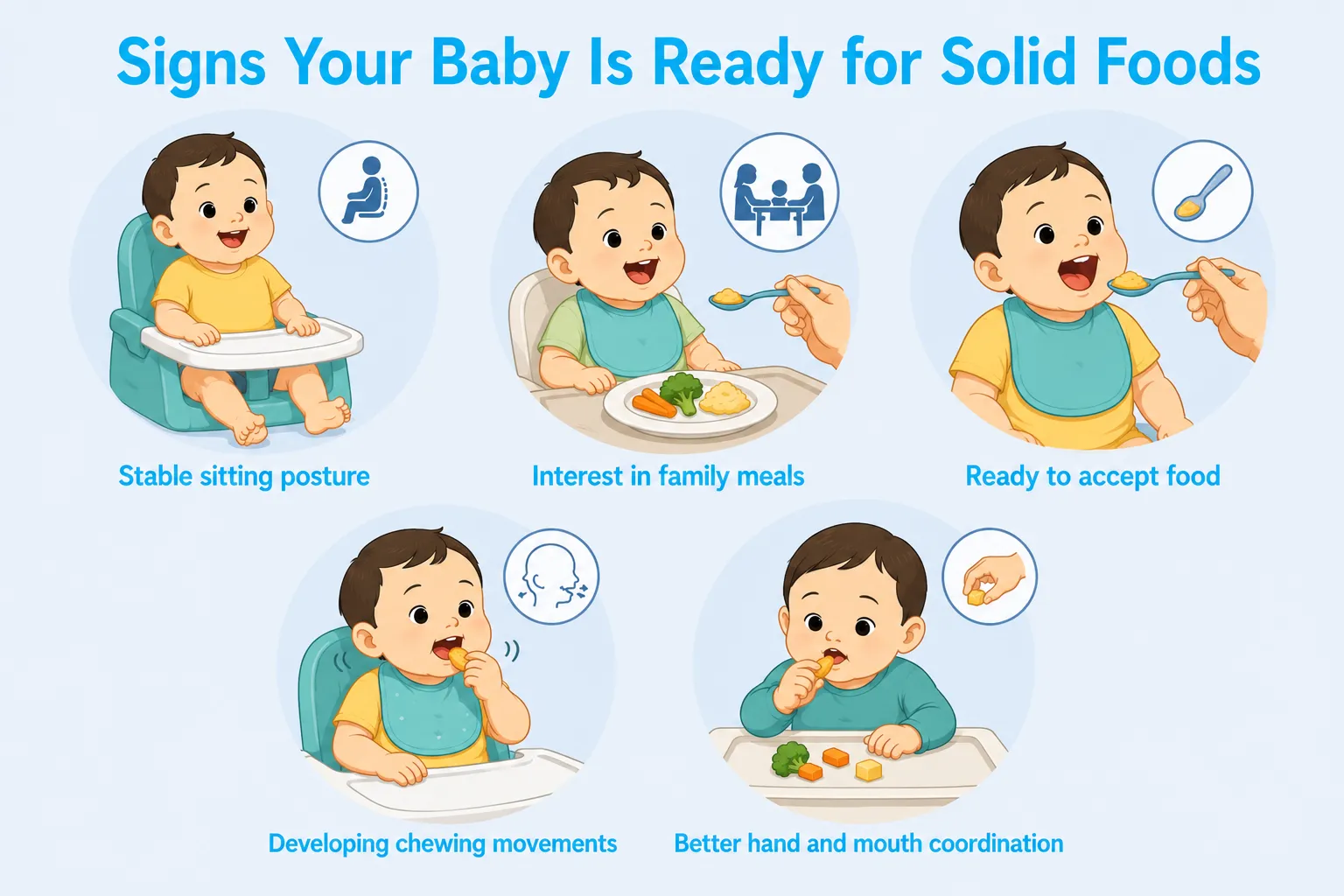
Starting solids is a gradual process where your baby learns new tastes, textures, and eating skills. Parents can make this transition safer by following simple feeding practices recommended during early infancy.
Below is a simple guide parents can refer to while introducing different foods to their child:
|
Feeding Stage |
Foods to Introduce | Recommended Foods |
| Beginning stage | Smooth, single-ingredient foods that help babies adjust to eating |
Mashed carrots, pureed apples, and iron-fortified cereals |
|
After initial acceptance |
Different food groups that introduce more variety and nutrients | Vegetables, fruits, rice, lentils |
| As feeding improves | Thicker textures and soft foods that support developing eating skills |
Soft cooked vegetables, mashed family foods |
|
Ongoing meals |
Balanced food combinations suitable for regular feeding routines |
Grains, vegetables, protein-rich foods, and healthy fats |
For personalized feeding recommendations and infant care support, parents can seek guidance from experienced specialists at the best pediatrics hospital in Chetpet.
When your baby starts eating solid foods, avoid the following to support safe and healthy feeding:
According to the WHO, young children feeding guidelines recommend safe and nutritionally appropriate complementary foods during their early years to support healthy growth and development. Following proper baby nutrition advice and infant feeding guidance helps ensure your baby receives safe, age-appropriate foods.
Parents should consult a doctor if they notice feeding difficulties, unusual reactions, or concerns after introducing solid foods.
Early guidance can make your baby’s transition to solids safer and healthier. Consult an experienced pediatrician in Chennai for personalised support and care.
Starting solid foods is an important milestone in your baby’s growth journey, and every child adjusts to this change at their own pace. Understanding the right time, choosing suitable foods, and following safe feeding practices can help your baby develop healthy eating habits from an early age. Parents should always pay attention to their baby’s comfort, development, and individual needs during this transition.
With expert support from experienced child specialists, families can feel more confident about their baby’s nutrition and overall health. At Dr. Mehta’s Hospitals, a trusted private multispeciality hospital in Chennai, parents receive personalised care and guidance throughout every stage of their child’s development.
Most babies can start solid foods around 6 months of age when they show signs of developmental readiness.
2. What are the first signs my baby is ready for solid foods?
Good head control, sitting with support, food interest, and improved mouth movements are common signs of readiness.
3. Can I give solid foods to my baby before 6 months?
Solid foods before 6 months are usually not recommended unless advised by your child’s doctor.
4. What are some good first foods for babies?
Soft foods like mashed vegetables, fruits, lentils, and iron-rich foods are commonly introduced first.
5. How much solid food should a baby eat at the beginning?
Babies usually start with small amounts and gradually increase their intake as they adjust to eating.
6. Should breastfeeding continue after starting solid foods?
Yes, breast milk or formula usually remains an important nutrition source even after introducing solids.
7. How can parents introduce new foods safely?
Introduce foods slowly, choose safe textures, and watch how your baby responds to new foods.
8. Which foods should babies avoid during the first year?
Babies should avoid honey, choking hazards, excess salt, added sugar, and unsuitable processed foods.
9. What should I do if my baby refuses solid foods?
Stay patient and try again later, as many babies need time to accept new tastes and textures.
10. When should I consult a pediatrician about baby feeding?
Consult a pediatrician if your baby has feeding difficulties, reactions to foods, or growth concerns.