
Do you wake up one or more times every night to urinate, but hardly ever feel the need to go during the day? If so, you’re not alone. While it may seem unusual, this pattern is more common than many people realize. It can happen because of changes in how your body works during sleep, your fluid intake, lifestyle habits, or certain underlying health conditions. Understanding why frequent nighttime urination happens can help you identify the cause, improve your sleep, and know when it’s time to consult a doctor.
Your body manages urine production differently during the day and night because of changes in activity levels, fluid movement, and natural body rhythms. During the day, movement helps circulate fluids, and your brain actively responds to bladder signals while you complete daily activities. At night, lying down allows stored fluids from different parts of the body to return to circulation, which may increase urine production in some people. Sleep patterns, ageing, and changes in certain hormones that control water balance can also influence how often you need to urinate overnight.
Frequent urination may not occur during the day because your body manages fluids differently when you’re awake. During waking hours:
At night, your body works differently. Lying down, changes in hormone levels, and your sleep cycle can increase urine production or make you more aware of the urge to urinate, leading to frequent nighttime bathroom visits.
Frequent urination at night can happen when certain body functions change during sleep, causing the bladder to fill faster or feel more active. Here’s why:
When you lie down at night, fluids that may have collected in your legs during the day can move back into the bloodstream. The kidneys process this extra fluid and produce more urine, which may increase the need to wake up and use the bathroom. This is more commonly noticed in people with swelling in the legs, certain health conditions, or age-related changes in fluid balance.
As people age, the body may become less effective at reducing urine production during sleep. This means the kidneys can produce more urine at night, increasing the need to wake up and urinate. Certain health conditions, such as diabetes, and medications like diuretics can also increase urine production during the night, making nighttime bathroom visits more frequent than those during the day.
Some people wake up at night because their bladder sends signals even when it is not completely full. This increased bladder sensitivity can create a false sensation of urgency, making you feel the need to urinate despite having only a small amount of urine in the bladder or even nothing. Factors such as bladder irritation, lifestyle habits, or changes in bladder function may contribute to this pattern.
As people age, the body may produce more urine during sleep than it did in younger years. This can lead to frequent nighttime urination, even if daytime urination remains normal. Certain medical conditions, such as diabetes, and medications like diuretics can also increase urine production at night, making nocturia more common.
Certain health concerns may make nighttime urination more noticeable because there are fewer distractions while sleeping. This frequent need to wake up and urinate at night is medically known as nocturia. Conditions affecting the bladder, kidneys, hormones, or overall fluid balance can influence urination patterns.
If nighttime bathroom visits become frequent, sudden, or affect your sleep quality, a medical evaluation can help understand the reason behind these changes.
Here are some common causes of frequent urination:
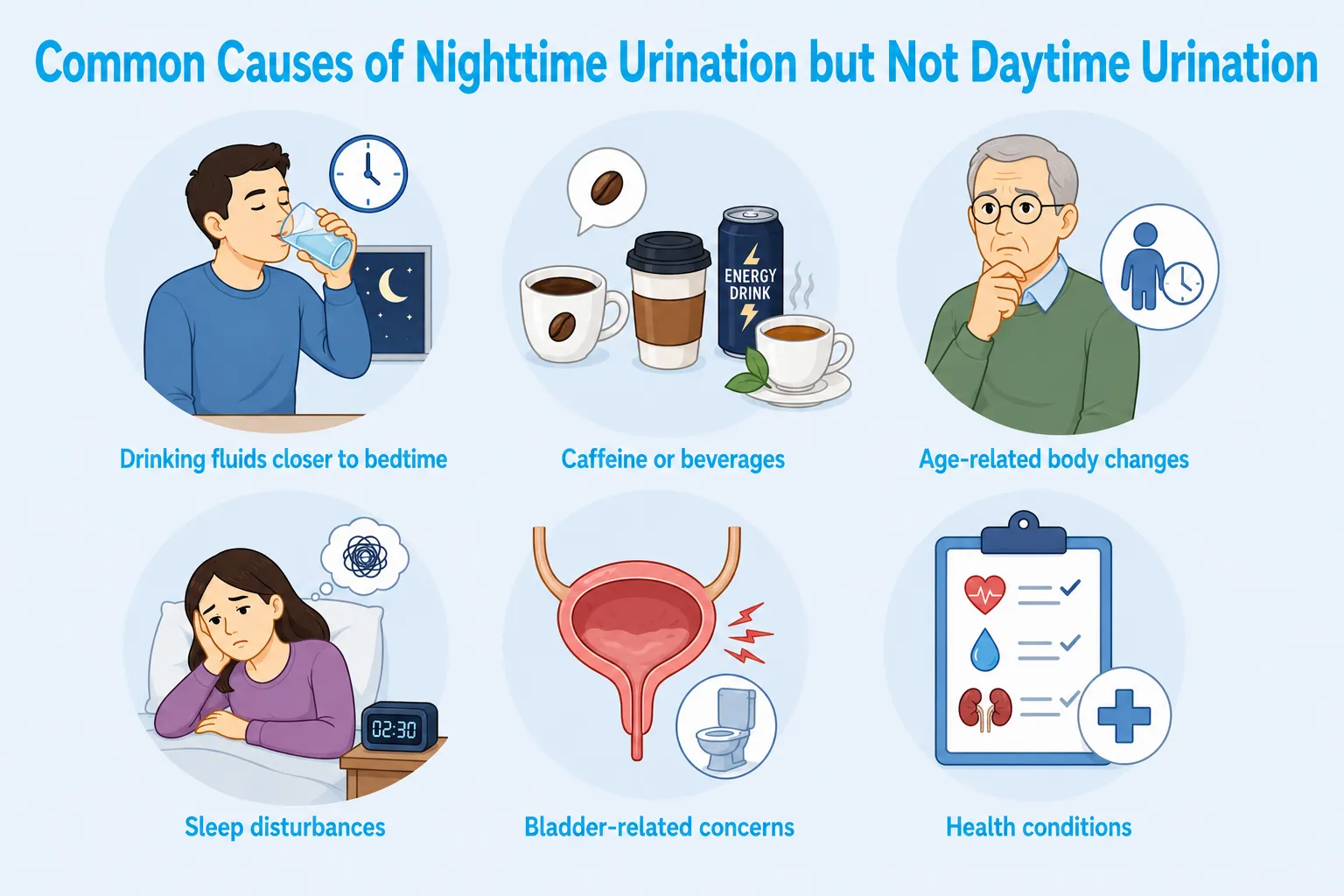
Changes in bladder habits, especially frequent urination at night, may happen due to different factors, and understanding these patterns can help in taking the right steps toward better urinary health.
| Difference | During the Day | During the Night |
| Body Activity | During the day you are moving, walking, and staying active. | At night, your body is resting, and lying down changes how fluids move in your body. |
| Urine Production | Your kidneys produce urine based on your fluid intake and daily activities. | Your body normally produces less urine during sleep, but this can change with age or certain health conditions. |
| Hormonal Regulation | Urine production mainly reflects your fluid intake and daily activities. | More antidiuretic hormone (ADH) is produced during sleep helping your body produce less urine. |
| Bladder Function | You can usually notice and manage the urge to urinate while awake. | Even a partially filled bladder may wake you up during sleep. |
| Body’s Natural Control | Your body balances urine production throughout the day. | Age, certain health conditions, or medications can reduce the body’s ability to limit urine production at night. |
| Urination Pattern | Bathroom visits are usually spread across your waking hours. | You may wake up several times to urinate, interrupting your sleep. |
According to research available through PubMed, managing nocturia depends on understanding the factors contributing to nighttime urination and choosing the right approach based on individual needs.
Occasional nighttime urination may happen due to changes in fluid intake or daily habits, but symptoms that continue for more than a few weeks or regularly disturb your sleep should be checked by a healthcare professional. You should also seek medical advice if nighttime urination occurs with pain or burning while urinating, blood in urine, difficulty passing urine, fever, sudden changes in bladder habits, or unexplained swelling. A proper evaluation can help identify whether bladder, kidney, or other health concerns are involved. Consulting an experienced urologist in Velappanchavadi can help you receive the right diagnosis and treatment guidance.
If you have been wondering, “Why do I urinate frequently at night but not during the day?”, the reason may be linked to changes in body functions, lifestyle habits, or bladder-related factors that become more noticeable during sleep. Occasional changes in urination patterns are common, but frequent disruptions should not be ignored when they affect your comfort and sleep quality.
Understanding your symptoms and seeking timely medical guidance can help identify the right solution. At Dr. Mehta’s Hospitals, the best multispeciality hospital in Chennai, an experienced bladder specialist can provide personalised care to support your urinary health and overall well-being.
This can happen due to changes in fluid balance, bladder function, sleep patterns, or other health-related factors.
2. How many times is it normal to urinate at night?
Waking once occasionally may be normal, but frequent nightly bathroom visits affecting sleep may need evaluation.
3. Why does lying down increase the need to urinate?
Lying down can allow stored fluids in the body to return to circulation, increasing urine production at night.
4. Can ageing cause frequent urination at night?
Yes, age-related changes can affect urine production, bladder control, and nighttime urination patterns.
5. Why do I not feel the urge to urinate often during the day?
Daily movement, routines, and normal bladder control can make urination feel more manageable during daytime hours.
6. Can drinking water before bed cause nighttime urination?
Drinking large amounts of fluids close to bedtime may increase the need to urinate overnight.
7. How can I reduce frequent urination at night naturally?
Managing evening fluids, maintaining bladder habits, and tracking symptoms may help reduce nighttime bathroom visits.
8. Can frequent nighttime urination indicate a bladder problem?
Sometimes, bladder sensitivity or other urinary conditions may contribute to frequent nighttime urination.
9. When should I worry about frequent nighttime urination?
Look for medical advice if it continues for weeks, affects sleep, or occurs with other urinary symptoms.
10. Which doctor treats frequent nighttime urination problems?
A urologist can diagnose urinary concerns and recommend suitable treatment based on the underlying cause.