

Your kidneys work every day to remove waste, manage fluids, and keep your body balanced. Drinking enough water helps your kidneys perform these important functions smoothly. When your body does not get enough fluids, your kidneys may have to work harder than usual.
While occasional dehydration can happen due to heat, exercise, or low water intake, frequent dehydration may affect your kidney health over time. Understanding how dehydration impacts your kidneys can help you notice early signs, improve daily habits, and know when medical attention may be needed. In this blog, we will explore the different ways dehydration can affect your kidneys.
Dehydration affects the kidneys by reducing the fluid they need to filter waste, maintain balance, and support normal body functions. When the body does not have enough water, urine becomes more concentrated, making it difficult for the kidneys to work efficiently.
Short-term dehydration may cause changes like reduced urination and darker urine. However, repeated or severe dehydration can increase stress on the kidneys and may contribute to problems such as kidney stones or reduced kidney function. Understanding how much water is actually good for the kidneys is important, as proper hydration supports kidney function and helps the body maintain a healthy fluid balance.
Dehydration symptoms can appear when the body does not have enough fluids to support normal functions. The table below highlights common signs of dehydration:
|
Common Sign |
What It May Indicate |
| Thirst |
The body can trigger thirst signals when fluid levels decrease, and more hydration is needed. |
|
Dark urine |
Reduced water intake may make urine more concentrated and darker than usual. |
| Dry mouth |
Lower fluid levels can reduce moisture production and contribute to dryness in the mouth. |
|
Fatigue |
Dehydration-related changes may affect energy levels and lead to tiredness or weakness. |
| Dizziness |
Insufficient fluids may influence circulation and balance, causing dizziness in some cases. |
|
Reduced urination |
The body may conserve available fluids by decreasing urine production during dehydration. |
Drinking lots of water is good for kidney disease, and can guide you towards safer hydration practices and better kidney health.
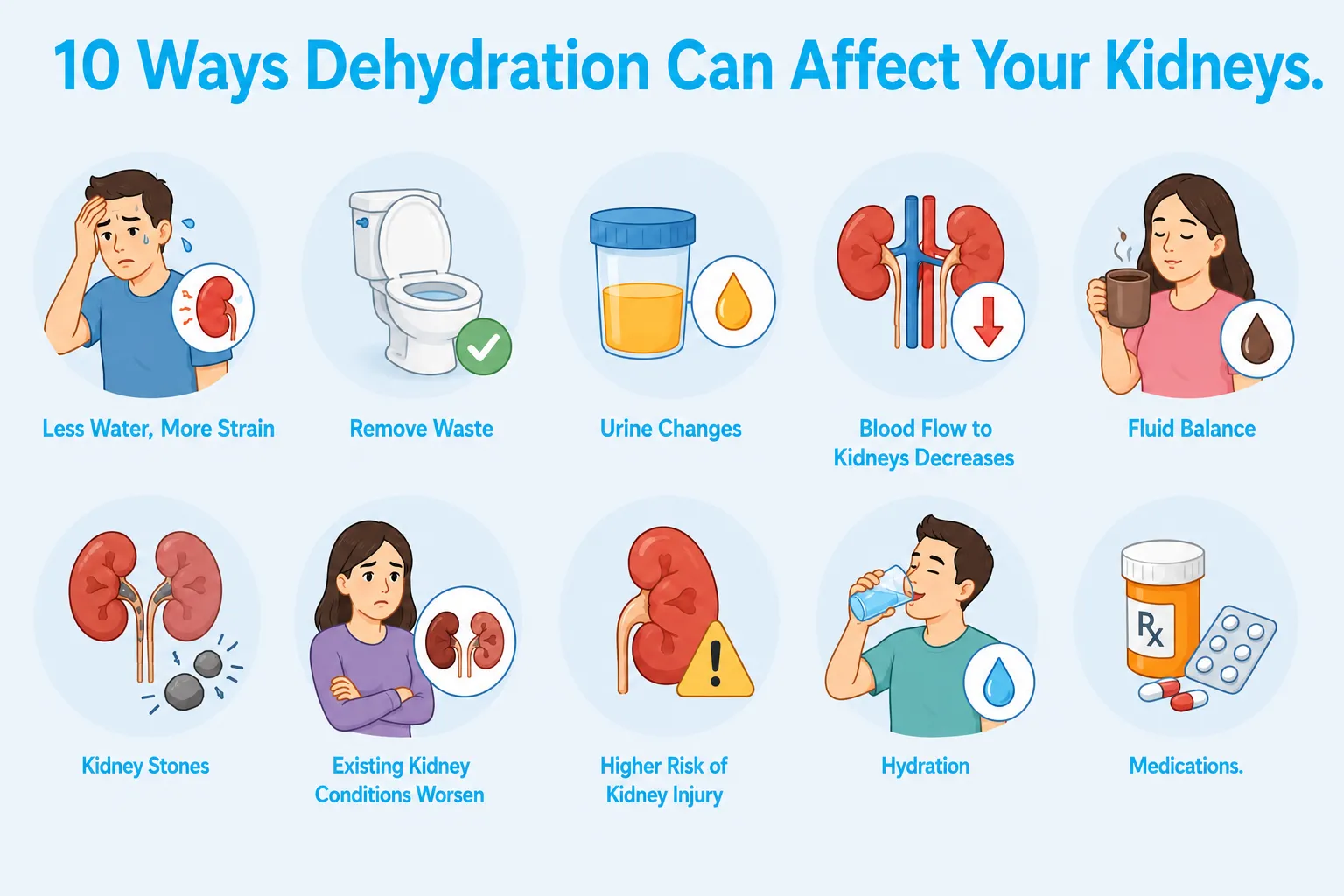
When your body does not receive enough water, your kidneys have less fluid available to support their filtering process. This can make the kidneys work harder to remove waste and maintain balance in the body. Staying hydrated helps support normal kidney function and reduces unnecessary strain caused by frequent dehydration.
One of the main roles of the kidneys is to remove waste products from the blood through urine. During dehydration, there may not be enough fluid to carry these waste materials out efficiently. If waste removal is affected repeatedly, it can increase stress on the kidneys and may require proper evaluation and kidney dehydration treatment based on the condition.
Dehydration commonly affects the colour, frequency, and concentration of urine. The NSW Government urine colour chart explains that darker urine may indicate dehydration, while pale urine is usually linked to healthy hydration levels. When fluid levels are low, the kidneys conserve water by producing less urine, making it appear darker and more concentrated. Monitoring urine changes can help identify early signs of dehydration and encourage better hydration habits.
The kidneys need proper blood flow to receive oxygen and nutrients required for healthy functioning. Severe dehydration can reduce fluid levels in the body, which may affect circulation and make it harder for the kidneys to perform effectively. Restoring hydration at the right time helps support normal kidney activity.
The kidneys help maintain the right balance of fluids and minerals that support important body functions. Dehydration can disturb this balance, affecting how the body manages essential elements like sodium and other electrolytes. People with existing kidney concerns should seek timely medical guidance, as proper kidney disease treatment can help manage kidney health effectively.
Dehydration can increase the chances of kidney stone formation because there may not be enough fluid to dilute minerals and salts in the urine. Over time, these substances can collect and form crystals. Drinking enough water supports regular urine flow and helps lower the risk of developing dehydration-related kidney stones.
People who already have kidney-related conditions need to be more careful about maintaining proper hydration. Frequent dehydration can add extra pressure on the kidneys and may affect their ability to function efficiently. Regular monitoring, healthy lifestyle choices, and medical guidance can help protect kidney function and manage existing concerns.
Severe dehydration can sometimes affect kidney performance by reducing the fluids needed for proper filtration and circulation. According to the National Library of Medicine (NCBI), reduced blood flow to the kidneys is a common pathway that can contribute to acute kidney injury. Recognising dehydration early and restoring fluid balance can help reduce unnecessary stress on the kidneys and support normal filtration.
Maintaining proper hydration every day is one of the simplest ways to support kidney health. Drinking enough fluids helps the kidneys remove waste, regulate minerals, and maintain normal urine production. Individual hydration needs may vary depending on factors such as age, activity level, climate, and overall health.
Mild dehydration often improves with proper fluid intake, but symptoms should not be ignored when they become severe. Warning signs such as confusion, dizziness, reduced urination, rapid heartbeat, or ongoing discomfort may require timely medical attention. A healthcare professional can evaluate your symptoms, identify possible kidney-related concerns, and recommend the right steps to restore hydration and protect kidney function.
Maintaining good hydration habits and getting a regular kidney health checkup can help support kidney function and detect concerns early. Here are ways you can keep your kidneys healthy:
Along with staying hydrated, recognising the early signs of kidney problems can help you seek timely medical care and prevent further complications.
A doctor should be consulted if dehydration symptoms continue for more than 24–48 hours despite proper fluid intake or if you notice warning signs like reduced urination, dark urine, swelling, frequent tiredness, or recurring kidney stones. People with existing conditions such as diabetes, high blood pressure, or previous kidney problems should be more careful about changes in kidney health.
A kidney specialist can evaluate your symptoms, identify possible kidney concerns, and recommend the right treatment approach. Getting timely support from the Best Nephrology Hospital in Chennai can help detect issues early and maintain better long-term kidney function through proper diagnosis and medical guidance.
Dehydration can affect your kidneys by increasing strain, reducing waste removal efficiency, and disturbing the body’s fluid balance. While drinking enough water supports healthy kidney function, ongoing symptoms or kidney-related concerns should be evaluated with expert medical guidance from a trusted nephrology hospital for accurate diagnosis and timely treatment.
Recognising dehydration signs early and maintaining healthy habits can help protect your kidneys in the long run. A top multispeciality hospital in Chennai with advanced facilities and experienced specialists can provide comprehensive care, personalised treatment, and the right support needed to maintain better kidney health.
Dehydration affects the kidneys by reducing the fluid levels needed to filter waste, maintain balance, and support normal kidney function.
2. What are the common signs of dehydration?
Common signs of dehydration include thirst, dark urine, dry mouth, tiredness, dizziness, and reduced urination.
3. Can dehydration cause kidney problems?
Yes, frequent or severe dehydration can increase stress on the kidneys and may contribute to kidney-related problems.
4. Can dehydration increase the risk of kidney stones?
Yes, dehydration can make urine more concentrated, which may increase the chances of kidney stone formation.
5. How much water should I drink to keep my kidneys healthy?
Water needs vary for each person based on age, activity level, climate, and overall health condition.
6. How can I protect my kidneys from dehydration?
Maintaining proper hydration, following a healthy diet, staying active, and managing health conditions can support kidney health.
7. When should I see a doctor for dehydration symptoms?
Consult a doctor if dehydration symptoms continue for 24–48 hours despite proper fluid intake or become severe.
8. Can dehydration affect urine colour?
Yes, dehydration can cause urine to become darker and more concentrated due to reduced fluid levels.
9. Which specialist treats kidney problems caused by dehydration?
A nephrologist diagnoses and treats kidney-related problems, including concerns linked to severe or repeated dehydration.
10. Can regular kidney checks help prevent kidney problems?
Regular kidney evaluations can help monitor kidney function and detect possible concerns at an early stage.