
Do you feel the sudden pulling of your leg muscles randomly at night, or wake up because of painful cramps? Leg pain at night can affect your sleep and make it difficult to feel active the next day. While occasional pain may happen after a long day or physical activity, frequent discomfort could be due to muscle strain, nerve irritation, poor blood flow, or joint problems.
Knowing what causes your leg pain can help you find the right way to manage it. From simple lifestyle changes to medical treatments, there are different ways to reduce discomfort and improve your quality of sleep. This blog explains the common causes, symptoms, treatments, and prevention tips for leg pain at night.
Leg pain often feels worse at night because reduced movement, changes in blood circulation, and increased awareness of pain while resting can make discomfort more noticeable. During the day, regular activity keeps your muscles active and improves blood flow, but staying still for long hours at night may lead to stiffness, cramps, or aching sensations.
In some cases, underlying conditions affecting the muscles, nerves, joints, or blood vessels, such as arthritis, nerve compression, or circulation problems, can also contribute to nighttime leg pain. Understanding what triggers your pain can help identify the cause and choose the right approach for lasting relief.
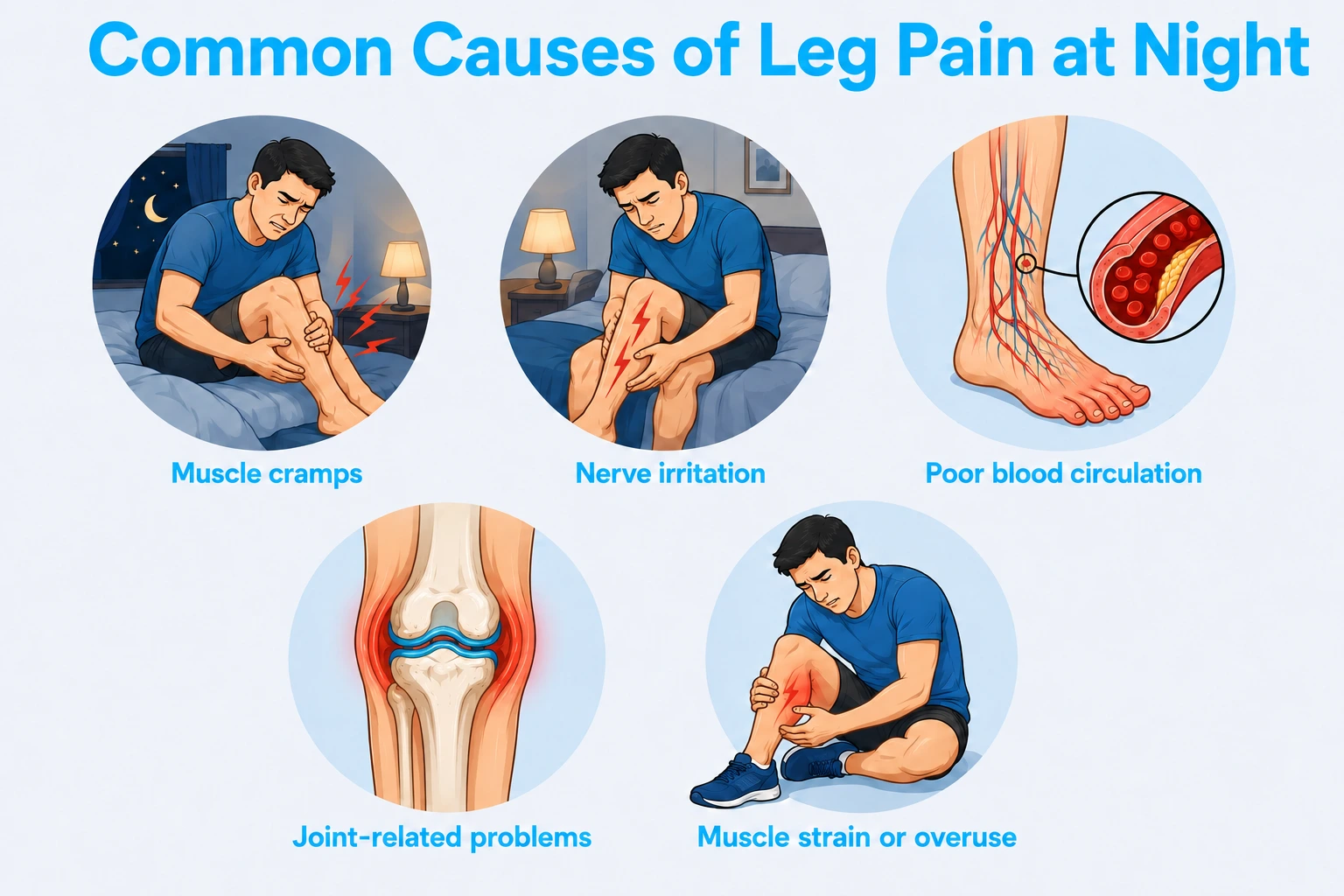
Leg pain at night can happen for many reasons, from simple muscle tiredness to underlying health conditions. Common causes of nighttime leg pain include:
Nighttime leg pain can feel different depending on what is causing the discomfort. Here are some of the common symptoms of leg pain at night:
|
Symptom |
What You May Experience |
| Aching Leg Pain |
A constant dull pain or heaviness in the legs that may become more noticeable while resting or sleeping. |
|
Muscle Cramps |
Sudden tightening or painful contractions of the leg muscles can wake you up during the night. |
| Burning Sensation |
A warm, burning, or uncomfortable feeling in the legs that may be linked to nerve-related irritation. |
|
Tingling or Numbness |
A pins-and-needles feeling or reduced sensation in the legs that may happen due to nerve involvement. |
| Sharp or Shooting Pain |
A sudden intense pain that may travel through the leg and affect comfortable sleep or movement. |
Leg pain treatment depends on identifying the cause of discomfort, whether it is related to muscles, nerves, circulation, or joints. Treatment options include:
Since leg pain can involve muscles, joints, or nerves, understanding orthopaedic care is important for proper diagnosis and treatment. A guide to orthopedics can help you learn more about managing movement-related conditions.
Leg pain at night can affect anyone, but it is more common among older adults, pregnant women, athletes, and people with underlying conditions affecting the muscles, nerves, or circulation. Nighttime leg cramps become more common with age, with 33% of people over 60 experiencing leg pain at least once every two months.
People who stand for long hours, exercise intensely, or have conditions like diabetes, arthritis, nerve problems, or circulation issues may have a higher risk of nighttime leg pain. Knowing these risk factors can help identify symptoms early and seek appropriate care when needed.
Preventing leg pain at night involves maintaining healthy habits that support your muscles, joints, and overall movement. Here are some tips that may help reduce frequent nighttime discomfort:
If your symptoms continue despite preventive steps, getting proper orthopaedic care in Chennai can help diagnose the reason behind your leg pain and provide suitable treatment options.
Leg pain at night may improve with simple lifestyle changes, but you should consult an orthopaedic specialist if the pain becomes frequent, severe, affects your sleep, or interferes with your daily routine. It is also important to get evaluated if you notice:
A specialist can examine your symptoms, identify the cause, and recommend the right treatment plan. For persistent nighttime leg pain, consult an orthopedic doctor in Chennai for expert care and guidance.
Leg pain at night can affect your sleep, comfort, and daily activities, but understanding the reason behind the pain can help you take the right steps toward recovery. While occasional discomfort may improve with simple care, frequent cramps, numbness, or persistent pain should not be ignored.
At Dr. Mehta’s Hospitals, we provide comprehensive leg pain treatment in Chennai, focusing on identifying the root cause and offering personalised care for every patient. With experienced specialists, advanced facilities, and a patient-first approach, we continue to deliver trusted healthcare as Chennai’s best multispeciality hospital for your family’s medical needs.
Leg pain may feel worse at night because reduced movement and increased pain awareness during rest can make discomfort more noticeable.
2. What causes sudden leg cramps while sleeping?
Sudden leg cramps during sleep may occur due to muscle fatigue, dehydration, poor circulation, or nerve-related problems.
3. When should I worry about leg pain at night?
Consult a doctor if leg pain is frequent, severe, affects sleep, or occurs with numbness, swelling, or weakness.
4. How can I get relief from leg pain at night?
Gentle stretching, proper rest, hydration, and treating the underlying cause can help manage nighttime leg pain.
5. Can nerve problems cause leg pain while sleeping?
Yes, nerve irritation or compression can cause burning, tingling, numbness, or shooting pain in the legs at night.
6. What is the best treatment for leg pain at night?
The right treatment depends on the cause and may include physiotherapy, medication, lifestyle changes, or specialised care.
7. Can leg pain at night happen because of poor blood circulation?
Yes, circulation problems may reduce blood flow to the legs and lead to pain, heaviness, or cramping sensations.
8. Where can I get leg pain treatment in Chennai?
Dr. Mehta’s Hospitals provides advanced leg pain treatment in Chennai with experienced specialists and personalised care.
9. What are the best tips to prevent leg pain at night?
Regular stretching, staying active, drinking enough water, and maintaining healthy habits can help prevent frequent leg pain at night.
10. Is leg pain at night common among older adults?
Yes, older adults may experience nighttime leg pain due to age-related changes in muscles, joints, nerves, or circulation.