A woman’s period can fluctuate from day to day, perhaps because of stress, changes in routine, or lifestyle habits. But if the periods do not go away, this could be a sign of a hormonal imbalance that needs treatment. One such commonly overlooked factor is thyroid dysfunction.
Although the thyroid gland is rather small, it has a significant role in influencing metabolism, energy production and reproductive health. In thyroid hormone levels change, ovulation frequency and the hormonal pathway that regulates the menstrual cycle can also be affected, resulting in changes in period frequency, flow, and regularity. If women do not understand this relationship, they may not identify early signs and symptoms and seek timely treatment if necessary.
Yes, hypothyroidism (underactive thyroid) and hyperthyroidism (overactive thyroid) can cause irregular periods. The hypothalamic-pituitary-ovarian (HPO) axis is the system of hormones that controls the menstrual cycle and ovulation, and thyroid hormones interact closely with this axis. If thyroid hormone is out of balance, disturbances to this hormonal communication can cause irregular periods.
Studies by PubMed Central suggest that nearly 42 million people in India are living with thyroid disorders, highlighting the growing burden of thyroid-related health issues in the country.
Some women with thyroid disorders can have heavier or lighter periods, or periods that don’t occur, or periods that are longer or shorter than usual. With proper diagnosis and treatment of the underlying thyroid disease, menstrual periods may be restored to normal, and reproductive health may be improved in many cases.
Thyroid hormones affect several physiological functions related to the healthy menstrual cycle. They help regulate the release of reproductive hormones such as follicle-stimulating hormone (FSH) and luteinising hormone (LH), both of which play a crucial role in ovulation and menstrual function. This balance can be altered by changes in thyroid hormone, which can affect ovarian function and the timing of the menstrual cycle.
Thyroid hormones also regulate the metabolism of the main female sex hormones, oestrogen and progesterone, as well as their effect on ovulation. Imbalances of thyroid function can also lead to variations in uterine lining thickness, flow and cycle predictability. This is partly the reason that thyroid disease is included in the list of conditions which are evaluated for a woman with ongoing menstrual irregularities. Women experiencing persistent menstrual changes should consider consulting the best gynecologist doctor in Chennai for a comprehensive evaluation and personalised treatment approach to address any underlying hormonal concerns.
Yes, disturbed periods are a common symptom of hypothyroidism. A decrease in thyroid hormone levels can affect the normal functioning of the HPO axis and cause irregular periods and irregular ovulatory function. Hypothyroidism can also stimulate the production of thyrotropin-releasing hormone (TRH) in some women, which can raise prolactin levels and cause additional disruption to the processes of ovulation.
Women with hypothyroidism may have heavy periods (menorrhagia), long periods, fewer periods, or no period at all. Menstrual problems can be accompanied by other symptoms that include fatigue, unexplained weight gain, constipation, dry skin, sensitivity to cold and thinning hair. If the thyroid hormone levels are replaced appropriately, early diagnosis can lead to improvement in thyroid-related symptoms and regularity of menstruation. For women experiencing ongoing thyroid-related menstrual concerns, seeking timely care at a multispeciality hospital at Velappanchavadi with dedicated women’s health services can help ensure accurate diagnosis and comprehensive treatment.
Studies by The Times of India indicate that about 10% of people in India have hypothyroidism, while an additional 8–9% may have subclinical hypothyroidism. Hyperthyroidism can also impact menstruation. Hyperthyroidism can cause the body to become overactive and affect the hormones that control ovulation and the menstrual cycle. As a result, women with hyperthyroidism may notice changes in the frequency, duration, and intensity of their periods.
Menstrual irregularities that are common with hyperthyroidism include lighter periods, shorter periods, and irregular periods. Some women also may have oligomenorrhoea, which is defined as having few periods. These changes in the menstrual period may be accompanied by symptoms like unexplained weight loss, intolerance to heat, palpitations, increased sweating, anxiety, and tremors. Treatment of the underlying thyroid condition can sometimes lead to better reproductive health and regular menstruation.
Although both hypothyroidism and hyperthyroidism can cause irregular periods, the menstrual changes associated with each condition may differ in several ways, as shown below.
|
Menstrual Change |
Hypothyroidism | Hyperthyroidism |
| Period Frequency | Periods may become less frequent or irregular |
Periods may occur infrequently or unpredictably |
|
Menstrual Flow |
Heavier or prolonged bleeding is more common | Lighter or reduced menstrual flow may occur |
| Cycle Regularity | Menstrual cycles may become unpredictable |
Cycles may become shorter or irregular |
|
Ovulation |
Delayed or absent ovulation may occur | Ovulatory disturbances may develop due to hormonal imbalance |
| Fertility Impact | Difficulty conceiving may occur if ovulation is affected |
Fertility may be influenced by persistent thyroid dysfunction |
Thyroid hormones are highly important for the regulation of menopausal hormones in the entire menstrual cycle. Thyroid hormones can also affect ovulation if they are not present in the correct concentration, influence the metabolism of reproductive hormones, and disrupt normal (HPO) axis function. This can make it easy for women with thyroid disease to see their periods change in timing, length, and strength.
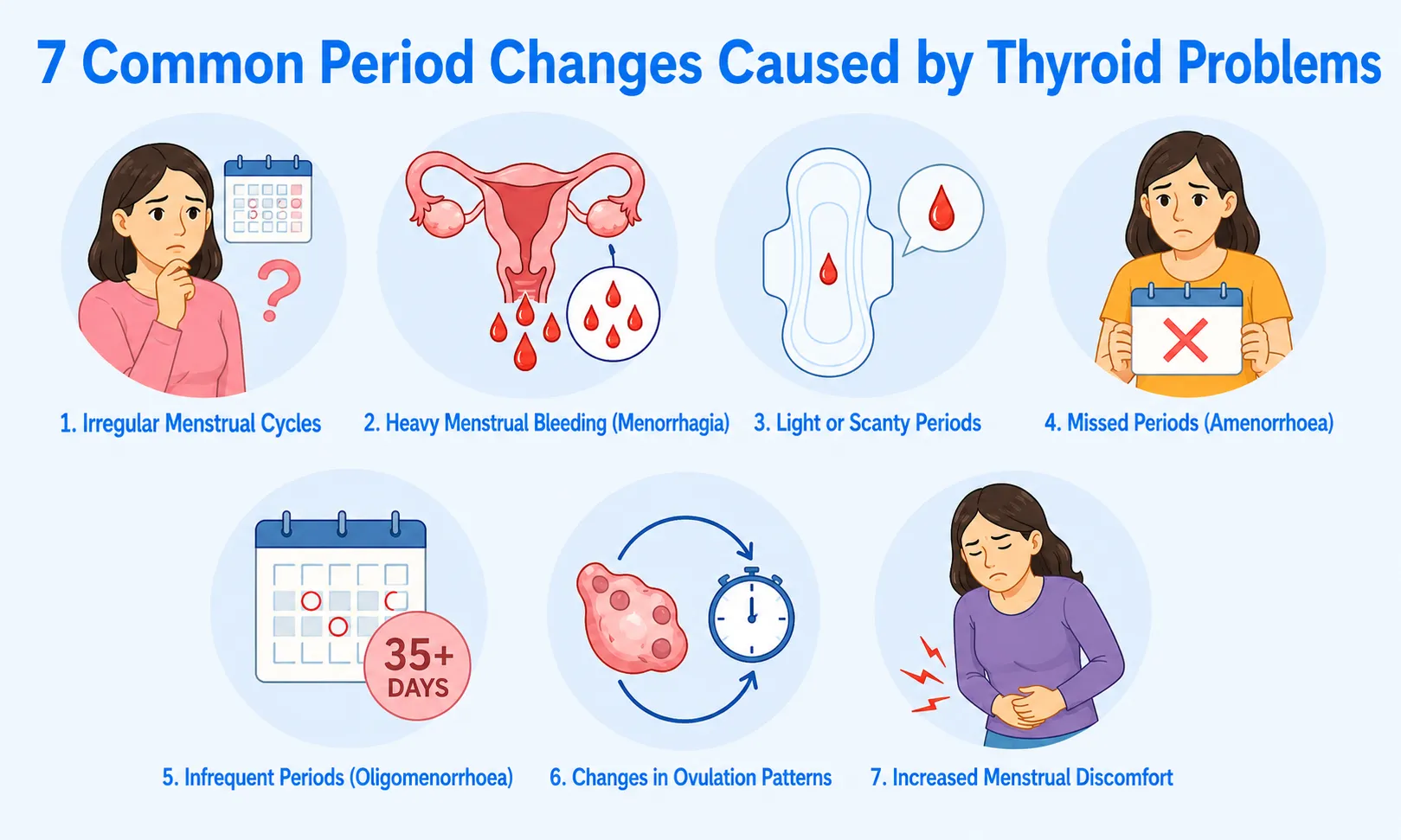
Some cycles do not occur at the same time as others, but if they do, they should not be overlooked, particularly if there are symptoms indicating a thyroid problem. Some of the most frequently seen menstrual changes in women who have thyroid disorders include:
Hormone fluctuations related to thyroid dysfunction may disrupt the normal hormonal messages to the ovulating system, resulting in irregular periods. Women can experience irregular periods. If the irregular period persists, consider thyroid testing, especially if there are other thyroid symptoms present.
Hypothyroidism is more commonly associated with heavy or prolonged menstrual bleeding. Imbalances in thyroid hormones can affect the way the body metabolises oestrogen and impact the body’s clotting capabilities, leading to heavier periods. Medical assessment is recommended if bleeding is heavy or interferes with daily activities.
Lighter periods or less menstrual flow may occur in women with hyperthyroidism. Hyperthyroidism can affect the normal function of the ovaries and may affect the development of the uterine lining. If menstruation changes persist, they should be discussed with a health care provider.
Amenorrhoea (no periods) can occur due to a significant thyroid hormone imbalance. Irregular ovulation and reproductive hormone production can disrupt normal menstrual cycles. If the underlying thyroid disorder can be identified and treated, menstruation can be restored.
In some women, menstruation may not occur regularly, with periods between cycles being more than 35 days. This can happen if thyroid function is affected in the regulation of ovulatory patterns and hormones. If a child is experiencing changes in cycle frequency at any time, they should be medically assessed.
Thyroid hormones modulate the HPO axis that controls ovulation and reproductive function. Hypothyroidism and hyperthyroidism can both lead to irregular ovulation or anovulation (no ovulation). These changes can impact the regularity of periods and reproductive health.
The hormonal changes caused by thyroid problems can be a factor in some of the symptoms, including fatigue, bloating, and greater menstrual discomfort during periods. Thyroid dysfunction does not directly cause menstrual pain, but it can affect the way symptoms are perceived. Thyroid control may be beneficial for menstrual health. Since thyroid disorders often require ongoing monitoring, timely laboratory investigations play an important role in assessing hormone levels and guiding appropriate treatment decisions.
Yes, untreated thyroid disorders may occasionally influence fertility by disrupting the menstrual cycle and hormonal balance in the reproductive system. Because TH affects the HPO axis, major changes in thyroid function can affect ovulation or anovulatory cycles. Therefore, women aiming to conceive may find it challenging if their thyroid conditions are not diagnosed or managed properly.
High levels of prolactin and irregular ovulation have been linked to hypothyroidism, irregular periods or menstrual irregularity and ovarian dysfunction with hyperthyroidism. The good news is that in many cases, adequate management of the thyroid condition can help to improve menstruation and reproductive health. If a woman is trying to conceive or has irregular periods, she should consult a health care provider to see if her thyroid should be checked.
A thorough medical history and examination is the first step in the diagnosis of menstrual disorders associated with thyroid disease. A doctor may ask about the pattern of menstrual irregularities, such as changes in menstrual periods, the amount of bleeding, missed periods, and any symptoms associated with it, including changes in energy level, weight gain or loss, hot flashes or colds, hair loss or palpitations. A physical exam might also be conducted to check for any physical changes that could indicate thyroid disease.
Lab investigations are important in confirming the diagnosis. Thyroid function tests, such as levels of thyroid-stimulating hormone (TSH) and free thyroxine (Free T4), are often ordered to assess the activity of the thyroid gland. Other tests may be recommended depending on the clinical situation to help detect autoimmune thyroid diseases, including tests for free triiodothyronine (Free T3) and thyroid antibody markers. Doctors might also recommend hormonal testing, pelvic ultrasound or a pregnancy test to rule out other possible causes and help them determine the right diagnosis, as menstrual irregularity can have many possible causes.
Some women experience irregular periods from time to time, which may be caused by stress, lifestyle changes or temporary hormonal fluctuations. If the period becomes irregular, if it is less than 21 days apart or more than 35 days apart or if it flows for an unusually long time or is heavier, however, medical evaluation is recommended. Women who have symptoms that may indicate thyroid dysfunction in addition to menstrual changes, such as excessive temperature sensitivity, hair loss, constipation, unexplained weight gain or loss, or persistent fatigue, should seek medical advice as well.
By working with a health care provider early, it may be possible to determine if thyroid dysfunction or other conditions are causing menstrual irregularities. Early diagnosis of the appropriate clinical assessment and thyroid function testing enables effective management and may contribute to better menstrual regularity, reproductive health and overall wellness. Dr Mehta’s Hospitals has well-trained professionals who offer women holistic treatment for thyroid issues and women’s health ailments, helping women at every stage of their reproductive years.
The thyroid gland is crucial for regulating hormones and reproductive health. Hypothyroidism and hyperthyroidism have both been shown to affect ovulation and to cause irregularities in menstruation, such as alterations in period frequency, flow and regularity. Women need to be aware of these changes and their possible link with thyroid health so that they can seek suitable care early.
Fortunately, menstruation irregularities associated with thyroid issues may improve when the thyroid condition is diagnosed and treated appropriately. If you experience persistent irregular periods or notice other symptoms suggestive of thyroid dysfunction, consulting a Multispeciality hospital in Chennai can help provide clarity, support, and a personalised treatment plan to promote long-term hormonal and reproductive well-being.
Yes. Both hypothyroidism and hyperthyroidism can disrupt hormonal balance and affect menstrual cycle regularity.
2. How does hypothyroidism affect periods?
Hypothyroidism may lead to heavy menstrual bleeding, prolonged periods, infrequent cycles, or missed periods.
3. Can hyperthyroidism make periods lighter?
Yes. Hyperthyroidism is often associated with lighter menstrual flow and changes in cycle frequency.
4. Can thyroid disorders affect ovulation?
Yes. Thyroid hormones influence the hypothalamic-pituitary-ovarian axis, which regulates ovulation and reproductive function.
5. Can thyroid-related menstrual changes affect fertility?
Untreated thyroid dysfunction may interfere with ovulation and potentially impact fertility in some women.
6. Which thyroid tests are used to investigate irregular periods?
Doctors commonly recommend TSH and Free T4 tests, along with additional investigations when clinically indicated.
7. Are irregular periods always caused by thyroid problems?
No. Stress, polycystic ovary syndrome (PCOS), pregnancy, and other hormonal conditions can also contribute to menstrual irregularities.
8. Can treating thyroid disorders improve menstrual regularity?
In many cases, appropriate treatment of the underlying thyroid condition can help restore normal menstrual patterns.
9. When should I seek medical advice for irregular periods?
You should consult a doctor if irregular periods persist, become increasingly unpredictable, or occur alongside symptoms of thyroid dysfunction.
10. Which specialist should I consult for thyroid-related menstrual concerns?
Depending on your symptoms, you may be evaluated by an endocrinologist, gynaecologist, or both to ensure comprehensive care.