Painful urination can feel uncomfortable and frustrating, especially when tests do not show a urinary infection. Many people think that any burning or difficulty passing urine is a UTI, but this is not always true.
In certain cases, the bladder may be sensitive, may be inflamed, or the lifestyle and a variety of other conditions can lead to persistent discomfort from the bladder that is not caused by an infection. Fortunately, many people can control their symptoms and may have a good quality of life with evaluation, supportive care, and healthy daily living.
In this article, we will outline some of the conditions that can cause urinary pain in the absence of an infection, some signs to look out for, and simple steps you can take to make your bladder more comfortable.
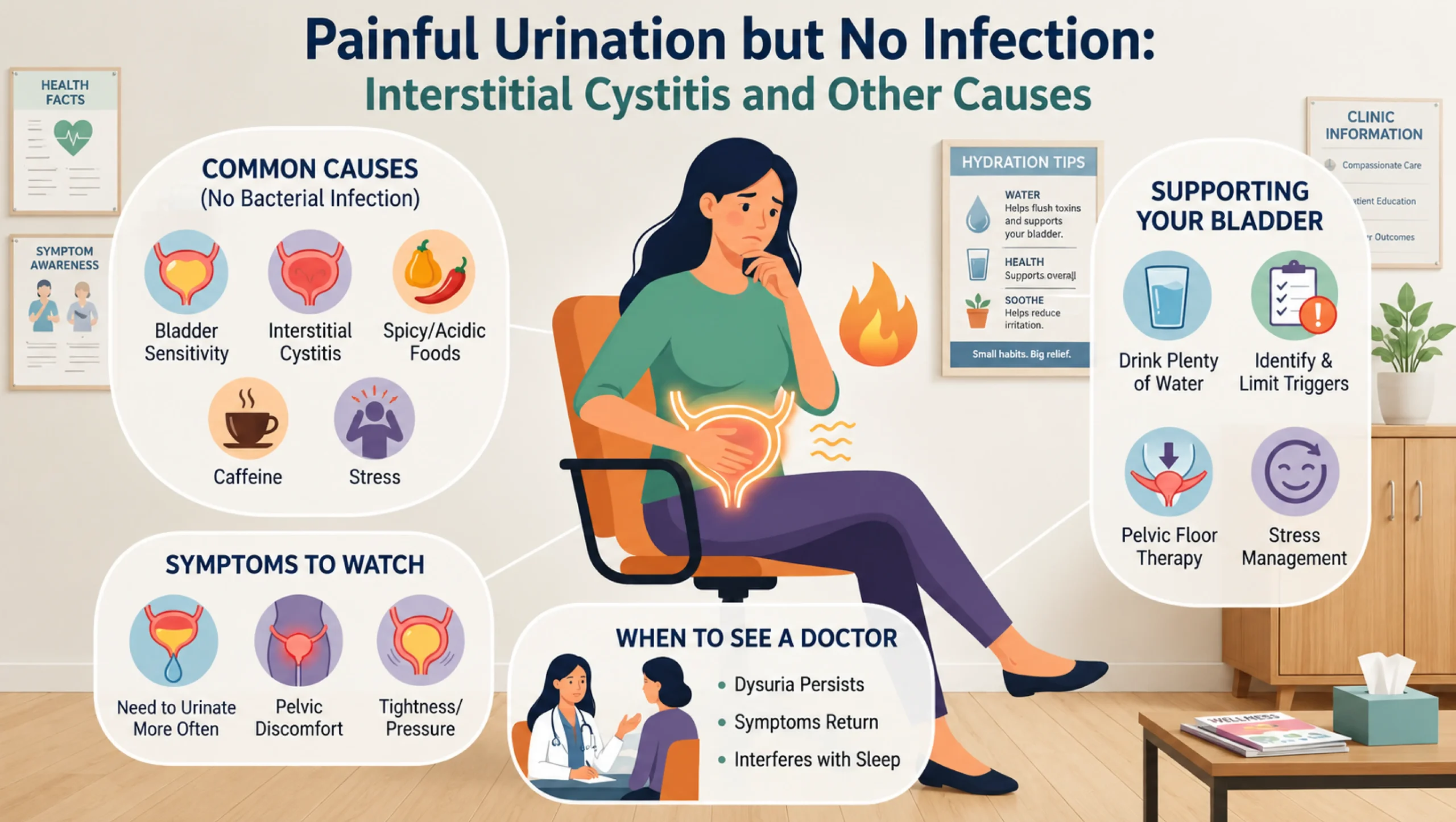
Painful urination without an infection can cause pain, pressure, or discomfort while passing urine, even when urine tests do not show the presence of bacteria. This may occur due to bladder irritation, sensitivity of the urinary tract lining, inflammation, hormonal changes, pelvic floor muscle tension, or certain food and lifestyle triggers. In some cases, conditions such as Interstitial cystitis can be a major underlying cause of these symptoms.
A survey that was done with Indian women indicates that dysuria, which is also known as a burning sensation when passing urine, is one of the most common urinary symptoms reported for women (86.2% as per the National Library of Medicine). Interestingly, in many instances, despite the symptom, there was no laboratory detection of any infection. Symptoms may overlap with those of urinary infections, so correct medical evaluation is key to finding the actual cause.
Research from PubMed Central indicates that almost 20% to 30% of women who have a UTI run the risk of a recurrent infection later. One study of 417 patients resulted in approximately 22.3% being identified as having recurrent urinary tract infections. In addition to urinary pain, some may experience:
Some people may experience different symptoms, or symptoms may appear or disappear at different times. If you experience persistent urinary discomfort, changes in your bladder, and pelvic pain, the best nephrologist in Chennai can help you get to the root cause and provide you with the proper direction for urinary wellness in the long run.
Yes. One potential cause of persistent, non-infectious bladder discomfort is interstitial cystitis, or bladder pain syndrome. This condition may cause:
Doctors aren’t sure what causes interstitial cystitis, but they think it could be due to sensitivity of the bladder lining, inflammation, or nerves.
There are a number of potential explanations for discomfort when urinating in the absence of positive infection tests. The possible causes include:
Over time, the bladder can become more sensitive in certain individuals, particularly those who are triggered by food or beverages or by stress. With proper healthcare, as soon as a patient feels away from their comfort zone, they can access a reliable online pharmacy in Chennai for timely medical assistance and manage their health conveniently.
In some individuals, simple practices or circumstances can make urine more sensitive. Here are some common triggers:
Knowing your individual triggers may help ease the discomfort slowly. Advanced laboratory tests in Chennai also enable regular monitoring and timely diagnosis, which can aid in identifying any health changes and contribute to overall long-term urinary health.
Treatment would focus on the cause, severity of symptoms, and urinary health.
Some people may find that certain foods and beverages make them feel better. Doctors may suggest:
There are some medications that can be helpful:
Not every type of medicine is suitable for everyone and can only be given with medical supervision.
In some cases, physiotherapy or exercises for the pelvic floor can be used to relieve discomfort and tension in the urinary area.
For some individuals, stress may impact the bladder’s sensitivity. Symptoms can be managed with stress reduction, breathing exercises, and a healthy lifestyle. Good early assessment and individual care can make people more comfortable and confident in managing their symptoms.
Simple daily habits may help support bladder wellness and reduce irritation.
|
Habit |
How It May Help |
| Drinking enough water |
Supports healthy urine flow and hydration |
|
Limiting bladder-trigger foods |
May reduce irritation and sensitivity |
| Stress management |
Supports overall bladder comfort |
|
Maintaining healthy bathroom habits |
Helps avoid unnecessary bladder strain |
Additional helpful tips:
Small actions can help with the health and comfort of the bladder in the long term.
Certain lifestyle habits can help promote bladder comfort. Some lifestyle habits may contribute to bladder comfort.
Simple day-to-day practices can make a big difference in maintaining bladder comfort and minimizing irritation. Adequate hydration during the day helps prevent urinary obstruction and can decrease bladder sensitivity.
Regular bathroom habits can help with bladder function; it is also important to avoid holding urine for prolonged periods of time. Certain foods or beverages, like spicy foods and food with too much caffeine or carbonated drinks, may cause discomfort for some people, so it is important to identify and limit personal triggers.
If you have any of the following, you should think about seeing a urologist:
A urologist can assist you in determining the root cause and provide you with the best treatment. At Dr. Mehta’s Hospitals, patients are treated with compassion and patience for their urinary and bladder problems. Their specialized staff at the hospital is dedicated to a comprehensive approach to diagnosis, care, and long-term urinary health.
There are multiple causes of painful urination that occur without infection, such as bladder sensitivity or the presence of interstitial cystitis. Symptoms may be uncomfortable, but they can often be much improved with early medical guidance and support with lifestyle habits.
Maintaining adequate hydration, nutrition, reducing stress, and establishing regular bathroom routines can help with ongoing urinary wellness. When symptoms persist or impact your life, an experienced urologist can help you get the care and reassurance you need. Contact our expert doctors right now if you are facing the symptoms.
Yes. Even if there is no infection, bladder irritation, interstitial cystitis, dehydration, or lifestyle factors can cause discomfort.
2. What is interstitial cystitis?
Interstitial cystitis is a bladder-related condition that can lead to bladder pressure, pelvic discomfort, and frequent urination (no infection).
3. Can stress affect bladder discomfort?
Yes. In some people, stress can lead to an increased sensitivity of the bladder and muscle tension.
4. Which foods may irritate the bladder?
In some individuals, spicy foods, overconsumption of caffeine, foods that are high in acid, and carbonated drinks can cause discomfort.
5. How is painful urination without infection diagnosed?
Urine samples, scans, and an evaluation of the bladder might be performed to determine the exact cause.
6. Can drinking more water help bladder comfort?
Drinking water keeps your urine flowing normally and can help lessen any irritation in some instances.
7. Is interstitial cystitis treatable?
Many people can successfully control symptoms using medications, medical advice, and lifestyle changes.
8. When should I see a doctor for painful urination?
If symptoms persist, if they occur regularly, or if symptoms affect your daily activities or sleep, medical advice should be sought.
9. Can bladder discomfort improve with diet changes?
Yes. Avoiding foods or beverages that irritate can help some people improve their symptoms.
10. Which doctor should I consult for ongoing bladder discomfort?
A urologist can assist with assessing the urinary symptoms and with planning the best possible treatment and lifestyle support.