Women’s health is closely linked to understanding conditions that may not show symptoms in their early stages. HPV infection is a common condition that is often not well understood.
Learning about HPV infection in women, including its symptoms, testing, and prevention, can help you make informed choices about your health. The good news is that HPV can be effectively managed with awareness, regular check-ups, and preventive care.
Human Papillomavirus (HPV) refers to a group of viruses that can infect the skin and certain areas of the body, including the reproductive system.
In India, HPV infection is quite common, with around 5% to 6.6% of women in the general population having cervical HPV at any given time, as per PubMed Central.
In women, HPV is closely associated with the cervix, although many types are harmless and may resolve on their own.
HPV can present in different forms:
It is important to understand that HPV is widespread, and many women may experience it without realizing it. Choosing a trusted care provider, such as the best gynecology hospital in Chennai, can also ensure accurate testing and timely guidance for your health.
Understanding HPV helps promote timely awareness and care. HPV often has no visible symptoms; therefore, regular screening is essential.
Any HPV-related changes can be effectively monitored and managed when detected early. That is why the importance of awareness and regular check-ups is highly promoted.
Being informed also helps reduce unnecessary worry, as most HPV infections do not lead to serious concerns and may resolve naturally.
Yes, HPV infection in women can be completely asymptomatic. Many women may not experience any visible signs or discomfort, especially in the early stages.
This means:
Because HPV can remain unnoticed, regular screening becomes important. It helps detect any changes early, even when you feel completely healthy. Having access to timely support, including 24/7 immediate care services in Chennai, ensures that any urgent concerns or symptoms are addressed without delay, improving overall outcomes and peace of mind.
HPV may not present symptoms but can be detected through regular screening.
Common methods include:
These tests are simple, quick, and usually part of regular women’s health check-ups. Doctors may recommend these tests based on age, medical history, and individual needs.
Screening is a key part of preventive care. Women tend to be recommended to start screening at a specific age and maintain regularity.
In general, the study published by the National Medical Journal of India has revealed that approximately 37.3 percent of the participants (537 out of 1439) had HPV infection, and the most common type of HPV was 11.
General guidance includes:
Even if you feel well, regular check-ups help provide reassurance and support long-term health. Choosing dependable diagnostic solutions, including in-depth lab tests in Chennai, can help with early diagnosis and give you an idea of your overall health condition.
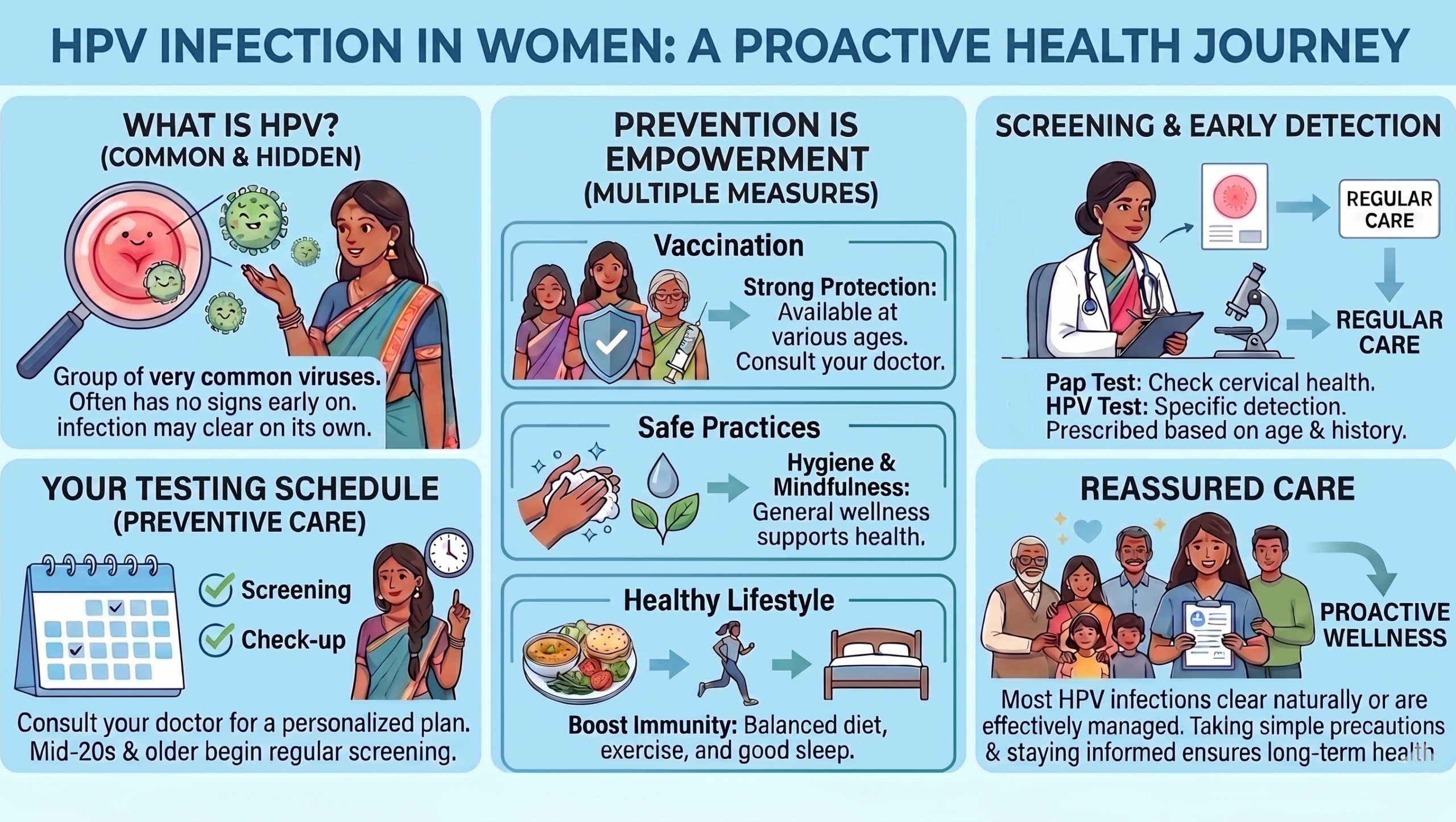
Prevention plays an important role in reducing HPV risk and supporting overall reproductive health.
Regular screening:
Regular screening tests, such as Pap smears, are significant in identifying early changes in cervical health. Even without symptoms, these tests help detect concerns early. Regular check-ups are reassuring, and they enable proactive guidance, which enables women to be proactive and confident about their long-term health.
Vaccination:
HPV vaccines are accessible and can protect against common types of the virus. They are usually recommended at a younger age but may also be advised later based on individual health needs. Consulting a doctor can help you understand the right time and suitability, ensuring you receive the most benefit from vaccination.
Safe practices:
Maintaining good personal health and hygiene can support prevention. Taking simple precautions and staying informed about reproductive health can help reduce the chances of infection. Open awareness and responsible choices play an important role in maintaining overall well-being and supporting long-term health.
Healthy lifestyle:
A balanced lifestyle , including proper nutrition, exercise, and adequate sleep can help the body respond better to infections. The body can better react to viruses, including HPV, with a strong immune system. Small, consistent habits can contribute to overall wellness and long-term health support.
These measures can support you in remaining active and hopeful of your well-being. Access to comprehensive therapy services in Chennai, including physiotherapy and rehabilitation, can further aid recovery, improve mobility, and enhance your overall quality of life.
Understanding HPV infection in women is an important step toward long-term health and wellness.
HPV is widespread and frequently asymptomatic, but routine screening and preventive measures can have a significant impact. The encouraging aspect is that most of the issues can be addressed effectively when they are identified early and well advised.
Being aware, visiting your doctor periodically, and taking practical preventive measures will make you feel secure and supported in your health care. Contact your doctor to schedule a screening and take a proactive step toward your health.
Yes, HPV is quite common, and many women may experience it at some point without noticeable symptoms.
2. Can HPV go away on its own?
In many cases, the body may clear the infection naturally over time.
3. Is HPV testing painful?
HPV testing is usually quick and simple, and most women find it comfortable.
4. How often should I get screened?
Screening frequency depends on your age and medical history. Your doctor can guide you on the appropriate schedule.
5. Can HPV be completely prevented?
While prevention methods can reduce risk, regular screening remains important for early detection.
6. Should I worry if I have HPV?
Most HPV infections are manageable. Regular check-ups and medical guidance can help you stay reassured.
7. Is HPV linked to cervical cancer?
Yes, certain high-risk types of HPV are strongly linked to cervical cancer. However, with regular screening and early detection, these changes can be identified and managed effectively.
HPV vaccination is typically recommended from ages 9–14 for best protection, but it can also be given later based on individual health needs and medical advice.
A Pap smear checks for abnormal cervical cell changes, while an HPV test detects the presence of high-risk HPV types. Both are important for comprehensive cervical health screening.
Most women do not experience any symptoms in the early stages. In some cases, HPV may cause genital warts or abnormal cervical cell changes, which are usually detected through screening rather than symptoms.