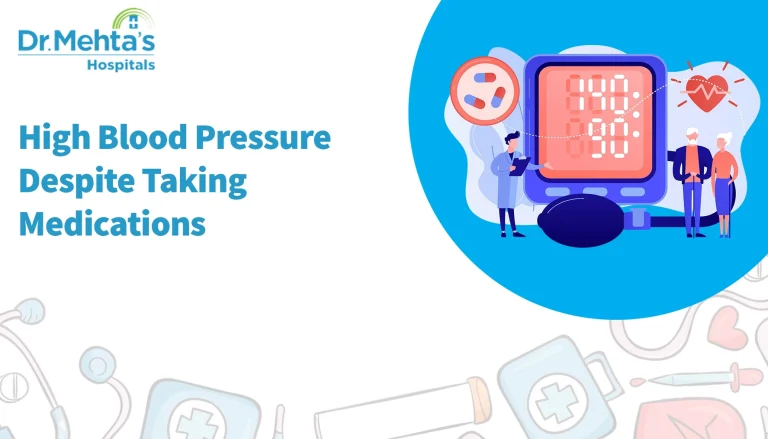
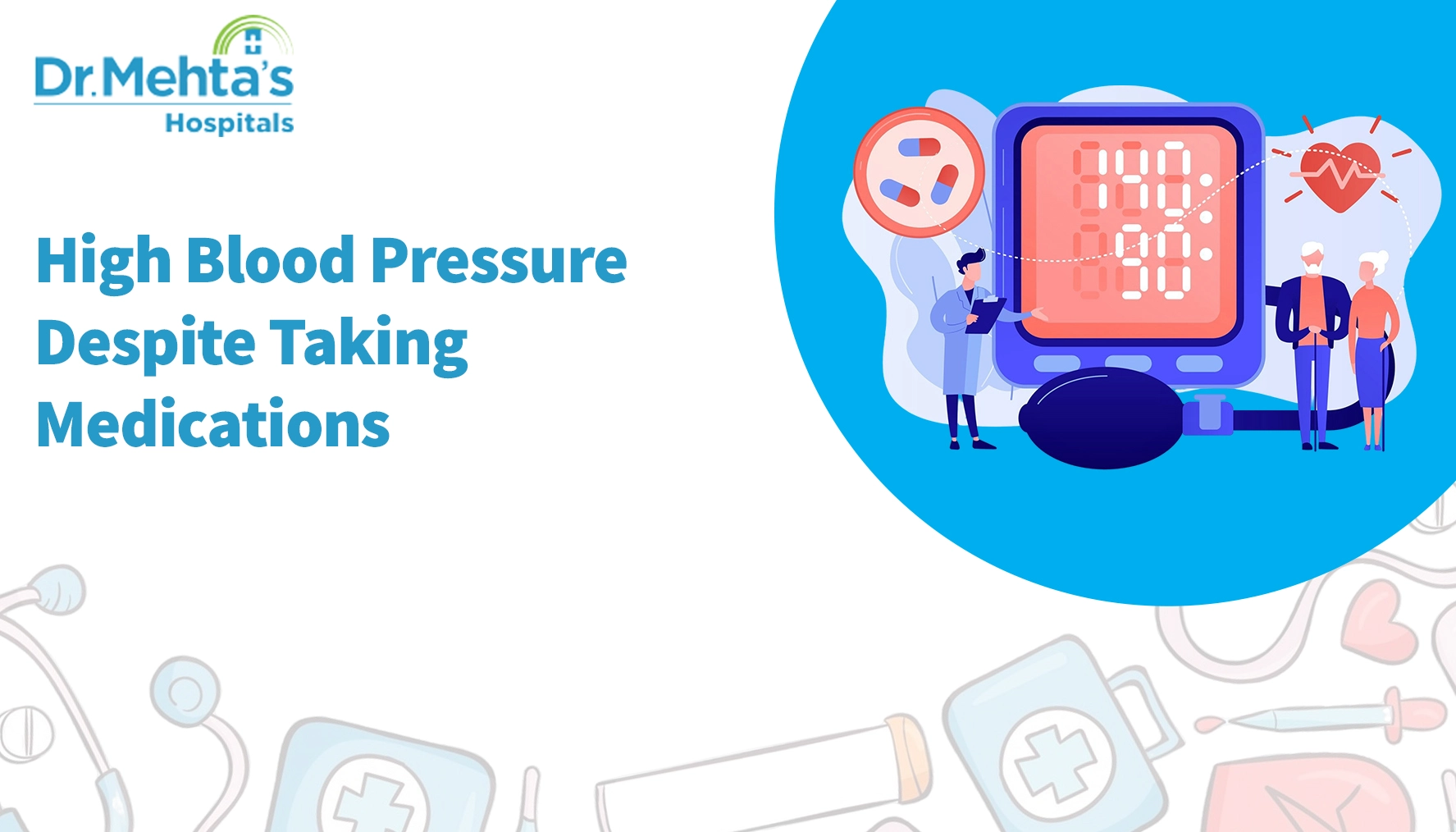
Blood pressure can stay high despite medicines because of missed doses, an unsuitable dose or combination, hidden salt, interacting medicines, or an undiagnosed condition such as kidney disease or sleep apnea. This does not mean your treatment has failed.
Often, one small correction, such as a dose change or better timing, brings the numbers down. Many people on treatment face this frustration, and it is usually fixable once the reason is found. This guide explains the common causes, symptoms, practical steps and when to see a doctor.
High blood pressure despite medication usually comes down to how, when, or whether the medicine is taken, other medicines and habits, or a hidden condition pushing pressure up. As reported by WHO, 1.4 billion people lived with hypertension in 2024, yet only about 1 in 5 had it under control, so you are far from alone.
The common reasons include:
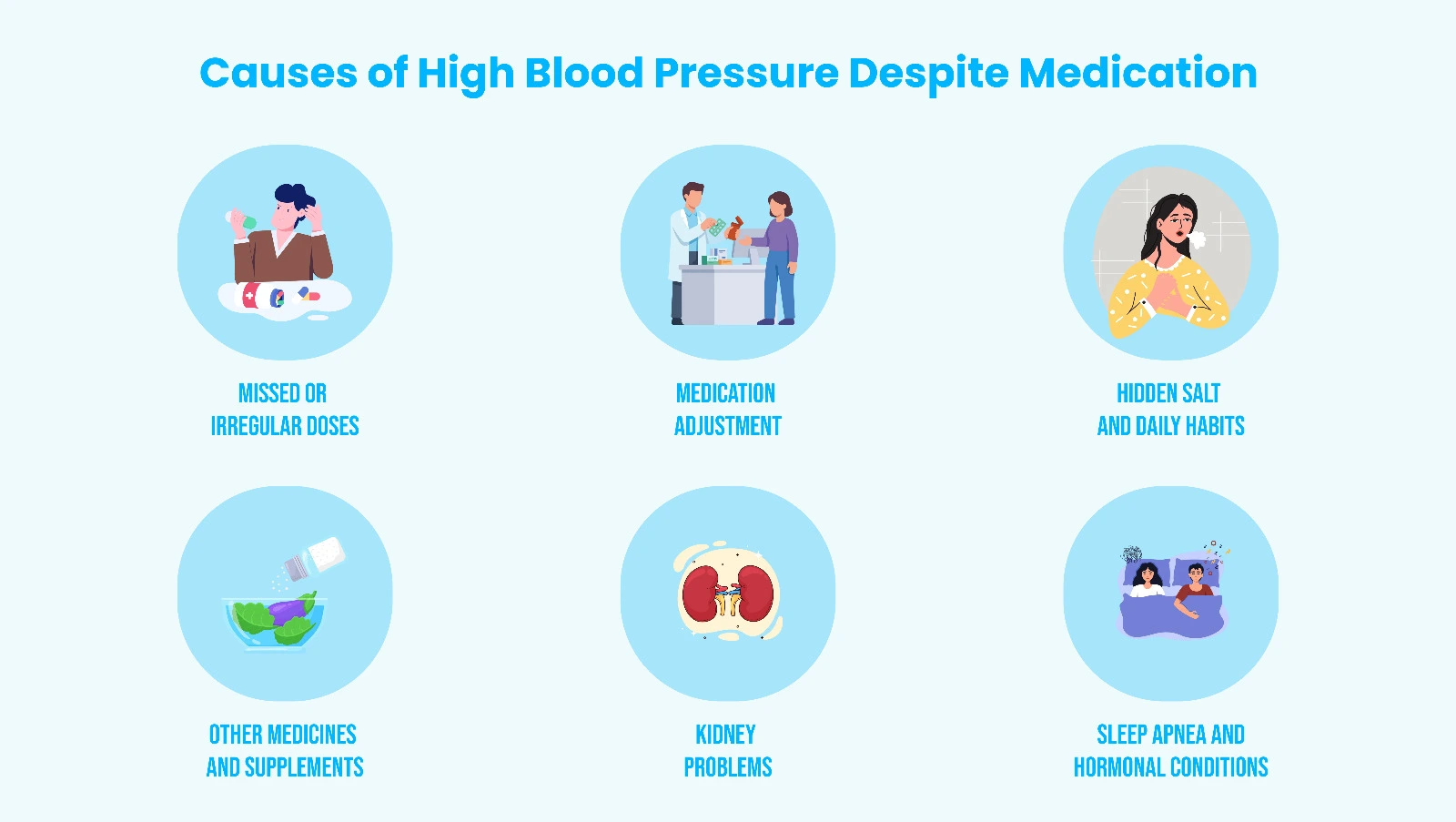
When blood pressure stays above target despite three medicines of different types, usually including a diuretic, taken at the right doses, doctors call it resistant hypertension.
It is less common than it seems, because many cases are only apparent resistance caused by missed doses or wrong readings. It is a signal for a closer look, not a sign that you have failed.
Uncontrolled high blood pressure often causes no symptoms at all. Most people live with high blood pressure without symptoms until a routine check or a complication reveals it. When pressure climbs very high, you may notice:
Small, steady steps help your treatment work better:
Bring your reading diary and medicine strips to your next appointment so your doctor can see the full picture. If your pressure has stayed high for years, opting for the best cardiac health checkup package in Chennai can also show how your heart is coping.
Doctors usually work through a few focused checks:
Speak to your doctor if your home readings stay above your target for a week or two despite regular medicines, or barely change after a dose increase or a new tablet. Swollen feet or face, foamy urine, loud snoring with daytime sleepiness, or dizziness and fainting after a medicine change also need a check.
Get emergency care if your reading crosses 180/120 mmHg along with chest pain, breathlessness, sudden weakness or numbness, vision changes or trouble speaking.
A top cardiac hospital can help assess why your readings remain high, review your medicines and look for hidden causes. As a trusted heart specialist hospital in Chennai, Dr. Mehta’s Hospitals offers appropriate evaluation and hypertension treatment.
High blood pressure despite medicines is a signal to look deeper, not a sign of failure. The cause is often something fixable, such as a missed dose, hidden salt, an interfering painkiller or an undiagnosed kidney or sleep problem.
Keep a record of your home readings, take your medicines regularly and speak to your doctor before changing anything. If your numbers are not coming down, a cardiology hospital in Chennai can trace the cause and plan the next step. A best multispeciality hospital in Chennai brings cardiologists and other specialists together to help you control it.
No, extra tablets can drop your pressure too low and cause dizziness or falls. Call your doctor, who can advise a safe adjustment.
2. Does the time of day I take my BP medicine matter?
Taking it at the same time every day matters most, though your doctor may suggest morning or night for certain medicines.
3. Will I need BP medicines for life?
Many people need long-term treatment, but doses can sometimes be reduced after sustained lifestyle changes. Never stop tablets without medical advice.
4. Which tests can find why my blood pressure stays high?
Doctors may advise blood tests for kidney function, electrolytes, thyroid and hormones, a urine test, an ECG, an echocardiogram or a sleep study.
5. Why is my blood pressure higher at the hospital than at home?
Anxiety in a clinic can raise readings, known as the white coat effect. Home or 24-hour monitoring shows your true everyday pressure.
6. Which is better, an upper-arm or a wrist BP monitor?
A validated upper-arm monitor is generally more reliable, because wrist devices are easily thrown off by arm position.
7. What should I avoid before measuring my blood pressure?
Avoid tea, coffee, smoking and exercise for at least 30 minutes, empty your bladder and rest quietly for five minutes first.
8. Can diabetes make blood pressure harder to control?
Yes, diabetes and high blood pressure often occur together and strain the same blood vessels, so closer monitoring may be needed.
9. Is it normal for blood pressure to change through the day?
Yes, pressure naturally dips during sleep and rises on waking and during activity, but persistently high readings still need attention.
10. Can a BP medicine stop working after some years?
Medicines rarely wear off, but your needs can change with age, weight gain, kidney function or new medicines, so rising readings deserve a review.