Chronic kidney disease (CKD) occurs when the kidneys gradually become less effective at removing waste and excess fluid from the bloodstream. It can progress silently, so many people may not realise there is a problem until kidney function has already declined.
CKD is classified into five stages of kidney disease, based mainly on the estimated glomerular filtration rate (eGFR), which measures how well the kidneys filter blood.
These stages indicate how much kidney function has declined and help doctors determine the appropriate level of monitoring, treatment, and care a person may need.
Chronic kidney disease is commonly divided into five stages based primarily on estimated glomerular filtration rate (eGFR), which indicates how effectively the kidneys filter blood. Here are the five stages of kidney disease:
|
Stage of Kidney Function |
eGFR | Kidney Function | What It Means |
| Stage 1 | 90+ | Normal or high |
Signs of kidney damage are present, with normal filtration. |
|
Stage 2 |
60–89 | Mildly reduced | Kidney damage is present with mild loss of function. |
| Stage 3a | 45–59 | Mild to moderately reduced |
Mild to moderate loss of kidney function. |
|
Stage 3b |
30–44 | Moderately to severely reduced | Moderate to severe loss of kidney function. |
| Stage 4 | 15–29 | Severely reduced |
Severe loss of kidney function. |
|
Stage 5 |
Below 15 | Kidney failure |
Kidney failure; dialysis or transplant may be considered. |
A study published in the Indian Journal of Nephrology and indexed by the National Library of Medicine reported that, in India too, diabetes and hypertension together account for 40–60% of CKD cases, highlighting the importance of managing these conditions to protect kidney health.
Kidney disease can remain silent in its early stages, with symptoms becoming more noticeable as kidney function declines.
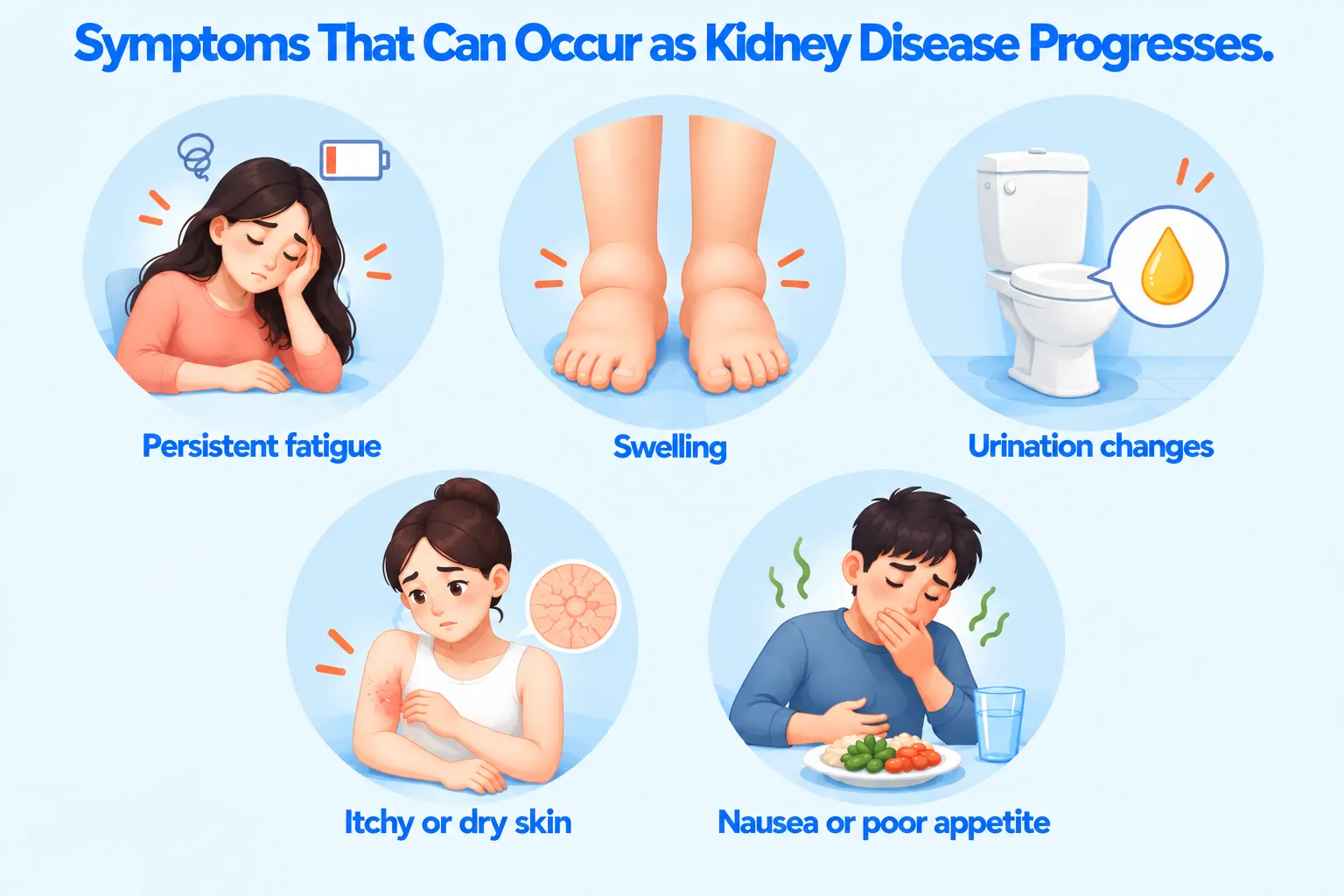
Recognising these early signs of kidney problems and seeking medical advice promptly can help determine the appropriate CKD treatment and support kidney health.
Doctors determine the stage of kidney disease mainly through blood and urine tests. A blood test measures creatinine, which helps calculate the estimated glomerular filtration rate (eGFR) and shows how well the kidneys are filtering waste. A urine test checks for albumin, which can indicate kidney damage.
Together, these test results help your doctor assess kidney function and determine the stage of CKD. Regular kidney checkups can also help you stay on top of your condition and understand the lifestyle and dietary changes that may support kidney health.
For example, your doctor can guide you on questions such as how much protein is safe with CKD.
A kidney checkup at Dr. Mehta’s Hospitals can help you get personalized guidance based on your kidney function and overall health.
If symptoms persist for more than a few days or keep returning, especially if they are getting worse, it is important to seek medical advice rather than waiting for them to disappear. Early CKD may have few or no symptoms, so people with diabetes, high blood pressure, or other kidney risk factors should also discuss regular testing with a doctor.
If these symptoms continue, visit a nephrologist:
Consult with our top nephrologist in Chennai, who can evaluate your symptoms, recommend appropriate kidney tests, and help identify kidney problems early.
A kidney disease diagnosis does not mean you have to face the future with uncertainty. With timely evaluation, regular monitoring, and appropriate treatment, CKD can often be managed and its progression slowed.
Access to experienced specialists, advanced diagnostic facilities, and personalised treatment plans can make managing CKD more structured and effective. The best multispeciality hospital in Chennai can bring different areas of medical expertise together, helping patients receive coordinated care when needed.
Our kidney specialists help patients understand their condition, explore suitable treatment options, and take informed steps towards better long-term kidney health.
The five stages range from Stage 1, with mild kidney damage, to Stage 5, which indicates kidney failure.
2. Can kidney disease be present without symptoms?
Yes, early-stage CKD often causes no noticeable symptoms.
3. Which test determines the stage of kidney disease?
The eGFR blood test is the main measure used to determine CKD stage.
4. What eGFR indicates Stage 3 kidney disease?
An eGFR of 30–59 mL/min/1.73 m² indicates Stage 3 CKD, divided into 3a and 3b.
5. Can kidney disease progress from one stage to another?
Yes, CKD can progress over time, although appropriate treatment may help slow its progression.
6. Is Stage 2 kidney disease serious?
Stage 2 indicates mild reduction in kidney function alongside evidence of kidney damage and requires monitoring.
7. What are common symptoms of advanced kidney disease?
Swelling, fatigue, changes in urination, itching, nausea, and poor appetite can occur as CKD advances.
8. Can diabetes cause kidney disease?
Yes, prolonged high blood sugar can damage the kidneys and contribute to CKD.
9. Can kidney disease be treated?
Yes, treatment can manage CKD, address its underlying cause, and potentially slow further kidney damage.
10. When should I see a kidney specialist?
See a nephrologist if kidney-related symptoms persist, worsen, or your tests show reduced kidney function.