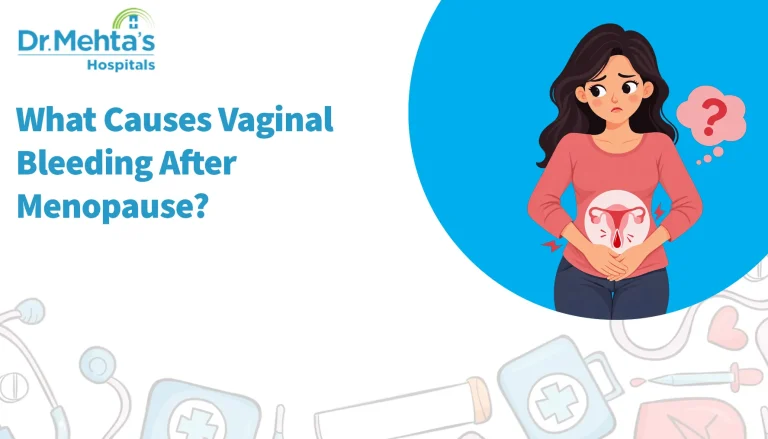
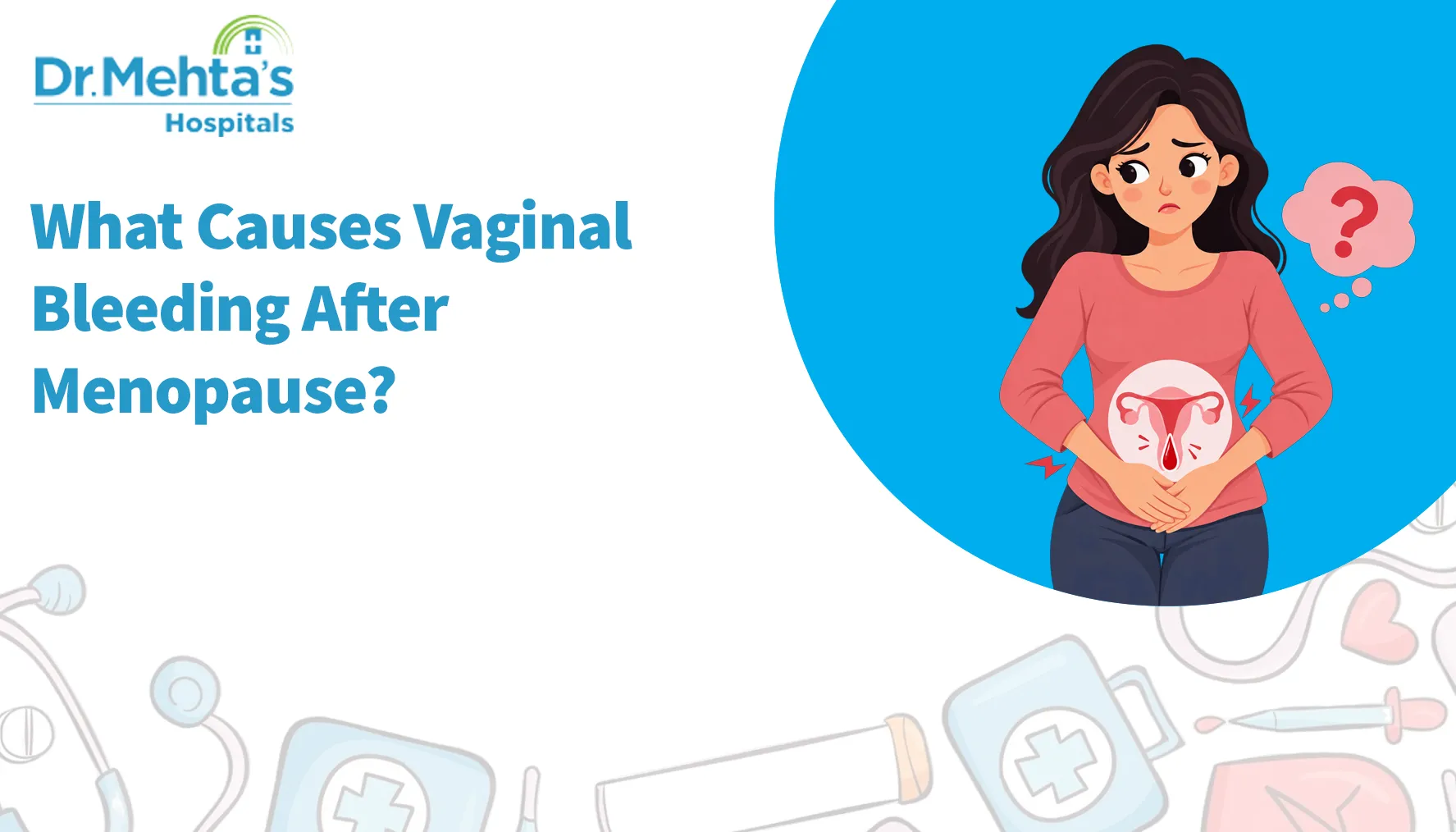
Vaginal bleeding after menopause can understandably make you concerned, but there is no need to panic or assume the worst. Once you have gone 12 months without a period, any bleeding afterwards is considered postmenopausal bleeding.
It may appear as light spotting, pink or brown discharge, or heavier bleeding. Several conditions can cause it, and many are manageable with appropriate treatment. At the same time, it is important not to ignore the symptom.
Knowing the possible causes and when to seek medical attention can help you stay informed, get the right care and feel more confident about what to do next.
No, vaginal bleeding after menopause is not considered normal and should be evaluated by a gynecologist. Any vaginal bleeding after a woman has gone through menopause could need medical evaluation.
Menopause is confirmed after 12 consecutive months without a menstrual period. Bleeding afterwards may have several causes, including vaginal tissue changes, uterine or cervical growths, or changes in the uterine lining.
Some cases can also be linked to cancer, which is why it is important not to overlook the symptom. Consult with our expert gynecologists in Vellapanchavadi if you experience postmenopausal bleeding.
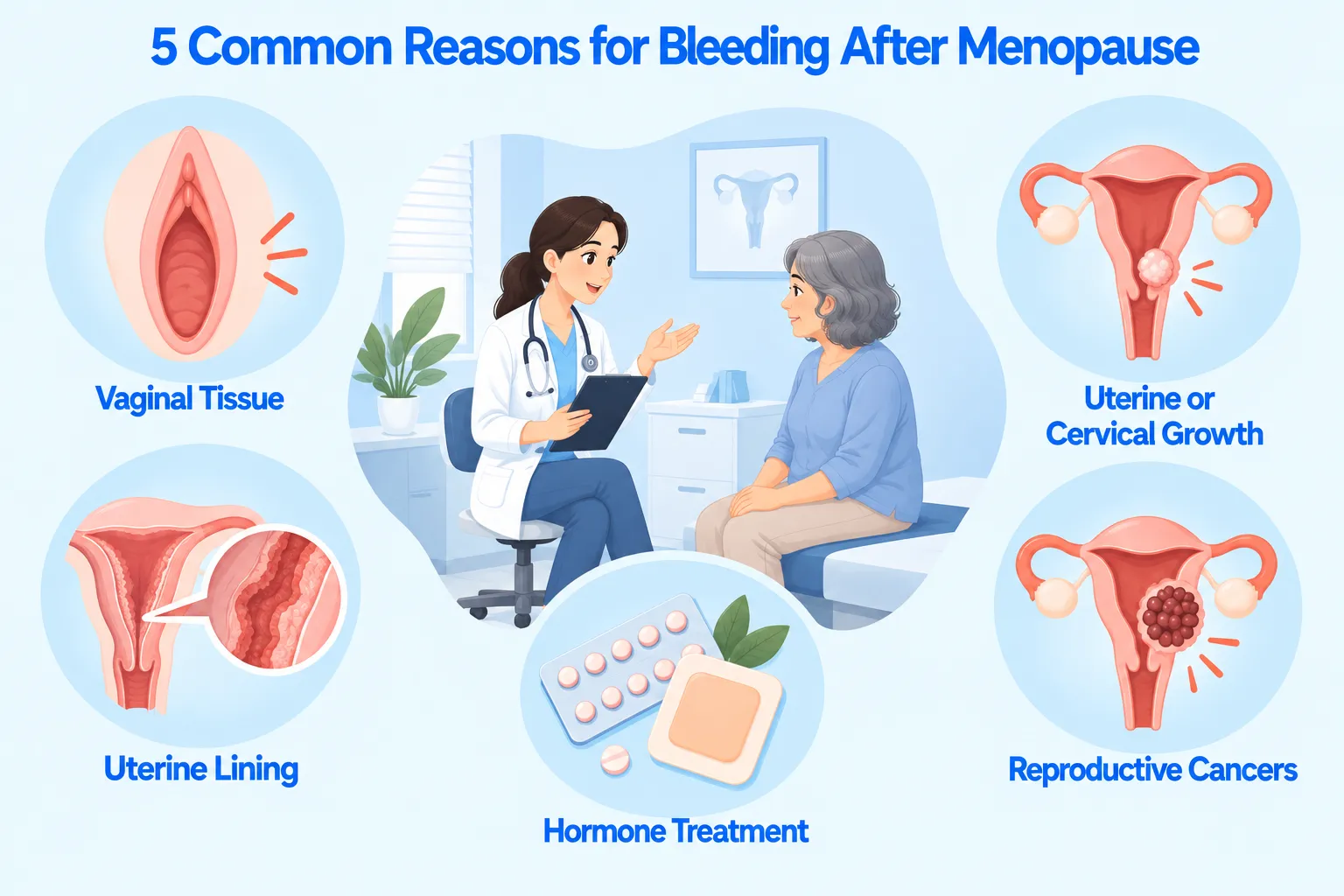
Lower estrogen levels after menopause can make vaginal tissues thinner, drier and more sensitive, causing irritation, discomfort or light bleeding, especially after sexual activity. Treatment may include moisturisers, lubricants or other menopause treatment options.
Uterine or cervical polyps are small growths that may cause bleeding after menopause and are usually non-cancerous. Depending on their size, location and symptoms, they may need monitoring or removal.
After menopause, the uterine lining can become abnormally thick, a condition called endometrial hyperplasia, which may cause bleeding or spotting. Depending on the type, it may require treatment or closer monitoring.
HRT can sometimes cause spotting or bleeding, especially during the first few months or after a dosage change. Hormonal imbalances in women can also affect the uterine lining and alter bleeding patterns. Any new, persistent or unusual bleeding during HRT should be evaluated by a doctor.
Postmenopausal bleeding occurs in up to 10% of women aged over 55 years. While it can have several causes, it may sometimes be linked to cancers of the uterus, cervix or vagina, particularly endometrial cancer. Any bleeding after menopause should be evaluated by a doctor.
Vaginal bleeding after menopause is diagnosed by identifying where the bleeding is coming from and what is causing it. The evaluation usually begins with a medical and medication history, followed by a pelvic examination.
The colour, amount and type of discharge may also be noted, especially when understanding the types of vaginal discharge and what they mean.
A transvaginal ultrasound can examine the uterus and measure the thickness of the uterine lining. If the lining is thicker than expected or bleeding continues, an endometrial biopsy or hysteroscopy may be recommended for further evaluation.
Treatment for bleeding after menopause depends on what is causing it. There is no single abnormal vaginal bleeding treatment that works for everyone.
Alongside appropriate treatment, knowing how to take care of vaginal health can help support comfort and reduce irritation.
You should arrange a gynecology appointment within a few days if you notice any bleeding after menopause, even if it is only light spotting. Watch for:
Consult with our top Obstetrics and Gynecology specialists in Chennai if the bleeding is heavy, persistent or accompanied by other symptoms.
Bleeding after menopause should not be ignored, even when it appears as light spotting. It can result from changes in vaginal tissues, polyps, hormone treatment or conditions affecting the uterus, so finding the cause is an important step towards appropriate care.
At Dr. Mehta’s Hospitals, we offer comprehensive gynecological care for women experiencing postmenopausal bleeding. With the support of a best multispeciality hospital in Chennai, you can access coordinated care under one roof.
Yes, some causes are benign, but any postmenopausal bleeding should still be evaluated.
2. What is the most common cause of bleeding after menopause?
Vaginal or endometrial tissue thinning caused by reduced estrogen is a common cause.
3. Can stress cause bleeding after menopause?
Stress is not considered a typical cause of vaginal bleeding after menopause.
4. Can vaginal dryness cause bleeding after menopause?
Yes, thinner and drier vaginal tissues can become irritated and bleed, particularly after sexual activity.
5. Can polyps cause bleeding after menopause?
Yes, polyps in the uterus or cervix can cause unexpected bleeding or spotting.
6. Can hormone replacement therapy cause postmenopausal bleeding?
Yes, hormone replacement therapy can cause spotting or bleeding, especially after starting or changing treatment.
7. Does bleeding after menopause always mean cancer?
No, most cases have a benign cause, but cancer must be ruled out through proper evaluation.
8. What tests are used for postmenopausal bleeding?
Common tests include a pelvic examination, transvaginal ultrasound and, when needed, an endometrial biopsy.
9. Is light spotting after menopause something to worry about?
Yes, even light spotting after menopause should be medically evaluated to identify its cause.
10. How long after menopause is bleeding considered abnormal?
Any vaginal bleeding occurring after 12 consecutive months without a menstrual period is considered postmenopausal bleeding.