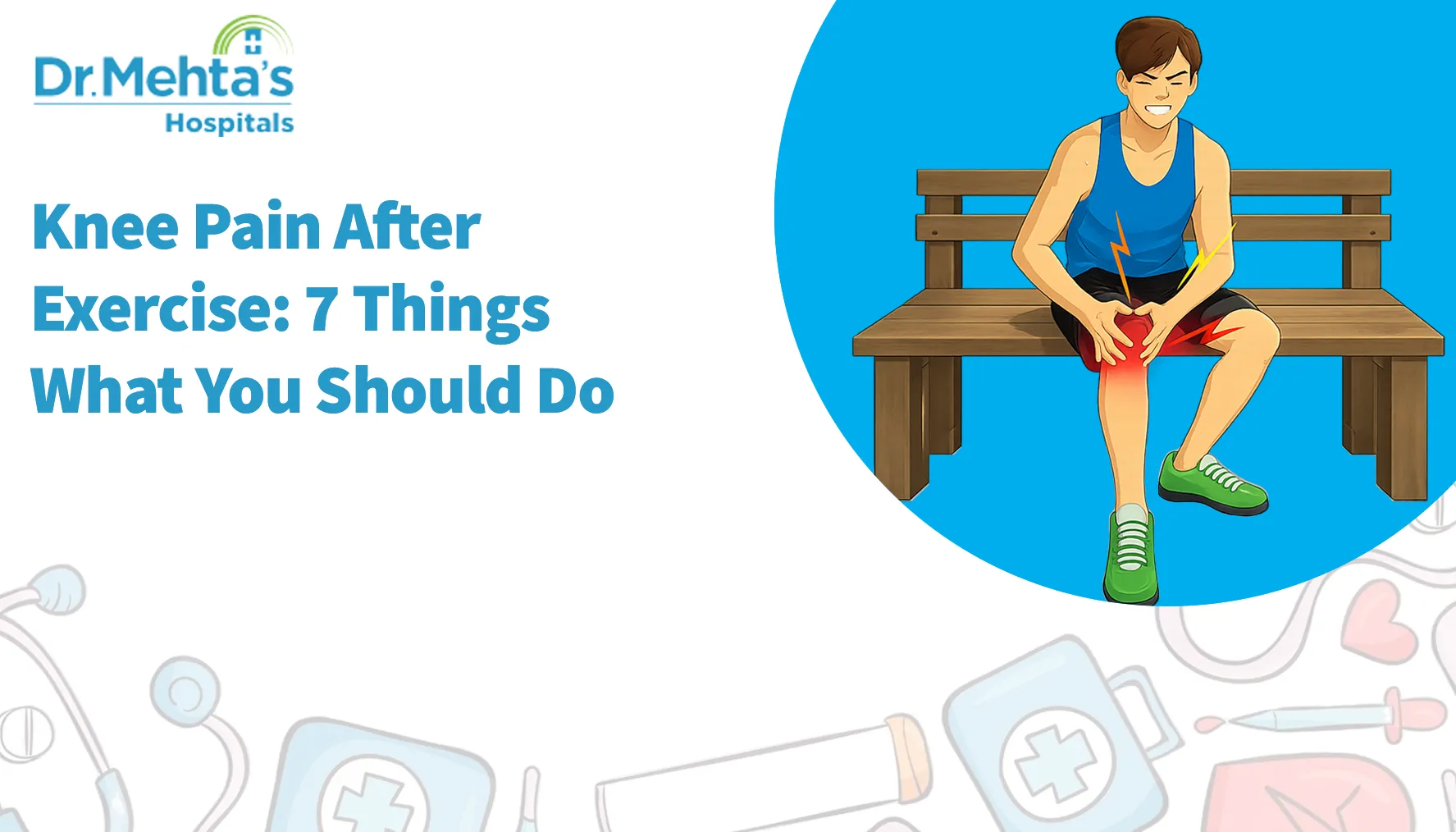
Have you ever felt a sharp pain in your knee after finishing a workout or even a simple walk?
While mild muscle soreness is common after exercise, knee pain is not something you should ignore. It can happen due to overuse, poor exercise form, weak muscles, or wearing the wrong footwear. The pain may start as a small discomfort but can become worse if left untreated. The good news is that many cases of knee pain can improve with the right care and a few simple changes to your routine.
In this blog, we’ll share seven practical things you can do to ease knee pain after exercise and know when it’s time to see a doctor.
Knee pain after exercise usually happens when the muscles, tendons, or joints are placed under more stress than they can handle. This can happen if you increase your workout intensity too quickly, use the wrong exercise technique, skip your warm-up, or wear footwear that does not support your feet properly.
Weak muscles around the hips and thighs can also put extra pressure on your knees during movement. In some cases, the pain may be caused by an underlying condition such as tendon irritation or a ligament injury. Understanding the cause is the first step towards treating the pain and preventing it from returning.
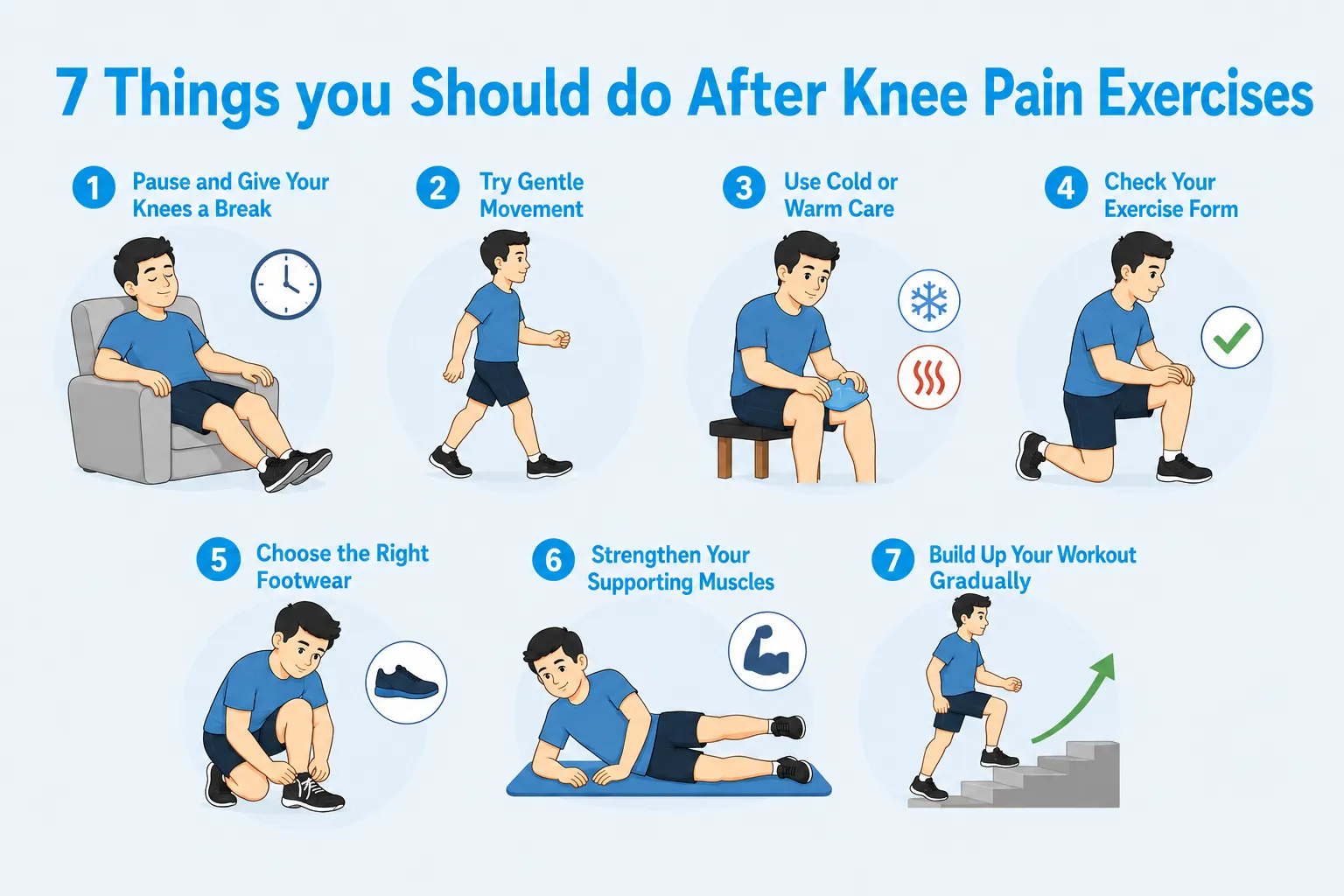
The first thing you should do is stop exercising and give your knees time to recover. Continuing to work out despite the pain can put extra strain on the joint and make the problem worse. Rest for a day or two and avoid activities that increase your discomfort. If the pain does not improve or keeps coming back, consult an ortho doctor to understand the cause and get the right advice.
If your knee pain is mild, avoid staying completely still for long periods. Gentle movements like short walks or light stretching can help reduce stiffness, improve blood flow, and keep the joint flexible. However, stop immediately if the pain becomes sharper or more intense, as this could be a sign of a more serious injury.
If your knee becomes swollen or starts hurting soon after exercise, apply an ice pack for 15–20 minutes to help reduce pain and swelling. If your knee feels stiff without swelling, a warm compress can help relax the muscles and improve movement. These simple methods are commonly used as part of knee pain treatment for mild symptoms. If the pain continues, it’s important to see a doctor.
Using the wrong exercise technique places extra stress on your knees and increases the risk of pain or injury. Pay attention to your posture, body alignment, and how you perform each movement. If you’re unsure about your form, ask a qualified trainer to guide you. Correcting your technique helps protect your knees and makes your workouts safer and more effective.
Wearing the right shoes gives your knees better support and reduces the impact on your joints during exercise. Replace worn-out footwear, as it loses the cushioning needed to absorb shock. Choose shoes that match your activity, whether you’re walking, running, or training. Well-fitted footwear helps you move comfortably and lowers unnecessary stress on your knees.
Strong thigh, hip, and calf muscles help support your knees and keep the joint stable during movement. Include strength exercises regularly, as the benefits of strength training include better knee support and improved joint stability. Better muscle support reduces pressure on your knees and improves balance and control. Start with exercises that match your fitness level and increase the intensity gradually.
Increasing the intensity of your workouts too quickly places unnecessary stress on your knees and raises the risk of pain and overuse injuries. Give your body enough time to adapt by increasing your workout duration, weight, or intensity in small steps.
Taking a gradual approach helps protect your joints and builds long-term strength. If you’re following home knee pain exercises for seniors, increasing your activity slowly helps prevent unnecessary stress on the joints. If you need expert guidance on knee care in Chennai, consult an orthopedic specialist before returning to high-impact activities.
Not all knee pain goes away with rest. If your symptoms persist or become worse, it’s important to seek medical attention instead of delaying treatment.
For an accurate diagnosis and advanced sports injury treatment, visit the Best orthopedic hospital in Velappanchavadi as early treatment can help prevent further joint damage.
Knee pain after exercise should never be ignored, especially if it keeps coming back or affects your daily activities. Simple steps like resting, improving your exercise form, wearing the right footwear, and strengthening your muscles can often help prevent the problem from getting worse. However, if the pain is severe or does not improve, getting the right medical care is important.
At Dr. Mehta’s Hospitals, our experienced orthopedic specialists provide accurate diagnosis and personalized treatment to help you recover safely and return to an active lifestyle. As a leading multispeciality hospital in Chennai, we are committed to delivering expert care with compassion, helping you move with confidence again.
Mild muscle soreness is normal, but sharp or persistent knee pain should be evaluated.
Stop the activity immediately and avoid movements that make the pain worse.
Overuse, poor exercise form, weak muscles, and improper footwear are some of the most common causes.
Yes, incorrect technique places extra stress on the knee joint and increases the risk of injury.
Yes, unsupportive footwear increases pressure on your knees during exercise.
Strengthening your thighs, hips, glutes, and calves improves knee stability.
Seek medical care if the pain is severe, lasts for several days, or affects your ability to walk.
Gentle walking may reduce stiffness if it does not increase your pain.
Increase your workout gradually, maintain proper exercise form, and choose footwear that supports your knees.
Dr. Mehta’s Hospitals offers expert diagnosis and personalised treatment for knee pain, sports injuries, and a wide range of orthopedic conditions.