Exercise is one of the best ways to keep your body active, improve strength, and support overall health. However, some people may notice knee pain after exercise, which can make everyday movements like walking, climbing stairs, or bending the knee uncomfortable. In many cases, mild discomfort after a workout is a normal response as your body adjusts to physical activity.
The knee is a complex joint that supports body weight and movement, which means it experiences pressure during activities like running, jumping, or sports. Understanding the difference between normal soreness and pain that needs attention is important for protecting your joint health. In this blog, we will explore the common causes, symptoms, treatment options, and prevention tips for managing knee pain after exercise.
Knees can hurt after exercise when the joint experiences more pressure than it can comfortably handle. During activities like running, jumping, squats, or sports, the knee absorbs impact with support from muscles, ligaments, tendons, and cartilage. Sudden increases in workout intensity, improper technique, weak muscles, or limited recovery time can place extra stress on the knee.
In many cases, knee discomfort is caused by overuse, muscle imbalance, or joint irritation. A study published in the Journal of Clinical Orthopaedics and Trauma found that strengthening the muscles supporting the knee may help improve function and reduce activity-related anterior knee pain. Persistent pain or discomfort that affects movement should not be ignored. Identifying the cause early and getting the right care supports recovery and prevents further strain.
Yes, mild knee pain after exercise can be normal, especially after a new workout, increased intensity, or physical activity after a long break. The muscles and tissues around the knee may need time to adapt, which can cause temporary soreness or stiffness.
However, knee pain that is sharp, keeps returning, causes swelling, or makes daily movements difficult may indicate an underlying concern. Factors such as overtraining, incorrect exercise techniques, muscle weakness, or previous injuries can increase stress on the knee joint.
If knee pain continues despite rest and basic care, consulting a knee specialist can help identify the cause and provide the right treatment.
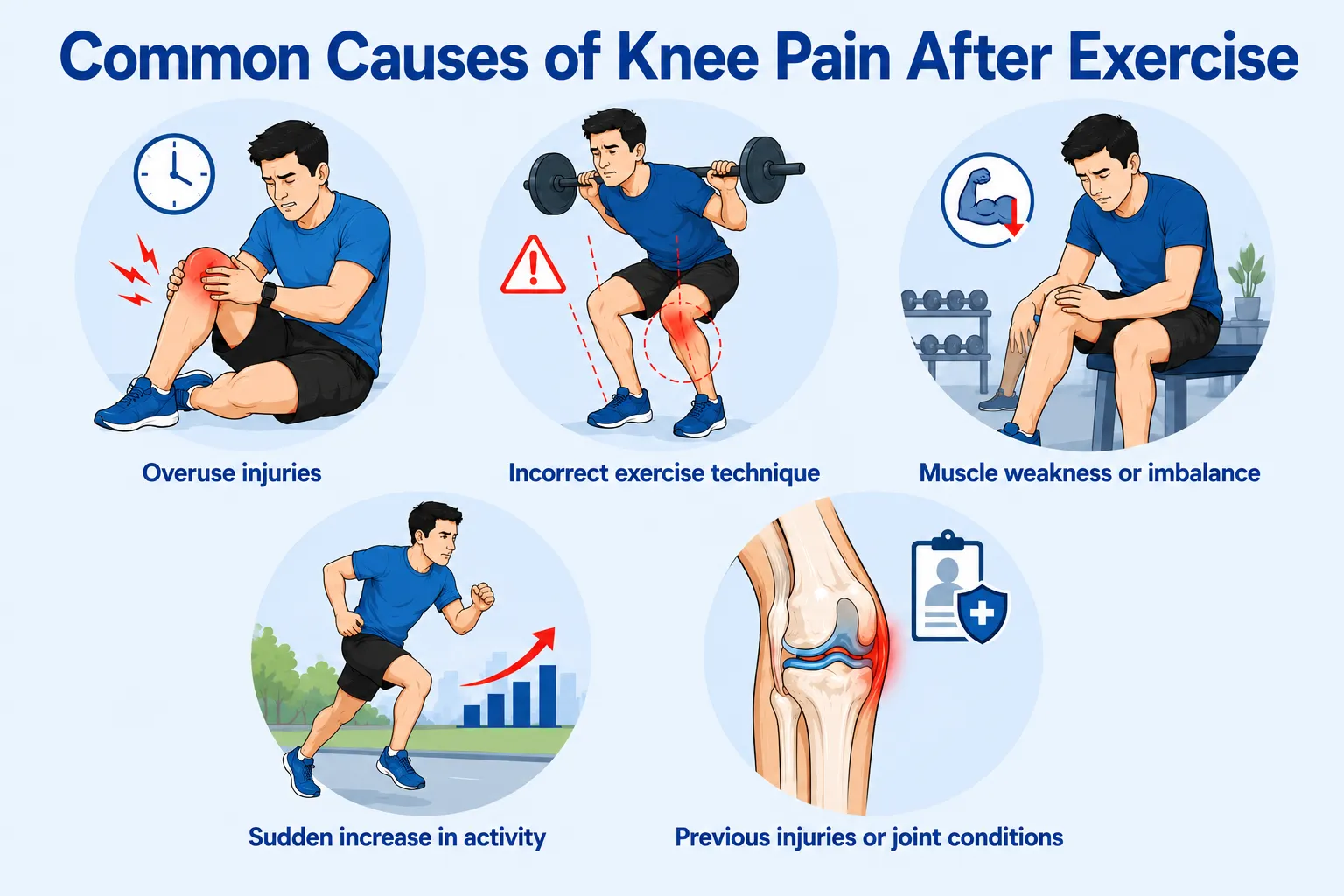
Understanding the cause helps in choosing the right steps for recovery and prevention. Here are some of the common causes:
The symptoms of knee pain after exercise can vary depending on the cause and level of stress placed on the joint. Here are some of the common symptoms:
|
Symptom |
What It May Indicate |
|
Mild soreness |
Temporary muscle fatigue after exercise, which usually improves with proper rest and recovery. |
| Swelling around the knee |
Knee swelling may indicate inflammation, overuse, or irritation in the tissues surrounding the joint. |
|
Sharp or sudden pain |
Sudden pain may indicate a strain, ligament stress, or injury that needs proper attention if symptoms continue. |
| Knee stiffness |
Stiffness occurs due to reduced flexibility, muscle tightness, or inflammation affecting normal movement. |
|
Clicking or locking sensation |
Clicking sensations may suggest changes in joint movement, cartilage irritation, or other knee-related concerns. |
The right knee pain treatment depends on the cause, severity, and symptoms experienced after physical activity. The goal is to reduce discomfort, restore movement, and prevent the problem from returning. Common treatment approaches include:
For mild exercise-related knee pain, the RICE method (Rest, Ice, Compression, and Elevation) may help manage discomfort and support recovery.
Preventing knee pain after exercise starts with building healthy workout habits and reducing unnecessary stress on your joints. Here are some tips you can follow:
Adding the right movements to your fitness routine, including the best exercises for joint pain relief, can help improve flexibility, strength, and long-term joint health.
A doctor should be consulted if knee pain after exercise does not improve with rest or starts affecting your daily activities. Mild soreness usually improves within a few days, but pain lasting more than a week, recurring discomfort, swelling, difficulty walking, or reduced knee movement may need medical attention.
An experienced orthopaedic doctor in Chennai can help determine whether your knee pain is due to overuse, injury, or an underlying joint condition. With the right diagnosis and treatment plan, you can manage pain effectively, support recovery, and return to exercise, sports, and everyday activities safely.
Knee pain after exercise is common and can happen due to factors like overuse, improper technique, muscle weakness, or increased strain on the joint. While mild discomfort often improves with rest and proper care, getting timely support from specialists at Dr. Mehta’s Hospitals can help identify the cause and prevent future concerns.
Building healthy exercise habits, improving strength, and seeking medical attention when required can help protect your knees in the long run. A trusted multispeciality hospital in Chennai provides access to expert diagnosis, personalised care, and effective treatment support to help you recover safely and maintain an active lifestyle.
Knees can hurt after exercise due to overuse, increased pressure, muscle weakness, poor technique, or joint irritation.
2. Is knee pain after exercise normal?
Mild knee pain after exercise can be normal, but severe, recurring, or long-lasting pain may need medical attention.
3. How long does knee pain after exercise usually last?
Mild exercise-related knee soreness usually improves within a few days with proper rest and recovery.
4. What is the best treatment for knee pain after exercise?
The best treatment depends on the cause and may include rest, physiotherapy, lifestyle changes, or medical care.
5. Can I continue exercising with knee pain?
Light activity may be possible with mild discomfort, but avoid exercises that increase knee pain or swelling.
6. How can I prevent knee pain after workouts?
Proper warm-ups, gradual training, muscle strengthening, correct technique, and enough recovery can help prevent knee pain.
7. When should I worry about knee pain after exercise?
Seek medical advice if knee pain lasts more than a week, causes swelling, or affects normal movement.
8. Which hospital is best for knee pain treatment in Chennai?
Dr. Mehta’s Hospitals provide expert orthopaedic care for the diagnosis and treatment of knee-related conditions.
9. What exercises commonly cause knee pain?
Running, jumping, squats, and high-impact activities may cause knee pain when done incorrectly or excessively.
10. Can weak muscles cause knee pain after exercise?
Yes, weak thigh, hip, or leg muscles can reduce knee support and increase strain during exercise.