
Kidney-related conditions can sometimes be difficult to understand because they may affect people in different ways. Recognising these differences is important for choosing the right care approach and protecting long-term kidney health.
Although Acute Kidney Injury (AKI) and Chronic Kidney Disease (CKD) both affect kidney function, the way they develop, progress, and are managed can vary significantly. Knowing the difference between acute kidney injury and chronic kidney disease can help reduce confusion, encourage timely evaluation, and support better health decisions. In this blog, we will explore the key differences, causes, symptoms, diagnosis, and treatment approaches.
Acute Kidney Injury (AKI) is a condition where the kidneys suddenly lose their ability to work properly within a short period of time. When this happens, the kidneys may find it difficult to filter waste, balance fluids, and maintain important functions in the body.
AKI can develop due to different reasons, including reduced blood flow to the kidneys, infections, certain medications, or other health conditions. With proper medical evaluation, acute kidney injury can often be managed by addressing the underlying cause and supporting kidney recovery.
Chronic Kidney Disease (CKD) occurs when kidney function reduces gradually over a long period. The condition develops slowly and may remain unnoticed in the beginning because symptoms are not always obvious.
Several factors can contribute to CKD, including long-term medical conditions, repeated stress on the kidneys, and problems that gradually affect kidney performance. Routine evaluation, healthy lifestyle choices, and appropriate care plans can help people manage CKD more effectively. Recent research conducted by Times of India suggests that chronic kidney disease could become a leading health concern by 2040, highlighting the importance of early detection and timely management.
Acute Kidney Injury and Chronic Kidney Disease have different patterns, timelines, and effects on overall kidney health. Here are some key differences:
|
Acute Kidney Injury (AKI) |
Chronic Kidney Disease (CKD) | |
| Onset | Develops suddenly within hours or days |
Develops gradually over months or years |
|
Duration |
Usually, short-term if diagnosed and treated early | Long-term condition requiring continuous management |
| Common Causes | Dehydration, infections, medications, or reduced blood flow to the kidneys |
Diabetes, high blood pressure, or long-term kidney damage |
|
Symptoms |
Symptoms may appear quickly and can include reduced urination or swelling | Symptoms often develop slowly and may not appear in the early stages |
| Diagnosis | Identified through sudden changes in kidney function tests |
Diagnosed through repeated tests showing long-term kidney changes |
|
Treatment |
Focuses on treating the cause and restoring kidney function | Aims to manage symptoms and support long-term kidney function |
| Recovery | Kidney function may improve depending on the cause and severity |
Requires long-term care to manage kidney health |
According to the International Society of Nephrology, the prevalence of CKD worldwide is around 10.4% among men and 11.8% among women, while AKI affects approximately 13.3 million people every year.
Different factors can contribute to Acute Kidney Injury and Chronic Kidney Disease, depending on whether the kidney changes happen suddenly or develop gradually. Here are the common causes of both:
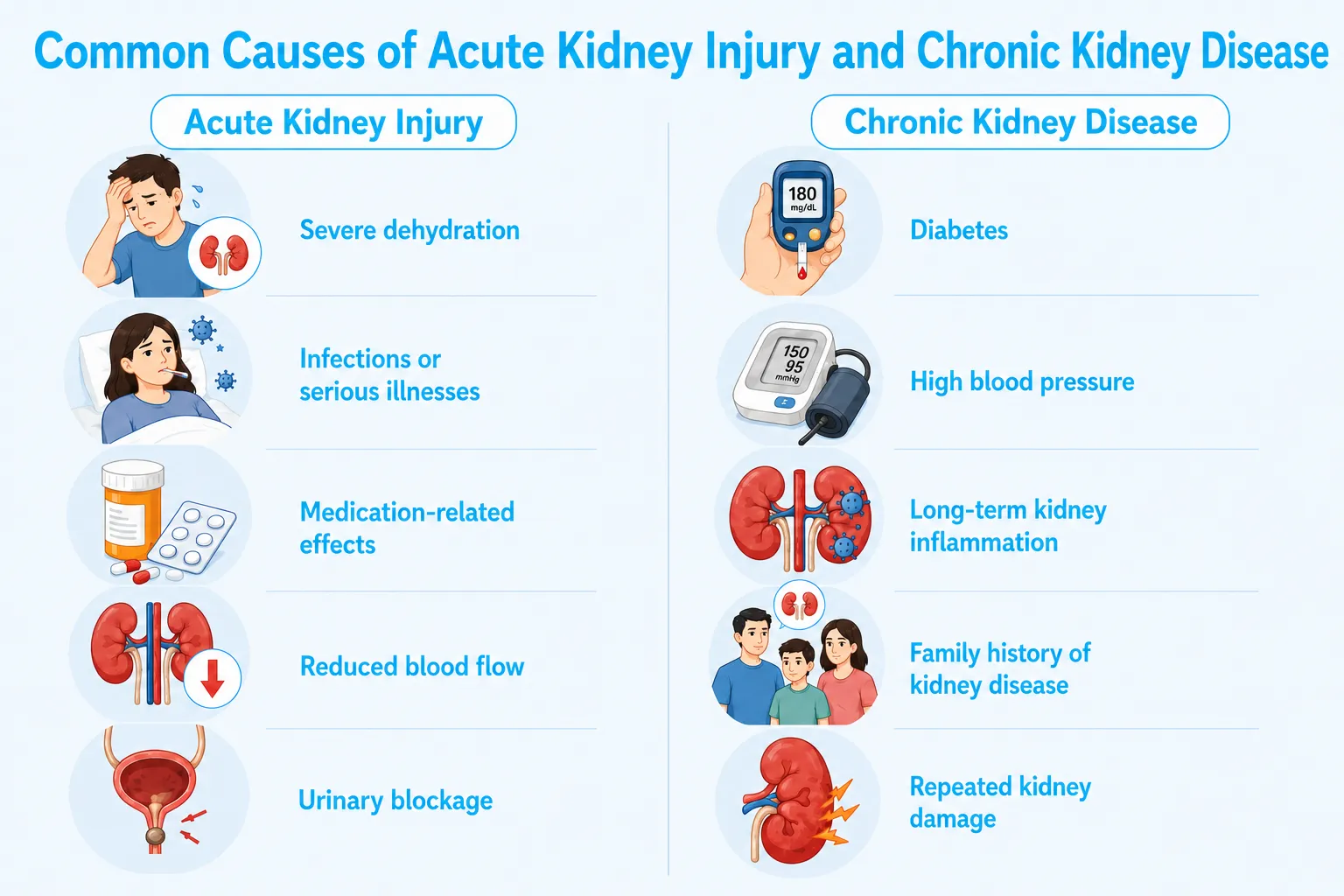
Along with regular monitoring and medical care, knowing the foods to avoid with kidney disease can help individuals make healthier choices and better support their kidney health.
The impact of Acute Kidney Injury and Chronic Kidney Disease can vary depending on the duration, symptoms, causes, and overall changes seen in kidney health. Here is how the symptoms of the two differ:
|
Symptom Factor |
Acute Kidney Injury (AKI) | Chronic Kidney Disease (CKD) |
| Symptom development | Symptoms may appear within hours or days |
Symptoms usually develop gradually over months or years |
|
Urination changes |
A sudden decrease in urine output may occur | Changes in urination may slowly develop over time |
| Swelling | Swelling can happen quickly due to fluid build-up |
Swelling may appear gradually as kidney function declines |
|
Fatigue and weakness |
May occur suddenly due to changes in kidney function | Often increases slowly as the condition progresses |
| Detection | Usually noticed after sudden symptoms or abnormal test results |
Often detected through regular kidney monitoring and health checks |
Identifying these differences can help people seek timely medical care and receive appropriate chronic kidney disease treatment when required.
Diagnosing Acute Kidney Injury and Chronic Kidney Disease involves understanding symptoms, medical history, and checking how well the kidneys are functioning. Doctors may recommend blood tests to measure kidney function, urine tests to detect abnormalities, and imaging tests to identify structural concerns.
The diagnosis helps determine whether kidney changes are sudden or developing gradually over time. Choosing the right kidney disease treatment in Velappanchavdi depends on identifying the underlying cause, severity, and overall health condition of the patient. Early diagnosis and regular monitoring play an important role in managing kidney health and preventing further complications.
Changes in kidney function may not always cause noticeable symptoms in the early stages. However, certain signs should not be ignored, especially if they continue or affect your daily health. Here are some early red flags you should be aware of:
If you notice these symptoms, consulting a nephrologist in Velappanchavadi can help identify kidney-related concerns early and provide the right medical guidance.
Acute Kidney Injury and Chronic Kidney Disease affect the kidneys in different ways, but both require proper attention and timely medical care. AKI usually develops suddenly, while CKD progresses gradually over time. Recognising changes in kidney health, identifying symptoms early, and receiving the right treatment can help protect kidney function.
Regular health monitoring and expert medical guidance play an important role in managing kidney-related conditions. A top multispeciality hospital in Chennai with experienced specialists and advanced medical facilities can provide comprehensive care, accurate diagnosis, and personalized treatment that supports patients throughout their kidney health journey.
Acute Kidney Injury develops suddenly, while Chronic Kidney Disease progresses gradually over months or years.
2. Can Acute Kidney Injury be treated?
Yes, Acute Kidney Injury can often be managed effectively when the cause is identified and treated early.
3. What are the early signs of Chronic Kidney Disease?
Early signs may include fatigue, swelling, urination changes, and high blood pressure, though symptoms may not appear initially.
4. What causes Acute Kidney Injury?
Acute Kidney Injury can be caused by dehydration, infections, reduced blood flow, medications, or urinary blockages.
5. How is Chronic Kidney Disease diagnosed?
Chronic Kidney Disease is diagnosed through blood tests, urine tests, imaging, and evaluation of kidney function.
6. When should I consult a doctor for kidney problems?
You should consult a doctor if you notice swelling, urine changes, fatigue, or persistent kidney-related symptoms.
7. Can lifestyle changes help manage Chronic Kidney Disease?
Healthy lifestyle habits, regular monitoring, and medical guidance can help manage Chronic Kidney Disease progression.
8. Which specialist treats Acute Kidney Injury and Chronic Kidney Disease?
A nephrologist manages Acute Kidney Injury and Chronic Kidney Disease by evaluating kidney function, identifying the cause, and recommending suitable care.
9. Which hospital provides kidney care services in Chennai?
Dr. Mehta’s Hospitals is recognised as the best nephrology hospital in Chennai, providing specialised care for kidney-related conditions.
10. Why is early diagnosis important for kidney diseases?
Early diagnosis helps detect kidney problems sooner and supports timely treatment to protect kidney function.