Everyone has at some time postponed going to the bathroom because of work obligations, travel, meetings, or just because there wasn’t a toilet nearby. Holding urine is not a serious problem in itself, but regular retention of urine over time can cause undue pressure on the bladder and urinary system.
The bladder is made to hold urine until it is time to pass it. But holding off too long to urinate may lead to some discomfort and, in some people, to a higher risk of urinary problems. Learning about the bladder and the importance of healthy toileting can be helpful in maintaining long-term bladder health and well-being.
In healthy people, delaying urination once in a while is not likely to be harmful. But people who hold urine for longer periods of time than usual can experience impaired bladder function and may be more susceptible to urinary problems, especially in those with medical conditions.
As the bladder fills, stretch receptors in the bladder wall trigger a signal to the brain, which results in a need to urinate. When these signals are consistently ignored, bladder overdistension, different bladder sensations, and inefficient bladder emptying may occur in some people. In some cases, urine may also back up and make you more vulnerable to developing a urinary tract infection (UTI), caused by bacteria growing in stored urine.
Although the bladder is a resilient organ, developing healthy voiding habits is important for maintaining optimal urinary tract health.
The length of time it is safe to hold urine varies from person to person, depending on various factors, including how much fluid you consume, your bladder capacity, what medications you are taking, and your general health and bowel habits. In a healthy adult, the number of urinations is about 4 to 8 times over 24 hours, but this varies among individuals.
If you need the toilet, it is best to go, not just wait several hours, but within a reasonable period. Individuals with urinary retention, prostate enlargement, neurological disorders, and recurrent urinary tract infections may need to pay extra special attention to their voiding habits. Pay attention to the body’s natural signals and follow a consistent urination routine to help to maintain healthy bladder function over time.
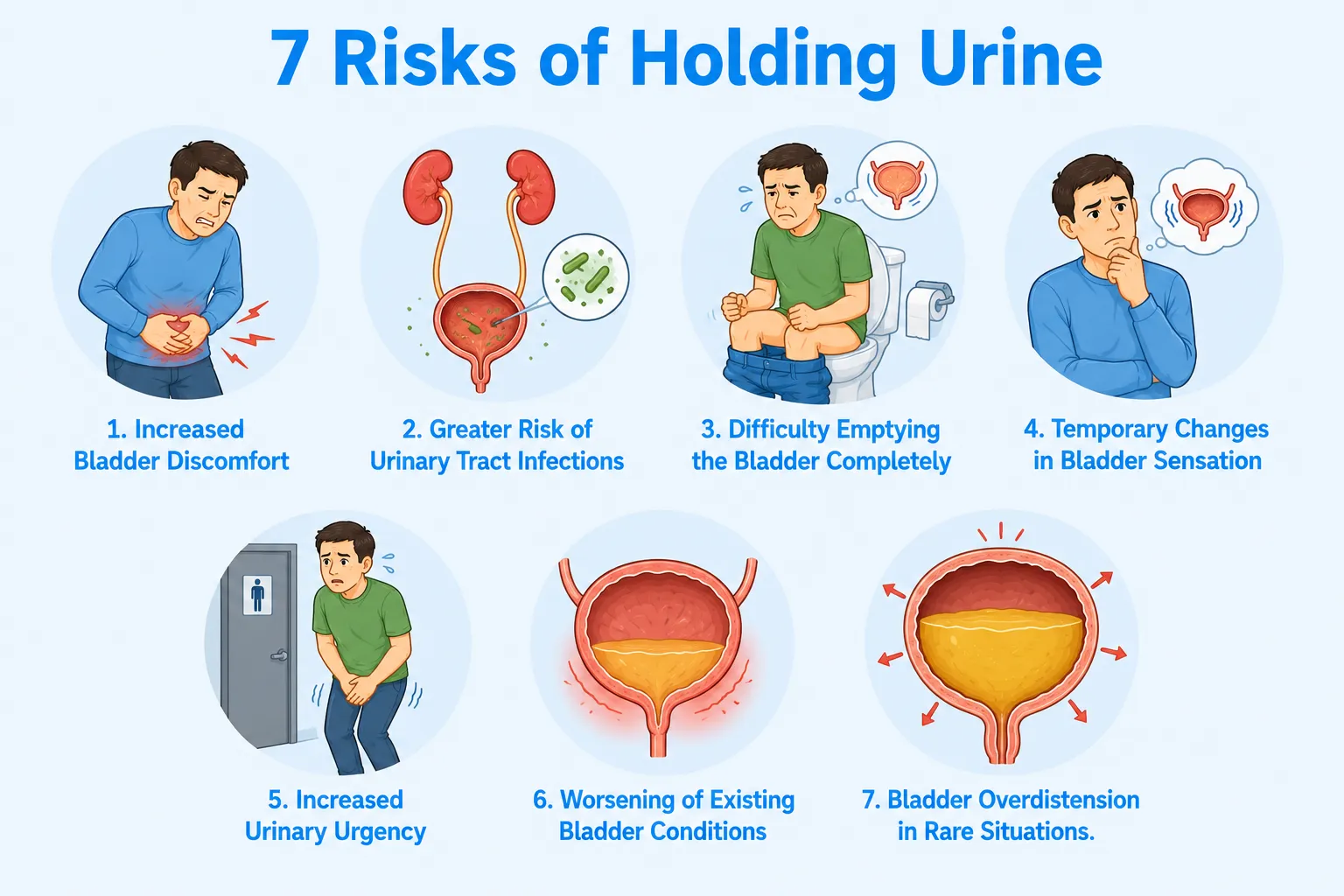
If a person experiences bladder retention or hesitancy for more than a few days, this can lead to some of the following urinary problems.
If the bladder stays full for a long time, its wall continues to stretch as the bladder expands. This over-distension can trigger the stretch receptors too early and cause lower abdominal pain, suprapubic discomfort, or a feeling of a bulge in the pelvis. While the discomfort may pass after emptying, repeated episodes of bladder overfilling can lead to changes in bladder compliance and decreased bladder comfort during bladder filling.
Practice emptying the bladder frequently to remove bacteria from the urinary tract. Urine retention can go on for a long time, which may promote bacterial overgrowth, especially in people with incomplete emptying of the bladder or underlying abnormalities of the urinary tract. This may predispose to recurrent UTIs over time, with symptoms including urination urgency, frequency and suprapubic pain.
If urination is postponed routinely, this can disrupt the normal contractile function of the detrusor muscle that empties the bladder. Overdistension can also cause detrusor underactivity, resulting in residual urine volume and incomplete bladder emptying in some cases. People can feel hesitant to pass urine, pass urine weakly, or feel like they do not pass urine fully.
During urination, there is a coordination of the communication between the receptors in the bladder, the pathways in the spine, and the higher centres in the brain. When a person regularly suppresses the urge to pass urine, it can change their perception of how full their bladder is, which can make it harder to notice the normal filling sensation. This imbalance of sensory communication can help to cause irregular urination and a decrease in awareness of urination.
Repeated bladder overfilling may increase bladder sensitivity and contribute to involuntary detrusor contractions in some individuals. This may lead to urinary urgency, which is a sudden and urgent need to pass urine that can’t be put off. Urgency may also be associated with urge urinary incontinence when there is delayed access to a toilet in certain cases.
People with underlying urological problems like overactive bladder (OAB), benign prostatic hyperplasia (BPH), neurogenic bladder dysfunction or bladder outlet obstruction may be at special risk if they experience prolonged urine retention. Holding urine frequently may exacerbate symptoms, including urgency, frequency, nocturia, weak urine stream, and incomplete bladder emptying. Studies suggest that BPH affects around 5% to 6% of men between the ages of 40 and 64. The condition becomes more common with age, affecting nearly 29% to 33% of men aged 65 years and above. For such patients, regular bladder habits are frequently suggested as a component of a symptom management regimen.
In rare cases, the urinary retention is so intense and prolonged that the bladder is over-distended, or stretched beyond its normal physiological capacity. This is because this over-distention can affect the ability of the detrusor muscle to contract, making the bladder less able to properly empty even after the obstruction or precipitating cause is cleared. Acute urinary retention, with painful or no urinary output, or progressive abdominal distention of the abdomen, must be promptly evaluated and treated in order to avoid future urinary complications. Seeking a timely assessment from an experienced urology specialist in Chennai can help identify the underlying cause and ensure appropriate treatment at the earliest.
Sometimes, urination may be delayed, but when urination is frequently postponed, it may lead to alterations in bladder function and urinary comfort. Repeated storage of urine can cause more stress to the bladder over time and can also make urinary symptoms more likely. Knowing these signs early on can encourage people to practice healthy bladder management and get medical help if needed.
Frequent delay in urination may cause the bladder to become distended, causing a feeling of heaviness, fullness, or pressure in the lower abdomen or in the pelvic area. This discomfort may get better after urination, but if the pressure in the pelvis recurs, it could mean that the bladder is being stretched too often beyond its normal capacity. If symptoms continue, additional workup is necessary to exclude underlying urinary dysfunction.
If urinary tract irritation or susceptibility to infection is a result of long-term urine retention, it can cause pain, stinging or a burning sensation when urinating, referred to as dysuria. This symptom can be associated with urinary frequency, urgency or discomfort in the lower abdomen. If dysuria continues, a health care provider should test for infection and other urologic problems.
For some, who tend to hold their urine, urinary hesitancy will occur, which is the inability to get urine moving despite the need to urinate. This can be caused by issues with the coordination of the bladder muscle and its sphincters. Persistent hesitancy or weakness in the urinary stream or straining should prompt a medical assessment.
Regular suppression of the need to urinate could lead to increases in bladder sensitivity and alterations in normal signalling pathways in the bladder. Consequently, people may have urgency, which is a sudden or urgent need to urinate that is hard to delay. In some situations, urgency can affect an individual’s daily functioning and quality of life.
Frequent urination is a significant factor in eliminating bacteria from the urinary tract. Often, urine will be retained in the bladder, providing conditions in which bacteria can thrive. If a person has repeated UTIs, especially if there is also evidence of incomplete bladder emptying, he or she should also be evaluated for bladder dysfunction or structural abnormalities.
Early assessment can help identify the underlying cause and prevent recurrent infections or long-term complications. Access to comprehensive care at a multispeciality hospital in Chetpet, Chennai ensures coordinated evaluation and treatment tailored to the patient’s needs.
While it is normal to have temporary discomfort from occasionally holding urine for too long, some people might be more likely to develop bladder problems from prolonged urine retention. Normal bladder emptying can be affected by existing medical conditions, age-related changes and factors that can contribute to urinary retention. Understanding these risk factors can encourage people to develop healthier voiding habits and to contact their healthcare provider if they need to.
In men, an enlarged prostate sometimes blocks the passage of urine through the urethra, which reduces the ability to completely empty the bladder. Frequent voiding delays may further increase PVR and exacerbate symptoms of BPH, including hesitancy, weak urine stream, urgency, and nocturia.
A long-term case of diabetes can cause damage to the nerves that control bladder sensation and detrusor function, which is sometimes called diabetic cystopathy. Bladder sensation may be lower, and habitually holding urine may lead to incomplete bladder emptying and urinary tract infections.
Certain neurological issues, like Parkinson’s disease, multiple sclerosis, stroke, spinal cord injury or other conditions that interfere with nerve pathways that control bladder function, can disrupt normal bladder emptying. In these people, retention of urine may be a factor that aggravates their urinary symptoms and helps to raise the likelihood of urinary complications.
Older people may be more susceptible to urinary retention due to age-related changes in bladder elasticity, detrusor muscle contractility and urinary tract function. These individuals may also suffer from additional negative effects on bladder function and frequent urinary tract infections if they continue to delay urination in this population.
Those who have multiple UTI’s might be more susceptible to the effects of chronic urinary retention. If the bladder is not emptied on time, the urine may allow bacteria to build up, leading to recurrent infections and ongoing urinary symptoms. Seeking prompt medical attention, especially when symptoms worsen or persist, can help prevent complications and ensure timely intervention through access to 24/7 emergency and immediate care services in Chennai.
There may be a temporary loss of bladder sensation or bladder efficiency after some surgical procedures that involve the prostate, bladder, pelvic organs, or lower urinary tract. During the recovery period, maintaining regular bladder emptying habits is important to support normal urinary function and minimise the risk of urinary retention.
Some medicines can affect the way your bladder muscle contracts or make it harder for urine to flow out of the bladder, such as anticholinergics, antihistamines, antidepressants, opioids and certain decongestants. These drugs, coupled with the tendency to delay urination, can also lead to bladder emptying problems and potentially to urinary retention.
|
Habit |
Holding Urine Frequently |
Healthy Bladder Habits |
|
Response to the urge to urinate |
Regularly delaying urination despite feeling the urge | Voiding when the bladder signals the need to empty |
| Bladder emptying | May contribute to incomplete bladder emptying over time |
Promotes complete and timely bladder emptying |
|
Risk of urinary discomfort |
Can increase pelvic pressure and urinary discomfort | Supports comfortable bladder function |
| Urinary tract health | Prolonged urine retention may increase susceptibility to infections in some individuals |
Regular voiding helps flush bacteria from the urinary tract |
|
Bladder function |
Repeated overdistension may affect bladder sensation and detrusor muscle activity | Maintains normal bladder capacity and sensory function |
| Long-term urinary health | May worsen symptoms in people with underlying bladder conditions |
Encourages healthier urinary habits and bladder performance |
The health of the bladder can be maintained with a healthy lifestyle and early attention to any urinary symptoms. The bladder works best if it is backed up by consistent voiding, proper hydration, and proper management of any underlying medical conditions that can impact bladder function. Taking preventive measures early may help maintain normal bladder capacity, limit the possibility of urinary complications, and ensure better urinary health in the long run.
Lifestyle changes that are easy to make and are regular can have a vital impact on bladder function. The following strategies can be used to keep the bladder healthy and to enhance overall bladder comfort:
Earlier evaluation of urinary symptoms can address underlying causes and prevent the progression of urinary symptoms. Persistent discomfort should not be ignored, as conditions causing painful urination without an infection may require specialised assessment and targeted treatment to improve urinary health and quality of life.
You should consult a doctor if you experience persistent urinary symptoms such as hesitancy, a weak urine stream, straining during urination, incomplete bladder emptying, urgency, frequency, nocturia, recurrent urinary tract infections, pain during urination, blood in the urine, or worsening pelvic discomfort. They can be caused by underlying conditions, like benign prostatic hyperplasia (BPH), bladder outlet obstruction, or neurogenic bladder dysfunction.
If you experience acute urinary retention (sudden inability to pass urine, often with severe lower abdominal pain and distention), seek immediate medical attention. A urinalysis, PVR (post-void residual) measurement, and uroflowmetry may help determine the cause and treatment. At Dr Mehta’s Hospitals, the most experienced urologists offer comprehensive care that helps maintain the health of your bladder for the long-term.
When it is impossible to urinate, the retention of urine may be unimportant in normal persons. But often, holding urine for a long time can lead to urinary discomfort, alteration in bladder sensation, UTI and aggravation of symptoms in patients suffering from any urinary ailment. Creating healthy bladder habits and reacting to the body’s cues in an appropriate manner can help maintain optimal urinary function.
It’s important to seek medical advice early if you have persistent urinary symptoms or concerns regarding bladder health. Proper evaluation and intervention can occur in the early stages and help identify the underlying cause, help control symptoms, and help maintain the health of the urinary system in the long-term. Many problems with the bladder can be effectively treated with simple lifestyle changes and professional advice if necessary. If you are experiencing persistent symptoms, consulting specialists at the best private multispeciality hospital in Chennai can help ensure early diagnosis, personalised treatment, and better long-term bladder health.
Occasional delays in urination are generally not harmful in healthy individuals, but routinely holding urine for long periods may affect bladder function over time.
2. How often should a healthy adult urinate?
Most adults urinate approximately 4 to 8 times a day, although this can vary depending on fluid intake and overall health.
3. Can holding urine increase the risk of urinary tract infections?
Prolonged urine retention may allow bacteria to multiply within the urinary tract, potentially increasing the risk of infection in some individuals.
4. What are the symptoms of urinary retention?
Common symptoms include difficulty passing urine, a weak urine stream, incomplete bladder emptying, lower abdominal discomfort, and increased urinary frequency.
5. Is it harmful to hold urine during travel or work?
Occasionally delaying urination due to unavoidable circumstances is usually not a concern, but it should not become a regular habit.
6. Can holding urine weaken the bladder muscles?
Repeated bladder overdistension may affect detrusor muscle function and bladder emptying efficiency in certain situations.
7. Who is more likely to experience bladder complications from holding urine?
Individuals with prostate enlargement, diabetes, neurological disorders, recurrent urinary tract infections, or pre-existing bladder conditions may be at higher risk.
8. Can dehydration affect bladder health?
Inadequate fluid intake can lead to concentrated urine, which may irritate the bladder and contribute to urinary discomfort.
9. When should I consult a urologist for urinary symptoms?
You should seek medical advice if you experience persistent urinary discomfort, blood in the urine, recurrent infections, or difficulty emptying the bladder.
10. Can healthy bladder habits improve long-term urinary health?
Yes. Maintaining regular voiding habits, staying hydrated, managing underlying health conditions, and seeking timely medical care can support healthy bladder function over time.