
Many people are not aware that bladder control problems are more common in men than in women. Although there are occasional changes in the bladder, problems with bladder control may occur if they are associated and are persistent, making it difficult to carry out normal activities, sleep, and affecting confidence and well-being. Fortunately, many bladder control issues are successfully treated with an accurate diagnosis and treatment.
Bladder control problems can affect men for many different reasons and are a type of urinary incontinence. Knowing what to look for and how it can occur can prompt men to get the early medical care they need to improve their well-being.
According to studies published by PubMed Central, urinary incontinence affects a significant proportion of men. Among those living with the condition, approximately 30% to 47% experience symptoms every day, while 15% to 37% report episodes of urine leakage at least once a week. Bladder control problems may occur in men for a variety of reasons. It allows healthcare providers to act on the root cause, which is key to treatment.
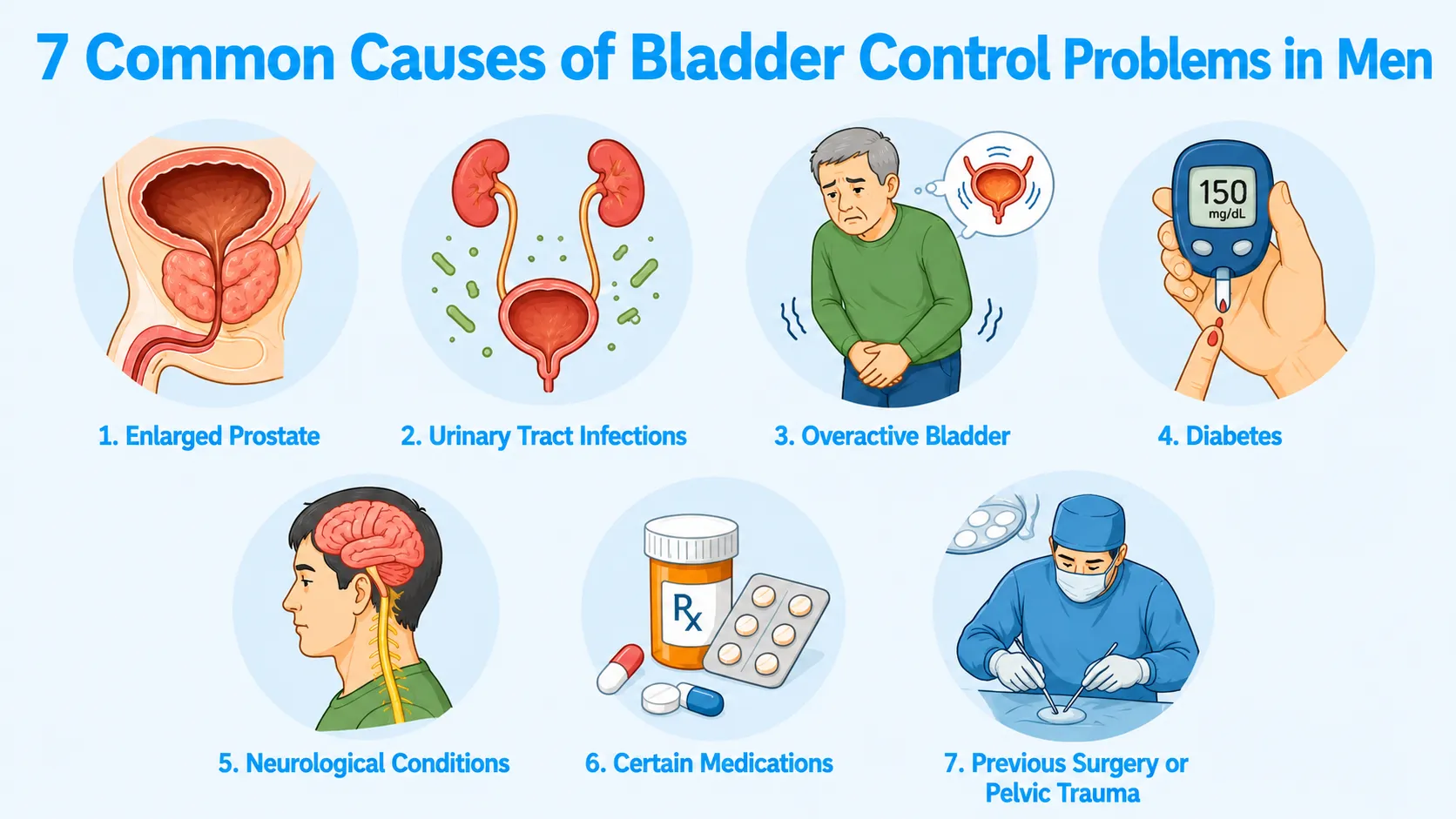
As men grow older, the prostate gland naturally tends to enlarge. Since the prostate surrounds the urethra, an increase in its size can put pressure on this tube and affect the normal flow of urine. This may lead to symptoms such as a weak urine stream, difficulty starting urination, frequent trips to the bathroom, especially at night, or the feeling that the bladder hasn’t emptied completely. While these symptoms can be frustrating, they are common and can often be managed with the right medical guidance.
Although urinary tract infections are less common in men, they can still occur and cause significant discomfort. When bacteria irritate the urinary tract, it may trigger a sudden urge to urinate, frequent bathroom visits, a burning sensation while passing urine, or lower abdominal discomfort. In some cases, men may also notice cloudy or foul-smelling urine. Seeking timely treatment can help clear the infection and relieve these symptoms.
An overactive bladder happens when the bladder muscles contract more often than they should, even when the bladder isn’t full. This can create a sudden and intense urge to urinate that may be difficult to postpone. Some men may find themselves planning their day around restroom access or waking up multiple times during the night to urinate. While it can affect daily life and confidence, several treatment options are available to help improve bladder control.
Diabetes can affect more than just blood sugar levels. Over time, poorly controlled diabetes may damage the nerves that help the bladder function properly. This can make it difficult to recognise when the bladder is full or affect its ability to empty completely. As a result, men may experience urgency, frequent urination, leakage, or recurrent urinary infections. Managing diabetes effectively can play an important role in protecting bladder health.
The bladder relies on signals between the brain, nerves, and muscles to work normally. Conditions such as Parkinson’s disease, stroke, multiple sclerosis, or spinal cord injuries can interrupt these signals and lead to bladder control problems. Depending on the underlying condition, men may experience leakage, difficulty passing urine, or a frequent need to urinate. Addressing these symptoms early can significantly improve comfort and quality of life.
Some medications can temporarily affect bladder function or increase urine production. For example, diuretics, often prescribed for high blood pressure or heart conditions, may lead to more frequent urination. Other medicines may influence the muscles or nerves involved in bladder control. If you notice changes in your urinary habits after starting a new medication, speak with your doctor rather than stopping the medication on your own.
Surgery involving the prostate or pelvic region can sometimes affect the muscles and nerves responsible for bladder control. Similarly, injuries to the pelvic area may interfere with normal bladder function. Some men experience temporary urinary leakage during recovery, while others may require additional support to regain bladder control. The good news is that with appropriate treatment and pelvic floor rehabilitation, many men notice significant improvement over time.
Studies by Scientific Scholar have reported that bladder dysfunction may be linked to various neurological levels, including suprasacral lesions (37.5%), suprapontine lesions (34.7%), frontal lobe involvement (11.1%), sacral or infrasacral lesions (9.7%), and upper motor neuron bladder with shock (7.0%). Depending on the cause of the bladder control problem, the symptoms can manifest in various ways.
Urge incontinence is characterised by a sudden and intense need to urinate that can be difficult to control. Men may feel the urge come on so quickly that they are unable to reach the toilet in time, leading to accidental leakage. This type of incontinence is often associated with an overactive bladder, where the bladder muscles contract unexpectedly. Frequent worry about finding a restroom can affect confidence and daily routines.
Stress incontinence occurs when physical activities put extra pressure on the bladder, causing urine leakage. Common triggers include coughing, sneezing, laughing, exercising, lifting heavy objects, or even standing up quickly. Although it is more frequently discussed in women, men can also experience stress incontinence, particularly after prostate surgery. The amount of leakage can vary from a few drops to larger amounts, depending on the severity of the condition.
Overflow incontinence happens when the bladder does not empty completely, causing it to become overly full. As a result, urine may leak out unexpectedly in small amounts throughout the day. Men with this condition may also experience a weak urine stream, difficulty starting urination, or the sensation that the bladder is never fully emptied. It is often linked to conditions such as an enlarged prostate or nerve-related bladder problems.
Functional incontinence occurs when a person has normal bladder function but faces challenges reaching the toilet in time. This may happen due to mobility limitations, arthritis, balance problems, cognitive difficulties, or other health conditions that make moving quickly more difficult. In these situations, the bladder itself may not be the underlying issue. Identifying and addressing the barriers can help improve independence and quality of life.
Mixed incontinence refers to the presence of symptoms from more than one type of urinary incontinence at the same time. The most common combination is urge incontinence and stress incontinence, where a person experiences both sudden urges to urinate and leakage during physical activities. Because multiple factors may contribute to the symptoms, treatment often requires a personalised approach. A proper evaluation can help determine the most effective management plan.
Occasional changes in urinary habits may not always be a cause for concern. However, persistent or worsening symptoms should not be ignored. Early evaluation can help identify the underlying cause and prevent complications. Consider speaking with your healthcare provider if you:
Seeking medical advice early can make a significant difference. A timely assessment can provide answers, reassurance, and access to appropriate treatment options tailored to your individual needs.
The evaluation of bladder control problems begins with a detailed medical history. Your doctor may ask about medications, fluid intake, previous surgeries, and the type, frequency, and severity of urinary symptoms. Depending on your condition, tests such as urinalysis, urine culture, and blood tests may be recommended to check for infections, kidney function, blood sugar levels, or prostate-specific antigen (PSA) levels.
In selected cases, specialised tests such as uroflowmetry, post-void residual urine measurement, and urodynamic studies may be advised to assess bladder function and identify the cause of urine leakage. When symptoms are severe, sudden, or significantly affecting daily life, having access to prompt medical evaluation and 24/7 emergency support can ensure that critical urinary concerns receive timely attention.
Treatment for bladder control problems in men depends on the underlying cause, the type of incontinence, and the severity of symptoms. Initial management often includes bladder training, pelvic floor exercises (Kegel exercises), scheduled voiding, and lifestyle modifications such as reducing caffeine intake and maintaining a healthy weight.
When necessary, medications may be prescribed to manage an overactive bladder or urinary symptoms related to an enlarged prostate (BPH). In cases where conservative treatments are ineffective, procedures such as transurethral resection of the prostate (TURP), male sling surgery, or artificial urinary sphincter implantation may be considered. Early diagnosis and appropriate treatment can significantly improve bladder control and quality of life. Accurate diagnosis plays an important role in choosing the most appropriate treatment, and timely access to reliable laboratory investigations in Chennai can help healthcare providers make informed clinical decisions.
There are a number of healthy habits that can promote bladder health and a decrease in urinary symptoms. These include:
If a man notices persistent changes in his urine, such as urgency, frequent urination, having to get up several times at night to urinate, leaking urine, hesitancy, a weak urine flow, or an urge to urinate but not being able to empty his bladder, he may want to speak with a urologist. Evaluation is also advised in people who suffer from repeated UTIs, blood in the urine (haematuria), pain while urinating, or if symptoms of bladder control get suddenly worse. The signs may signal underlying problems that include benign prostatic hyperplasia (BPH), overactive bladder, urinary tract blockage, and neurogenic bladder dysfunction or other urological issues that need specialised evaluation.
Early consultation with the best urologist in Chennai can facilitate timely diagnosis and appropriate intervention, helping to prevent symptom progression and improve quality of life. At Dr Mehta’s Hospitals, experienced urology specialists utilise advanced diagnostic techniques and evidence-based treatment approaches to manage bladder control problems in men. Early support for your health, with expert advice, can be very helpful for treatment outcomes and for long-term health.
Problems with bladder control are regularly experienced by men and may stem from overactive bladder, diabetes, nerve-related problems, or enlargement of the prostate gland. These symptoms may be annoying, but a variety of treatment options exist, including lifestyle changes, medications, and specialised therapy, if necessary.
Prompt medical help can result in earlier diagnosis, more effective symptom control and a better quality of life. If you are having urinary symptoms that are impacting your daily functioning or causing you concern, it will pay to have a healthcare professional give you some help and treatment. If urinary symptoms are affecting your quality of life, do not delay seeking help. Consult the experts at the multispeciality hospital in Chennai for timely diagnosis and personalised treatment.
Common causes include enlarged prostate, overactive bladder, diabetes, infections, and nerve-related conditions.
2. Is urinary incontinence a normal part of ageing?
While urinary symptoms become more common with age, bladder control problems are not considered a normal part of ageing and should be evaluated.
3. Can prostate enlargement cause bladder control problems?
Yes. An enlarged prostate can affect urine flow and contribute to urgency, frequency, and leakage.
4. Are bladder control problems treatable?
Yes. Many treatment options are available depending on the underlying cause.
5. Can pelvic floor exercises help men?
Pelvic floor exercises may strengthen the muscles involved in bladder control and reduce leakage.
6. When should I see a doctor for urinary leakage?
You should seek medical advice if leakage becomes frequent, worsens, or affects your quality of life.
7. Can diabetes affect bladder function?
Poorly controlled diabetes may affect the nerves involved in bladder regulation.
8. What tests are used to diagnose bladder problems?
Doctors may recommend urine tests, blood tests, ultrasounds, and urodynamic studies.
9. Does reducing caffeine improve bladder symptoms?
Limiting excessive caffeine intake may help reduce urgency and frequency in some individuals.
10. Which specialist should I consult for bladder control problems?
A urologist specialises in diagnosing and treating urinary tract and bladder-related conditions in men.