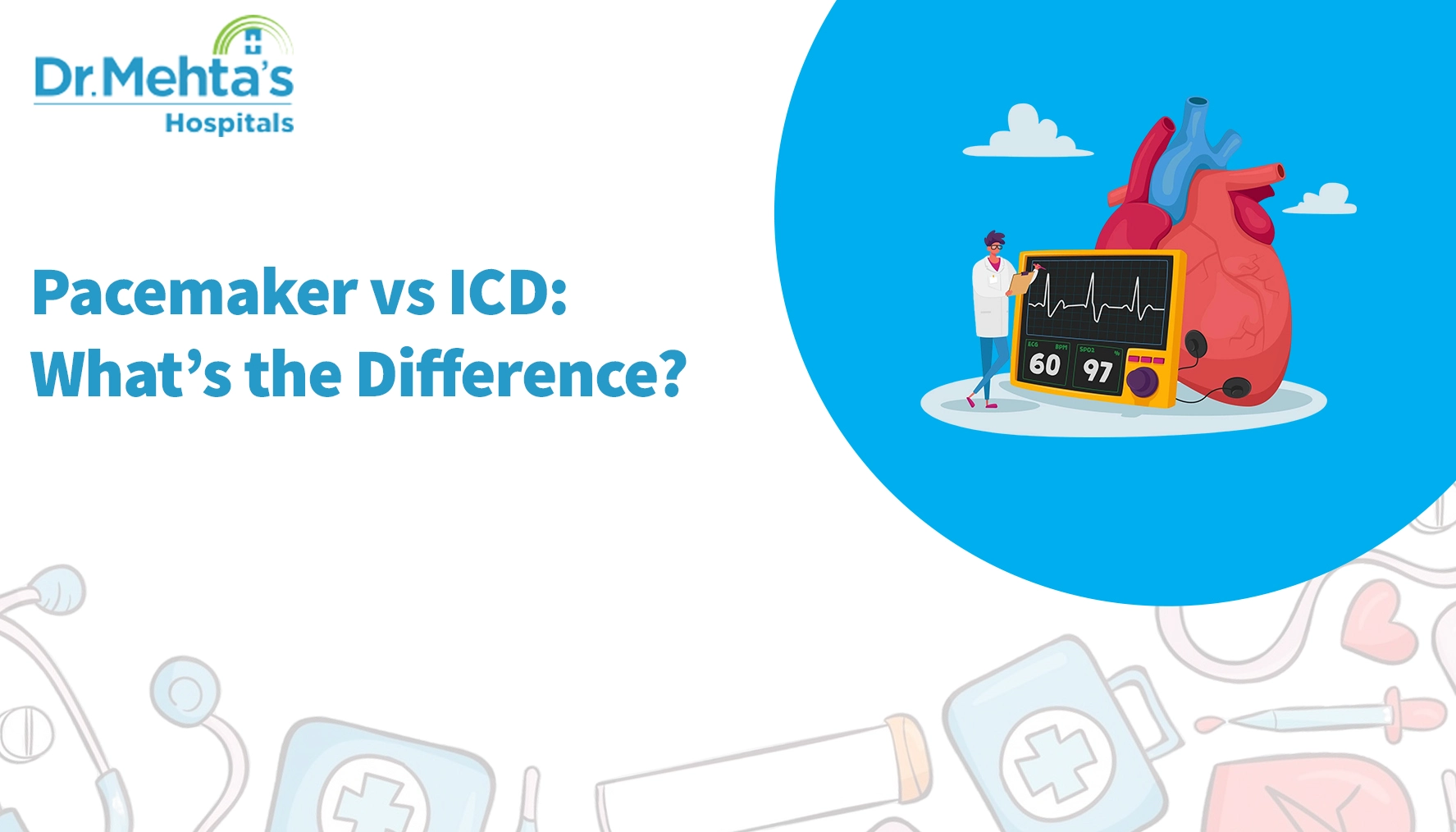
In some cases, heart rhythm disturbances lead to less efficient pumping of blood to the body. A doctor may recommend a medical device, such as a pacemaker or ICD, in some instances to keep the heart beating regularly and to improve the quality of a person’s life.
Many people are initially misled by these terms because they both have to do with heart rhythm care. However, they have different functions and are recommended based on the type of heart disease.
Today’s cardiac devices are sophisticated, safe, and designed to help people live their lives more comfortably and confidently. A pacemaker should be explained to the patient and family so that they can feel informed and reassured.
|
Feature |
Pacemaker | ICD (Implantable Cardioverter Defibrillator) |
| Main Purpose | Helps regulate slow heart rhythms |
Assists in controlling severe irregular heart rhythms |
|
How It Works |
Transmits tiny electrical impulses to keep the heart beating regularly | Keep track of heart rhythms and can restore normal rhythms if they become irregular |
|
Common Use |
Slow heartbeat (bradycardia) |
High-risk irregular rhythms |
| Device Function | Keeps heartbeat regular |
Can regain normal rhythm when necessary |
|
Implant Location |
Usually, under the chest skin |
Usually, under the chest skin |
|
Daily Life |
Most people continue normal activities |
Most people can return to normal functioning with guidance |
A pacemaker is a small electronic gadget that is placed under the skin near the chest to assist in controlling slow or irregular heart rhythms.
As the heart slows down, the device sends gentle electrical signals to the heart. This keeps the beat regular and helps keep it healthy. Typical components of a pacemaker include:
A pacemaker can be prescribed if the heart rate is lower than usual or the heart slows down between beats. In such cases, it is crucial to seek help from the experts at a reputable cardiology hospital in Chennai to receive a prompt diagnosis and an appropriate treatment plan for a healthier heart.
An ICD (Implantable Cardioverter Defibrillator) is an electronic device that monitors the beating of your heart and takes action when it detects one of certain dangerous heart rhythms. If needed, the ICD can provide electrical therapy to help restore a more normal rhythm.
According to a report from Grand View Horizon, the implantable cardioverter defibrillator (ICD) market in India was estimated at USD 113 million for the year 2023, which is projected to grow at a fast pace to nearly USD 210 million by 2030. An ICD may:
ICDs are often used in patients who have a higher risk of serious heart rhythm issues. Today’s ICDs are well-engineered to keep patients safe and to support heart health over time.
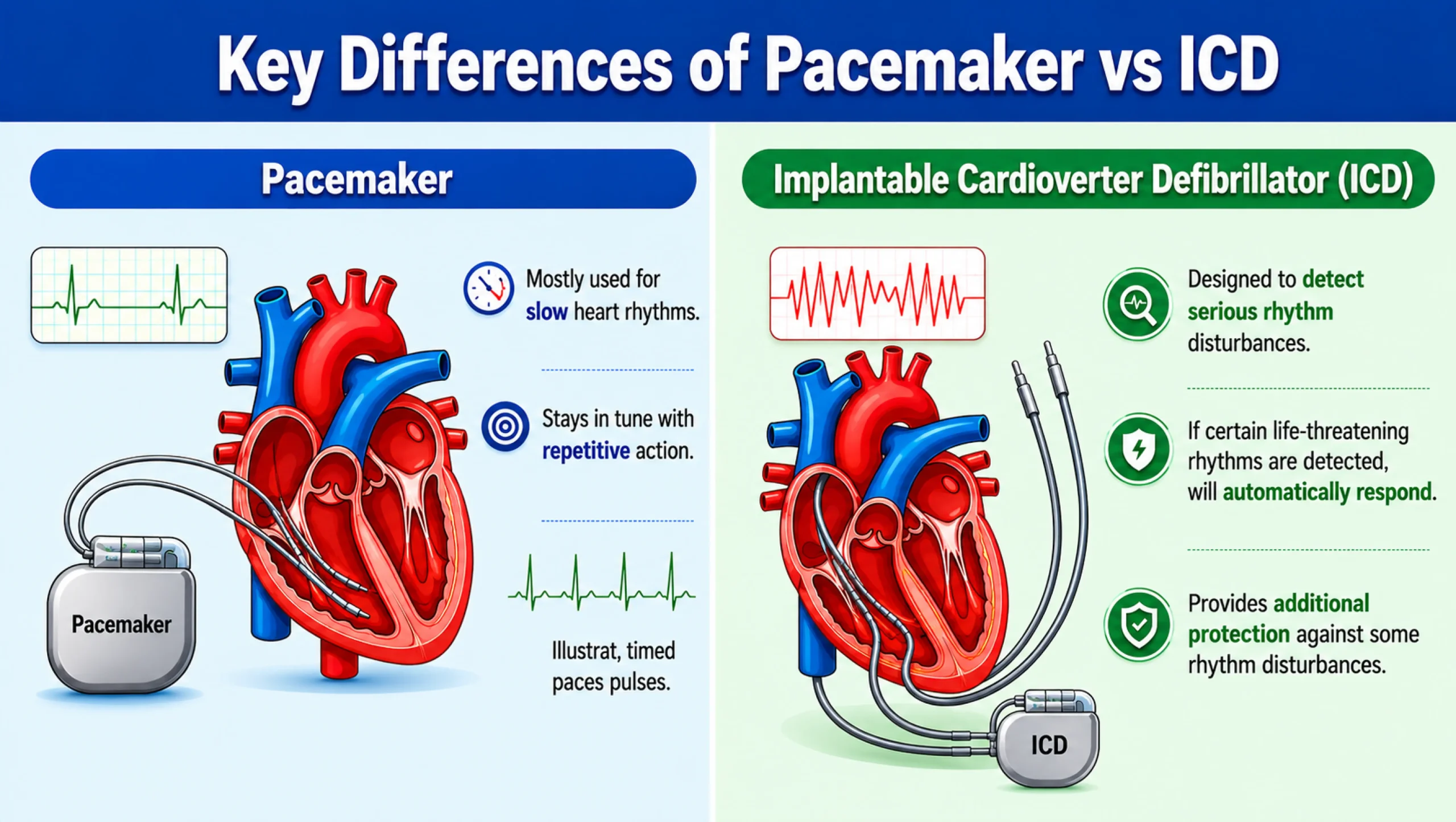
With the increasing prevalence of cardiovascular diseases, the use of Implantable Cardioverter Defibrillators (ICDs) in India is also increasing. PubMed Central has reported that the Indian ICD market is no less than USD 50 million, driven by transvenous ICDs. Both devices are used for heart rhythm, but for different reasons.
It is determined by the best cardiologist in Chennai based on the cardiac assessment, symptoms and the type of heart disease.
Yes. Some sophisticated ICDs also have pacemaker capabilities. The same device can:
The best treatment is determined after careful examination of the heart and testing.
While pacemakers and ICDs are both designed to help people who have problems with heart rhythm, they are indicated for different medical conditions. They allow the heart to function more normally and can enhance comfort, energy and quality of life. Prompt and accurate diagnosis and prompt cardiac treatment can contribute to the selection of the best possible treatment strategy for the individual patient.
A pacemaker is used to treat the following conditions:
Each treatment plan is tailored to the person’s heart health and medical history. Regular monitoring and timely diagnostic support from a reliable lab test centre in Chennai can also play an important role in tracking heart health and guiding the next steps in care.
Doctors may evaluate symptoms such as:
Proper cardiac evaluation is important as these symptoms can happen for different reasons.
Pacemaker and ICD implantation are usually performed in an expert cardiac unit. Typically, the method includes:
Most of the procedures are relatively short in duration, and many patients make a good medical recovery. Doctors provide a lot of detail before and after surgery to ensure a smooth healing process.
Most patients recover slowly and pain-free. Doctors may recommend:
Most people will recover in a few weeks with medical supervision.
After getting a pacemaker or ICD, many people lead normal and productive lives. Patients can often:
Follow-ups are conducted periodically to ensure that the device continues to function properly over time. Family members and health care providers also provide support based on their confidence.
Yes. Most people live normally and have an active life after the implant. In the presence of proper medical care and follow-ups:
Your cardiologist will advise the amount of activity, lifestyle modifications and follow-up that is appropriate for your situation.
Your doctor might suggest some precautions, including:
Generally, most electronic devices used in daily life are safe to use in normal circumstances.
Doctors choose between a pacemaker and an ICD based on the patient’s specific heart condition and the type of rhythm problem they have. A pacemaker is usually recommended when the heart beats too slowly, causing symptoms like fatigue, dizziness, or fainting. An ICD is often advised for people who are at risk of dangerously fast or life-threatening heart rhythms that could lead to cardiac arrest. To make the right decision, doctors evaluate the heart’s pumping function, symptoms, medical history, test results, and overall heart health.
Doctors may recommend:
These assessments can help decide which device will be the best long-term choice for heart support.
If you have any of the following symptoms, you should see a cardiologist:
Early cardiac evaluation can detect any cardiac rhythm issues and enable timely care. The highly trained cardiology experts at Dr Mehta’s Hospitals deliver patient-centred treatment for heart rhythm disorders through cutting-edge diagnostic and therapeutic options.
Pacemakers and ICDs are essential medical devices that play a key role in maintaining normal heart rhythms and enhancing the quality of life for many people. An ICD is used primarily to monitor and protect the heart from arrhythmias under specific high-risk conditions, whereas a pacemaker is primarily for the treatment of slow heart rates.
Many individuals live active, confident and full lives following device implantation despite early diagnosis, personalised treatment and regular follow-up care. If you’re seeing symptoms linked to your heart’s irregular rhythm, an experienced cardiologist can give you the proper advice and comfort. Contact our experienced doctors right now to begin your treatment.
A pacemaker primarily treats fast heart rhythms, and an ICD monitors and treats some severe abnormal heart rhythms.
2. Is pacemaker implantation painful?
It typically takes place under anaesthetic and medical supervision to ensure the patient’s comfort.
3. Can a person travel with a pacemaker or ICD?
Yes. Most individuals can travel normally after recovery, following their doctor’s advice.
4. How long does a pacemaker or ICD last?
The duration of the battery life is dependent on the type of device and its use, but many devices can last for several years before the battery needs replacing.
5. Can mobile phones affect a pacemaker or ICD?
Most modern mobile phones are safe to use under normal conditions. Physicians may suggest that they remain just slightly away from the implant site.
6. Will I need regular check-ups after implantation?
Yes. Doctors can follow up regularly to track the performance of the device and the heart’s overall health.
7. Can I exercise after getting a pacemaker or ICD?
With medical guidance, many people are able to return to moderate physical activity after recovery.
8. Who may need an ICD?
An ICD may be considered by doctors for people who have some high-risk cardiac rhythm disorders.
9. Is recovery after implantation long?
Generally, patients make a slow recovery in a few weeks and return to normal activities without difficulty.
10. When should I consult a cardiologist for heart rhythm symptoms?
If you experience dizziness, fainting, palpitations, breathlessness or unusual sensations of heartbeats, you should seek medical advice.