

Your urine can reveal important information about your overall health. In some cases, routine urine tests may detect excess protein in the urine, a condition known as proteinuria.
If you are hearing this term for the first time, it may sound confusing or concerning. In most cases, however, protein in the urine is temporary and can be managed. Learning about the causes of protein in urine, symptoms, and treatment options can make you feel more educated and more at ease.
Fortunately, many people can manage proteinuria effectively and maintain healthy kidney function with early medical attention and the right lifestyle measures.
Proteinuria refers to the presence of excess protein in the urine. The kidneys normally filter out waste and retain important materials such as protein.
When the kidneys are stressed or affected, small amounts of protein may leak into the urine. This may occur temporarily after dehydration, exercise, or fever. Sometimes it means there is something else that needs to be examined in the kidneys.
Studies in India suggest that proteinuria rates vary widely, ranging from around 0.47% in some rural communities to significantly higher levels among people at greater risk of kidney problems. This condition is often discovered before symptoms occur, when people are having a routine urine test.
One of the common signs of proteinuria is foamy or bubbly urine. Foamy urine can sometimes occur due to dehydration or forceful urination, but persistent foam may indicate excess protein in the urine.
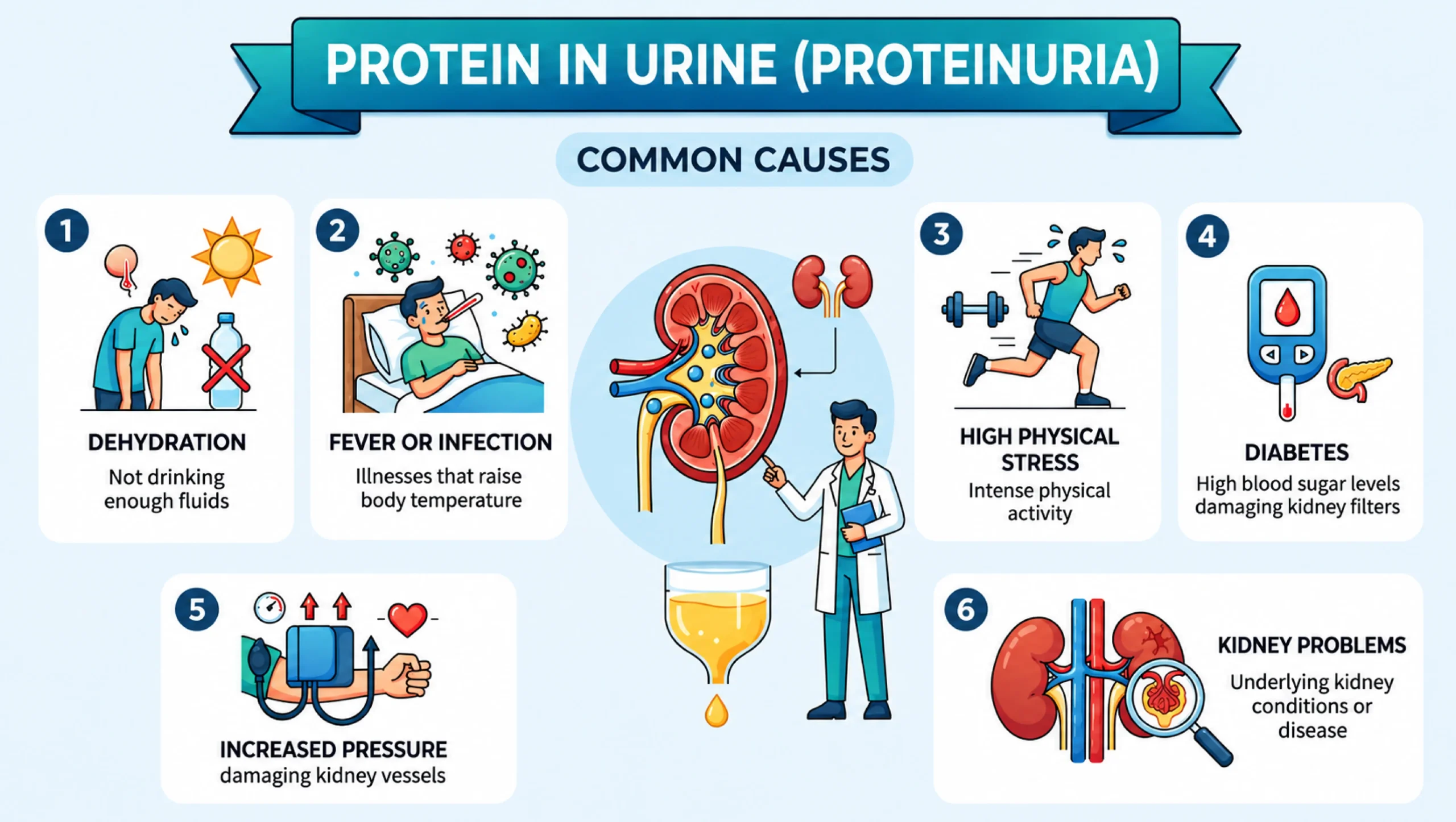
There are multiple causes of proteinuria, some of which are not related to chronic renal disease. Here are the common causes of proteinuria:
Identifying the underlying cause is important for choosing the right treatment and protecting long-term kidney health. Early treatment by experts at the best nephrology hospital in Chennai can facilitate the identification of kidney-related issues at an early stage and help to achieve improved long-term kidney health results.
In some cases, proteinuria may not cause obvious symptoms initially. However, certain symptoms of protein in urine may become noticeable over time. Here are the early signs of kidney problems:
These symptoms do not always indicate a serious condition, but persistent changes should be evaluated by a doctor. Getting timely evaluation through advanced diagnostic services and lab tests in Chennai can help identify the underlying cause early and guide the right treatment for better health outcomes.
Proteinuria can sometimes be temporary, while in other situations it may continue over repeated tests.
| Type | Temporary Proteinuria |
Persistent Proteinuria |
|
What it means |
Short-term change in urine protein – often linked to temporary stress on the body. | Protein present over repeated tests – may need further medical evaluation. |
|
Common causes |
Exercise, dehydration, and fever usually improve once the body recovers. |
Kidney-related conditions or chronic issues may require long-term monitoring. |
|
Duration |
Usually resolves on its own – often temporary and manageable. |
Lasts longer – may require ongoing medical evaluation or treatment. |
|
What to do |
Monitor and repeat tests if needed – doctors may recommend repeat urine tests to ensure the condition resolves. |
Consult a doctor for further checks – additional evaluation helps understand the cause. |
Understanding the type of proteinuria helps doctors decide the next steps for care and treatment.
Proteinuria is typically detected by a urine test. Depending on the level of protein detected and health status, doctors may order other tests.
In the PubMed Central study group, about 9.3% of people were found to have proteinuria. A similar cross-sectional study conducted in the coastal regions of Villupuram district in Tamil Nadu also reported related findings.
Common tests include:
Early diagnosis is important for good planning of treatment and for the maintenance of good kidney function over the long term. Access to a reliable online pharmacy in Chennai can also make it easier to get prescribed medications on time and support consistent care for better kidney health management.
The right treatment for proteinuria is decided based on the main health condition causing it. Treatment may emphasize kidney support and management of related conditions, when appropriate. Here are the typical treatments:
Staying hydrated, eating a balanced diet, staying physically active, and attending regular health check-ups can help support healthy kidney function naturally.
It is important to note that the presence of protein in the urine does not necessarily imply a significant problem, particularly if it is related to temporary factors such as dehydration or fever. However, if protein continues to appear in repeated tests, it’s important to seek medical guidance.
If you experience foamy urine, swelling, trouble with urination, or constant fatigue, you may want to visit a doctor. Early medical evaluation can help identify the cause and ensure timely treatment and peace of mind.
Knowing what to look for in the early stages of kidney disease and getting treatment early can help maintain healthy kidneys over time. Consulting specialists in advanced urology care in Chennai can also help identify symptoms like blood in urine early and ensure timely treatment for better urinary health outcomes.
There are many reasons why protein might appear in the urine, from some temporary changes in the body to conditions that may require medical treatment.
The reassuring news is that many cases can be managed effectively with proper medical care, lifestyle support, and regular monitoring. It is important to know what kidney health symptoms can arise and what might be the causes to ensure you are taking proactive action to avoid kidney problems.
If you notice persistent foamy urine or other signs of kidney health concerns, seeking timely medical advice is important. Connect with our expert doctors to start your treatment now.
It indicates that a person has more protein in their urine than they should, and may require further investigation.
2. Is foamy urine always linked to proteinuria?
Not always. Sometimes, foamy urine can happen temporarily due to dehydration or passing urine too quickly, but in some cases, it may point to an underlying health issue that needs medical attention.
3. Can dehydration cause protein in urine?
Yes, dehydration may raise the amount of protein excreted in the urine, which may make urine more concentrated.
4. What are the common signs of protein in the urine?
Common symptoms may include foamy urine, swelling in the legs or feet, fatigue, and changes in urination patterns.
5. Is proteinuria treatable?
Yes, proteinuria is often treatable. Treatment depends on the underlying cause and may include lifestyle changes, medications, hydration, and regular monitoring.
6. How is proteinuria diagnosed?
Usually, the diagnosis of proteinuria is made with urine testing, and sometimes blood or imaging tests may be recommended.
7. Can diabetes cause protein in urine?
Yes, high blood sugar over time can impact kidney function and cause protein to leak into the urine.
8. How can I reduce protein in urine naturally?
Supporting kidney health naturally may include staying hydrated, eating a balanced diet, managing blood pressure and blood sugar levels, and maintaining a healthy lifestyle.
9. When should I consult a doctor for protein in urine?
You should consult a doctor if you notice persistent foamy urine, swelling, fatigue, or repeated abnormal urine test results.
10. Can proteinuria be temporary?
Absolutely, exercise, dehydration, fever, or stress can cause transient proteinuria, and it usually resolves as the body heals.
11. Can protein in urine go away on its own?
Yes, temporary proteinuria caused by dehydration, fever, stress, or intense exercise may resolve on its own once the underlying condition improves.
12. Is protein in urine a sign of kidney disease?
Sometimes. Persistent protein in the urine can be an early sign of kidney disease, especially in people with diabetes or high blood pressure.
13. What foods should I avoid if I have proteinuria?
People with proteinuria may be advised to reduce excess salt, processed foods, sugary foods, and unhealthy fats. A doctor or dietitian can suggest a suitable kidney-friendly diet.
14. Is proteinuria common in diabetes patients?
Yes. Diabetes is one of the leading causes of proteinuria because high blood sugar can damage the kidneys over time.
15. Can children develop proteinuria?
Yes, children can sometimes develop temporary proteinuria due to fever, dehydration, or physical activity, but persistent proteinuria should be medically evaluated.