

Changes in urine appearance or smell can sometimes become noticeable, especially when urine appears unusually foamy or develops a stronger odour than usual. Although this may be alarming initially, it is usually associated with easy and controllable factors.
Understanding what may contribute to foamy or strong-smelling urine can help individuals identify temporary lifestyle-related causes and recognise when medical advice may be necessary. In many cases, these changes are temporary and can improve with small lifestyle adjustments.
If these symptoms continue for several days or occur repeatedly, consulting a healthcare professional may help identify any underlying condition.
Foamy urine usually appears bubbly or frothy in the toilet bowl and may sometimes be noticed after urinating with force or speed. On the contrary, smelly urine can be of strong or unusual smell as opposed to its normal mild smell.
According to a study published by PubMed Central, nearly 10.1% of patients visiting outpatient clinics were diagnosed with significant bacteriuria, with women accounting for 72.5% of cases, emphasizing the growing need for greater awareness, faster diagnosis, and proactive urinary care among women.
Changes in urine color or odor don’t always indicate a serious medical issue. They can be affected by the level of hydration, food or the speed at which the urine is passed.
But when the foam is long-lasting or the odor is intense and abnormal, it is worth listening to it and knowing the potential causes.
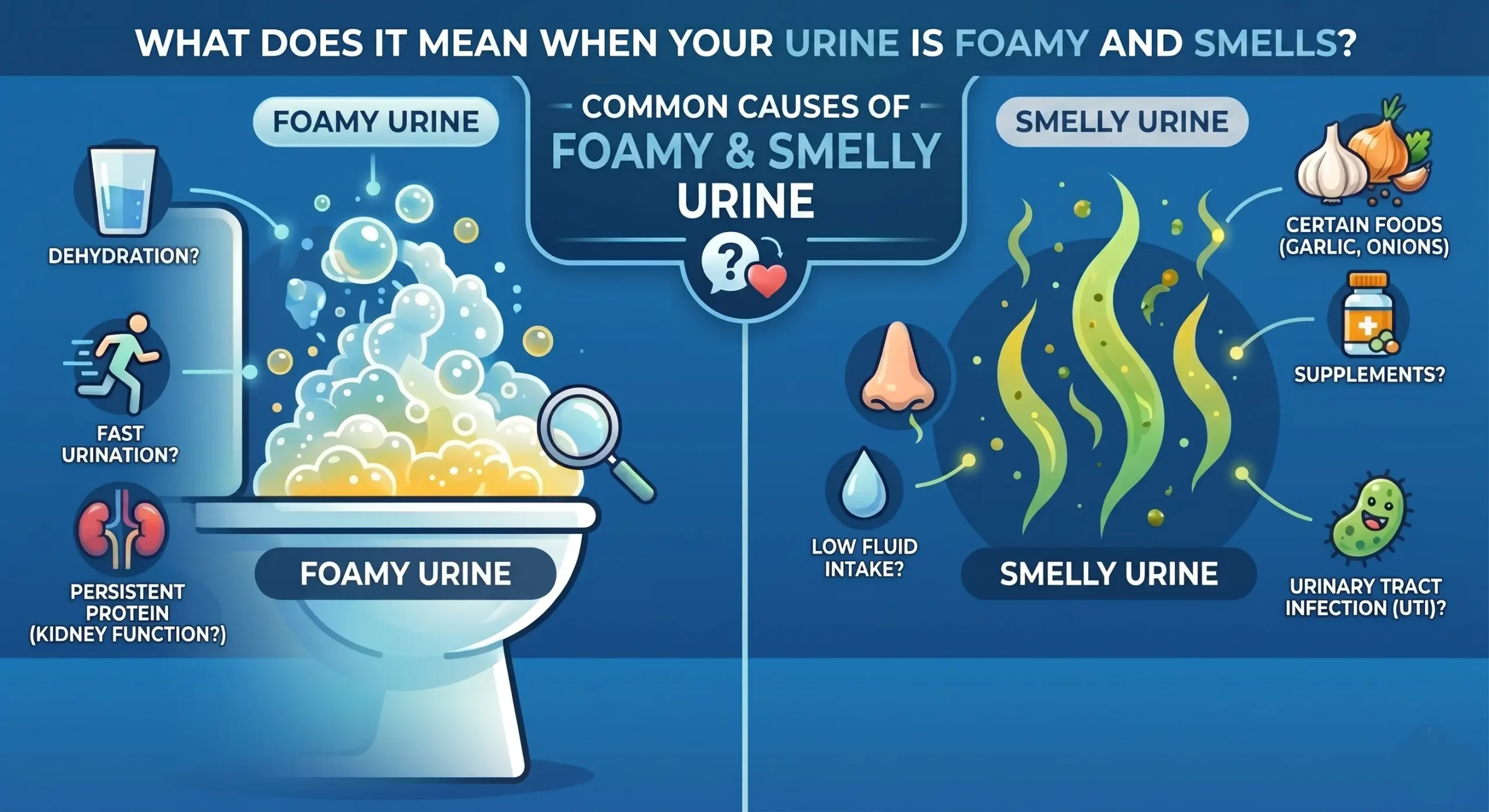
Foamy or unusually strong-smelling urine can develop for several different reasons, ranging from temporary lifestyle factors to underlying medical conditions.
Persistent foamy urine
Persistent foam in urine can indicate high protein levels. This may be related to kidney function and should be evaluated.
Foam with swelling or fatigue
When foamy urine is coupled with body swelling or low energy, it is best to consult a doctor for proper evaluation, and seeking care from the nephrology experts at Mehta Hospital, one of the best nephrology hospitals in Chennai, can help ensure timely diagnosis and the right treatment plan.
Low water intake
Strong urine is usually more odorous. Consuming sufficient fluids may assist in restoring a less offensive odour.
Certain foods
Certain foods like garlic, onions, and specific spices can temporarily change the odor of urine.
Vitamins or supplements
Certain supplements can alter the smell of urine, but this change is typically not harmful.
Strong, persistent odour
When the smell is still strong despite adequate hydration, it can be a sign of a problem.
Pain or frequent urination.
These could be signs of an infection in the urinary tract. Early medical evaluation and treatment can usually help manage the condition effectively.
Smelly urine.
When strong-smelling urine occurs along with pain, fever, or frequent urination, further medical evaluation may be recommended to identify the underlying cause.
Daily habits can significantly support urinary health and alleviate symptoms.
Drinking enough water throughout the day helps dilute urine and may reduce strong odours caused by concentrated waste products. Proper hydration also supports overall kidney and urinary function. A balanced diet also helps in the overall body functioning which contributes to the healthy urine patterns. When the body does not receive enough fluids, urine becomes more concentrated, resulting in a stronger smell. According to a report by Indian Express, certain drinks like coffee or alcohol can also temporarily change the way urine smells.
Kidney and urinary health can be helped by eating fresh fruits, vegetables, and home-cooked meals. Limiting salt, processed foods, and excessively spicy foods can also contribute to avoiding a change in the smell of urine. A balanced diet also helps in the overall body functioning which contributes to the healthy urine patterns. Urine becomes more concentrated and may smell more severe when the body is dehydrated. According to a report by Indian Express, certain drinks like coffee or alcohol can also temporarily change the way urine smells.
Regularly emptying your bladder helps maintain a healthy urinary system. Holding urine for long periods may lead to bacterial growth, which can affect urine smell and comfort. When you listen to what your body is telling you, and do what you need to do, you are more likely to have better urinary health in the long-term.
Proper personal hygiene can be used to minimize the chances of infection that can lead to the alteration of urine smell. Basic routines such as maintaining hygiene and comfortable clothing can be used to promote urinary health. This is particularly important in preventing bacterial growth that may cause discomfort or noticeable odour changes, and staying aware of symptoms like frequent urination at night through resources like this guide can help identify underlying causes early and seek timely care.
Paying attention to changes in urine appearance, smell, or frequency can help you understand your body better. When you observe continuous foam or intense smell, it is good to keep a record of the frequency. Keeping track of persistent symptoms may also help provide clearer information during medical consultations.
Regular health check-ups may be used to detect any underlying issues at an early stage, even before symptoms are evident. Regular health evaluations can help detect kidney or urinary issues earlier, even before symptoms become more apparent. Frequent observation is a useful method to be proactive and to keep long-term well-being.
It may seem strange to notice changes such as foam or a strong smell in the urine, but in most instances, it is associated with such simple factors as hydration or diet.
Understanding the possible causes behind foamy or strong-smelling urine can help individuals make informed decisions about hydration, lifestyle habits, and medical care when necessary. The majority of causes are short-term and can be corrected by minor changes in lifestyle.
If these changes continue or are accompanied by other symptoms, seeking medical guidance can help you feel reassured and supported. Contact us to start your treatment now.
Not always. Temporary foam can occur due to dehydration or fast urination. Persistent foam may need evaluation.
2. Why does my urine smell stronger sometimes?
Strong-smelling urine is often due to low water intake, certain foods, or supplements.
3. Can dehydration make urine foamy and strong-smelling?
Yes, dehydration can make urine more concentrated, leading to both foam and a stronger odour.
4. When should I consult a doctor?
If the changes persist, or if you notice discomfort, frequent urination, or unusual symptoms, it’s best to seek medical advice.
5. Can diet affect urine appearance?
Yes, certain foods and drinks can temporarily change the colour, smell, or appearance of urine.
6. How can I keep my urinary system healthy?
Staying hydrated, maintaining hygiene, and following a balanced lifestyle can support overall urinary health.
7. Is foamy urine always related to kidney disease?
Not necessarily. Temporary foamy urine may occur due to dehydration, fast urination, or concentrated urine. However, persistent foam accompanied by swelling or fatigue may require medical evaluation to rule out kidney-related conditions.
Healthy urine is usually pale yellow to light straw-coloured. Darker urine may sometimes indicate dehydration, dietary influences, medications, or certain medical conditions.
Yes. Urinary tract infections may sometimes cause urine to develop a strong or unusual smell and may also be associated with burning sensation, discomfort, or increased urinary frequency.
In many cases, yes. Proper hydration helps dilute concentrated urine, which may reduce strong odours caused by waste build-up or dehydration.