High blood pressure, or hypertension, is one of the most common health concerns among adults today. Most people know it can affect heart health, but many are unaware that it can also damage the kidneys over time. Fortunately, small lifestyle changes in your daily routine can make a significant difference.
Your kidneys work continuously to remove waste products, regulate fluids, and maintain overall body balance. When blood pressure is too high over a long time, it can damage these vital organs.
Today, we will discuss simple, practical and kidney-friendly steps to reduce blood pressure naturally and maintain overall well-being.
The kidneys contain tiny blood vessels that help filter excess fluids and waste from the body. Healthy blood circulation is essential for these blood vessels to function properly.
Over time, persistently high blood pressure can damage these blood vessels and reduce kidney function. As a result, the kidneys may become less efficient at filtering waste. At the same time, kidney disease can further raise blood pressure, creating a cycle that requires timely management.
According to a report of PubMed Central, around 13% of adults in India are affected by chronic kidney disease (CKD), and high blood pressure and diabetes are responsible for nearly half of these cases.
In many cases, early kidney-related changes may not cause noticeable symptoms. Therefore, regular health check-ups are essential. You should consider consulting a doctor if you notice the following symptoms:
These symptoms may occur due to various health conditions and are not always linked to kidney problems. Seeking medical attention early can help identify the underlying cause and support timely treatment, especially with guidance from experienced kidney specialists in Chennai.
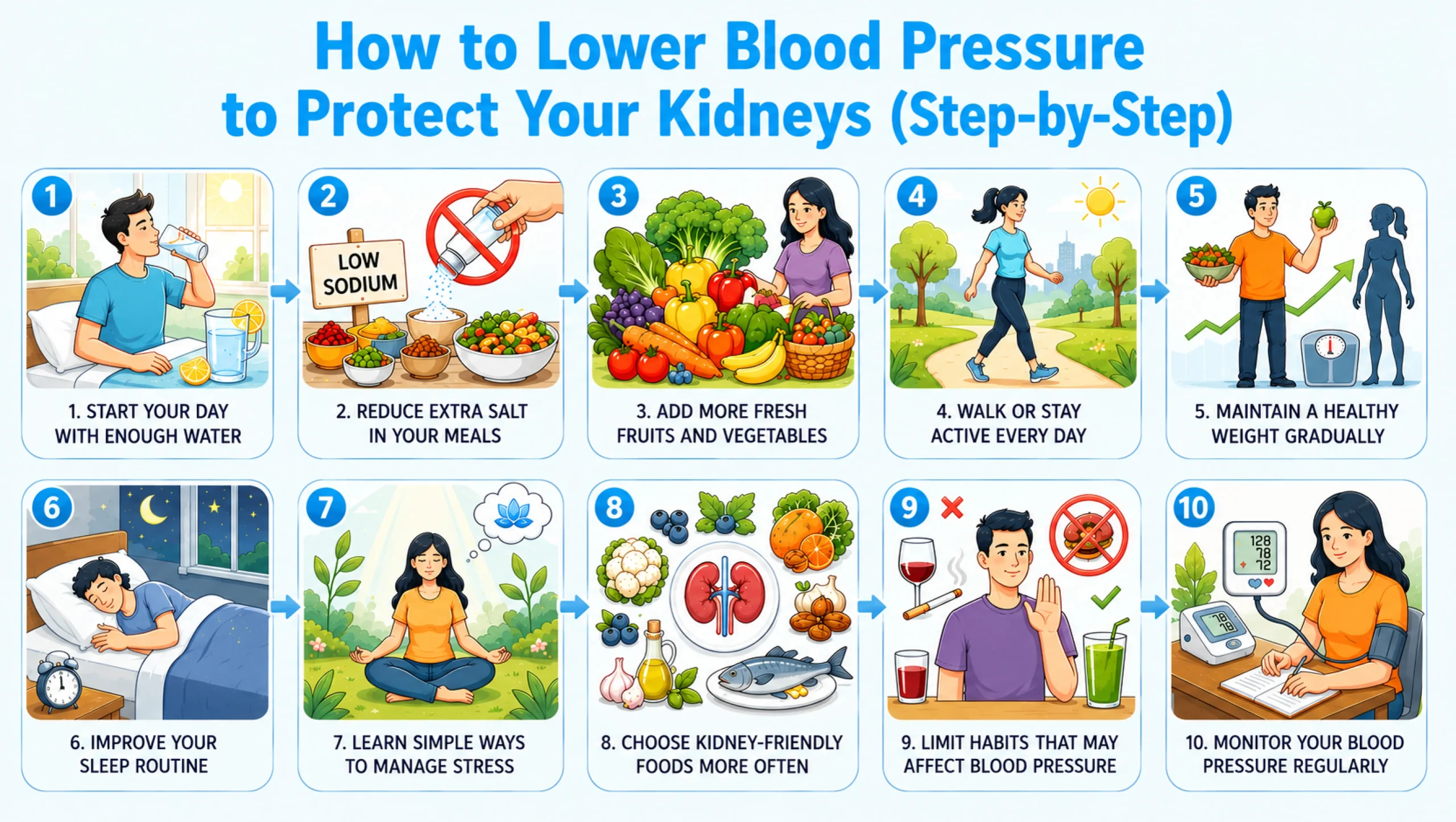
Simple lifestyle habits such as healthy eating, regular exercise, and stress management can support both heart and kidney health. Managing blood pressure early can help improve overall health, energy levels, and daily well-being.
Water is essential for proper circulation and kidney function. Water requirements vary depending on a person’s lifestyle, climate, and medical condition, but most adults are advised to drink around 1.5 to 2 litres of plain water daily. Light yellow urine and regular urination are often signs of good hydration. These are some quick tips:
There is variation in the amount of water that individuals require. If you have kidney-related health issues, it is best to consult your doctor about the right number of fluids you should consume each day.
Excess salt intake can increase blood pressure and affect overall health. Many packaged and restaurant foods contain hidden sodium. Here are some basic tips you can follow:
Fresh fruits and vegetables provide fibre, vitamins, and minerals that support heart and kidney health. Some good recommendations for regular use are:
A colourful and balanced diet rich in vegetables may help support healthy blood pressure naturally, especially when paired with the right medications and consistent care from trusted healthcare providers like the online pharmacy in Chennai for easy access to prescribed medicines and wellness support.
Regular physical activity supports healthy circulation and overall well-being. You do not need intense workouts to experience health benefits. Other activities, like gentle ones, can help too. Try these options to stay active:
It is better to be consistent than perfect.
Losing even a small amount of weight may help improve blood pressure levels. Try to focus on sustainable habits:
Avoid extreme diets or quick-fix methods, as slow and steady lifestyle changes are often easier to maintain and more effective in the long run, especially when supported by regular health monitoring through trusted services like the diagnostic lab services in Chennai.
Poor sleep can affect stress levels, energy, and blood pressure regulation. These are some good sleeping habits:
Adults need about 7 to 8 hours of sleep a night.
Many people may not realise that daily stressors can affect blood pressure. These are some simple stress-management ideas:
Even a few minutes of relaxation each day can positively affect overall well-being.
Certain foods may support healthy blood pressure and kidney function when included as part of a balanced diet.
|
Food |
How It Helps Blood Pressure and Kidneys |
|
Oats |
Rich in fibre and may support heart health |
| Leafy vegetables |
Provide important nutrients and antioxidants |
|
Fresh fruits |
Help maintain hydration and provide vitamins |
| Nuts and seeds |
Offer healthy fats when eaten in moderation |
| Healthy protein options |
Support muscle health without excess processed ingredients |
Choose freshly prepared meals whenever possible and focus on balanced nutrition.
Certain lifestyle habits can place extra strain on the heart and kidneys. Helpful changes include:
Small, consistent changes can make a meaningful difference over time.
Regular blood pressure monitoring helps you better understand your overall health. You can:
Early tracking of change enables timely support and guidance.
You should consider consulting a kidney specialist if:
Early care can help prevent kidney disease and enhance long-term health.
To get the best care and advice for the kidney, you should seek help from an experienced nephrologist, who will help you understand the lifestyle and treatment approach you need.
Taking care of your blood pressure is one of the most valuable steps you can take for your kidney health. Everyday habits such as staying active, eating a balanced diet, getting adequate sleep, and managing stress can positively support your overall health.
Gradual changes over time can have lasting effects. With regular medical check-ups and healthy lifestyle habits, many people can maintain healthy blood pressure and support long-term kidney health. Contact our expert doctors to start your treatment now.
Hydration helps with blood flow and well-being. While water alone may not control blood pressure, good hydration is an important part of a healthy lifestyle.
2. Which foods are good for kidney health?
Kidney-friendly meal plans may include fresh fruits, vegetables, oats and balanced protein sources. Individual health needs may differ from those outlined here.
3. Is walking good for blood pressure?
Yes. Walking can help you get better circulation, improve your heart health, and keep your blood pressure normal.
4. How often should blood pressure be checked?
Adults should monitor their blood pressure regularly, especially if they have kidney disease, diabetes, or a family history of highpertension.
5. Can stress affect blood pressure?
Yes. Continuous stress can lead to higher blood pressure. Stress management techniques and healthy lifestyle habits can help reduce stress effectively.
6. When should I consult a nephrologist?
You should consult a nephrologist if you have persistent high blood pressure, swelling, diabetes, or noticeable changes in urination.
7. Can reducing salt really help blood pressure?
Yes. Restricting additional salt in food could help to maintain healthier blood pressure levels and lessen the additional burden on the kidneys over the long haul.
8. Are fruits and vegetables important for kidney health?
Fresh fruits and vegetables are rich in nutrients, fibre and antioxidants, which are essential for general well-being, including heart and kidney health.
9. Does sleep affect blood pressure?
Quality sleep is a significant factor when it comes to good blood pressure. Poor sleep habits can impact stress and body balance.
10. Can high blood pressure affect kidney health even without symptoms?
Yes. Blood pressure may not have obvious signs or symptoms in many situations at first. Regular health check-ups can help detect problems early and support long-term kidney care.
11. How often should kidney function be tested?
People with diabetes, hypertension, or a family history of kidney disease should undergo regular kidney function tests as advised by their doctor.
Early signs may include swelling, fatigue, changes in urination, high blood pressure, and difficulty concentrating.