Sleep plays a crucial role in how your body rests, heals, and recharges. Your nighttime sleep habits can impact your spine health in ways you may not realise.Sometimes, morning stiffness or mild back pain isn’t due to an injury but linked to your sleep patterns. The good news is that small changes and better awareness can make sleep a powerful tool for improving spinal alignment and comfort.
Your spine is naturally in the S-shape which enables your posture and movement. By sleeping in a manner that keeps this natural curve your muscles are relaxed, your nerves are not strained, and your blood moves freely.
Most Indians prefer side sleeping, with nearly 62% of total sleep time spent in this position. The second most preferred posture is sleeping on the back which constitutes approximately 34%of total sleep time.
How is spine health affected? Awkward positions, lack of proper pillow support, or back rotation may over time cause strains on muscles and joints.
If pain persists, the best orthopedic doctors in Chetpet help identify the cause early.
How to avoid back pain while sleeping? Before listing them, remember: the goal is to keep your spine neutral and supported while avoiding pressure points.
Back sleeping is the best sleeping position for upper back pain. It maintains the spinal position in a neutral position to minimize joint and muscle pressure. This posture balances body weight, supports natural alignment, and may reduce lower back strain compared to stomach sleeping. A small pillow placed under the knees will help to reduce strain on the lower back and increase comfort.
How sleep position affects your spine? The fetal position is relaxed to relieve the lower back and hip pressure. Maintaining a bent knee position and a straight back helps in better positioning. A pillow between the knees prevents the upper leg from rotating forward, helping your hips and spine stay aligned.
Sleeping with the head slightly raised can be beneficial to individuals who have lower back pain. This position supports spinal alignment and may also ease snoring or acid reflux. It resembles a comfortable sitting position and reduces the stress on the lumbar spine, which helps the muscles to remain relaxed during sleep. If the pain still affects daily comfort or sleep quality, speaking with a trusted spine health surgeon in Velappanchavadi can offer the right guidance and long-term relief.
The left side position can be helpful in digestion and blood circulation. This is a common posture to be suggested when one is pregnant, as it enhances the circulation of both the mother and the baby. A pillow behind the lower back and under the belly is used to ensure a comfortable position is taken without pressure points.
A long body pillow can help the shoulders, spine, and hips in the best sleeping position for spine alignment. This reduces twisting and helps maintain proper alignment. The additional support may also alleviate breathing and load on the lower back and this is particularly in mildly discomforted persons.
Swelling can be minimized and pressure on the spine eased by keeping the legs and head slightly elevated. This posture can also assist individuals who suffer from snoring or congestion. Elevation supports natural circulation and keeps the back neutral and relaxed during sleep. If symptoms become sudden or severe, getting 24/7 Medical support can make a significant difference in comfort and recovery.
A pillow that holds the neck in a straight position with the spine helps avoid strain on the upper back and shoulders. This assists in decreasing morning stiffness and enhances comfort. The cervical spine remains relaxed and supported by ensuring that the head is not tilted forward or backwards.
Sleeping on the stomach is the rarest sleep style worldwide, with only around 7% of adults preferring it. These spine sleeping positions can create unnecessary pressure on the spine, joints, and muscles.
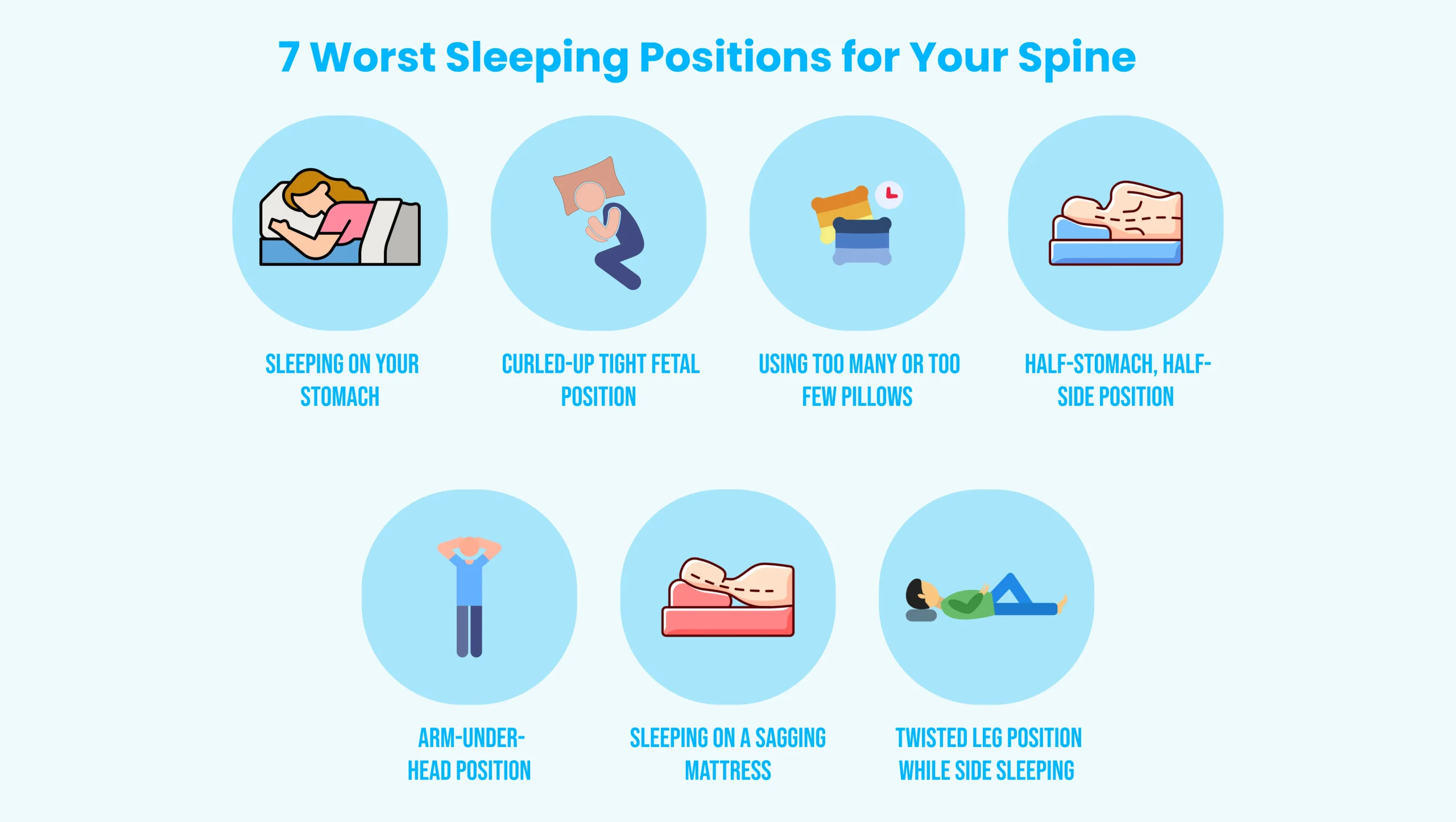
Sleeping on the stomach may twist the neck and straighten the natural slope of the spine. This can tighten the neck, shoulders, and lower back over time. In the long run, this stance may cause undue tension to soft tissues.
A curled sleeping posture can reduce the breathing capacity and over round the spine. This position can keep muscles tense throughout the night. Long-term support and comfort are important in keeping the spine straight and relaxed.
Pillows can be stacked or not, and this can result in the neck either tilting up or down. This influences the spinal position and may form pressure points. Selection of a single supportive pillow aids in keeping the body in a neutral position and minimizes the amount of muscle tension.
This pose bends the spine and causes unequal pressure on the spine. The lower back may strain when the leg oversteps the other. Maintaining the position of hips and shoulders is beneficial to prevent spinal protection and preventable discomfort.
The arm sleeping beneath the head can flatten the nerves and exert pressure on the shoulder joint. This may bring about stiffness or numbness over a period of time. It is important to keep the arms relaxed and lying beside the body or resting on a pillow to ensure comfort.
A mattress which sinks or is not supportive can make the spine bend abnormally. This is able to make muscles work harder during the night. A firm, supportive mattress helps maintain proper posture and overall sleep comfort.
The hips and lower spine can be rotated by falling on one leg as you sleep on your side. The purpose of holding a pillow between the knees is to keep the back straight and not to allow the lower back to twist. For those who also experience discomfort while standing or walking, supportive footwear may further enhance alignment and overall relief. Does it Really Help?
Although you may have been sleeping in a particular manner over a period of time, gradual changes can assist. Try adjusting your pillows, back support, or sleep angle until you find a comfortable position. In case of persistent pain, it may be a good idea to consult a spine doctor or physiotherapist. You can consider care support at the top orthopedics hospital in Chennai to be evaluated and advised.
Even minor sleep routines may have an impact on your morning spine. Many people don’t realise how much sleep posture impacts long-term spinal comfort and alignment. Knowing about these habits will allow you to sleep well and get up renewed.
Having a pillow that raises the head excessively or insufficiently can cause stress to the neck and the upper back. The perfect pillow is one that supports your head in line with your spine in order to allow your neck to be relaxed during the night.
Pillows lose their support after some time and would not be able to maintain a neutral position of your neck. When the pillows are old, it is good to replace them to ensure that the posture is in place and the body is not straining unnecessarily.
Sleeping on a sitting position, a recliner or a sofa can put an uneven pressure on the spine. Although it is comfortable in the short term, it does not promote natural spinal curves.
When you always wake up sore or stiff, it can be an indication that your sleeping position or bed mattresses require some attention. These early warning signs can be listened to and prevent discomfort in the long run.
Worn or old mattresses can sink in areas and cause disruption of the spine. A supportive sleep surface maintains posture and allows joints and muscles to rest properly.
Sleep should leave you refreshed and restored. The correct sleep posture cushions the natural curvatures of your body, reduces strain and promotes long-term musculoskeletal wellbeing. Minor changes today can bring significant change to the way your back will feel tomorrow.
In case sleep discomfort continues to be or turns out to be common, book an appointment with an orthopedic specialist at Dr. Mehta’s Hospitals, the Best hospital in Chennai, and seek individual attention. Reach out to connect with our specialists today.
If sleep-related discomfort lasts more than a week or interferes with daily activities, consulting an orthopedic doctor is helpful.