Asthma and COPD both make breathing harder, and both can bring on coughing and wheezing. That is why people often mix them up. They are different conditions, though, with different causes, patterns, and treatment plans.
Knowing which one you may have helps you get the right care sooner. This guide explains the differences in simple words, so you can spot the signs and know when to see a doctor.
No. Both affect the airways, but they behave differently.
|
Feature |
Asthma | COPD |
| Typical onset | Can begin in childhood or adulthood |
More common later in adulthood |
|
Symptoms |
Often vary or occur in episodes | Often persistent and gradually worsen |
| Common triggers/risk factors | Allergens, exercise, infections, cold air |
Smoking and long-term exposure to irritants |
|
Cough |
Can occur during flare-ups | Often persistent |
| Breathlessness | May come and go |
Often becomes more persistent |
Asthma often runs in families and is linked to allergies. Common triggers include:
Over 26 years, the share of Indians living with COPD grew from 3.3% to 4.2%, a rise reported in The Lancet Global Health. The biggest causes are:
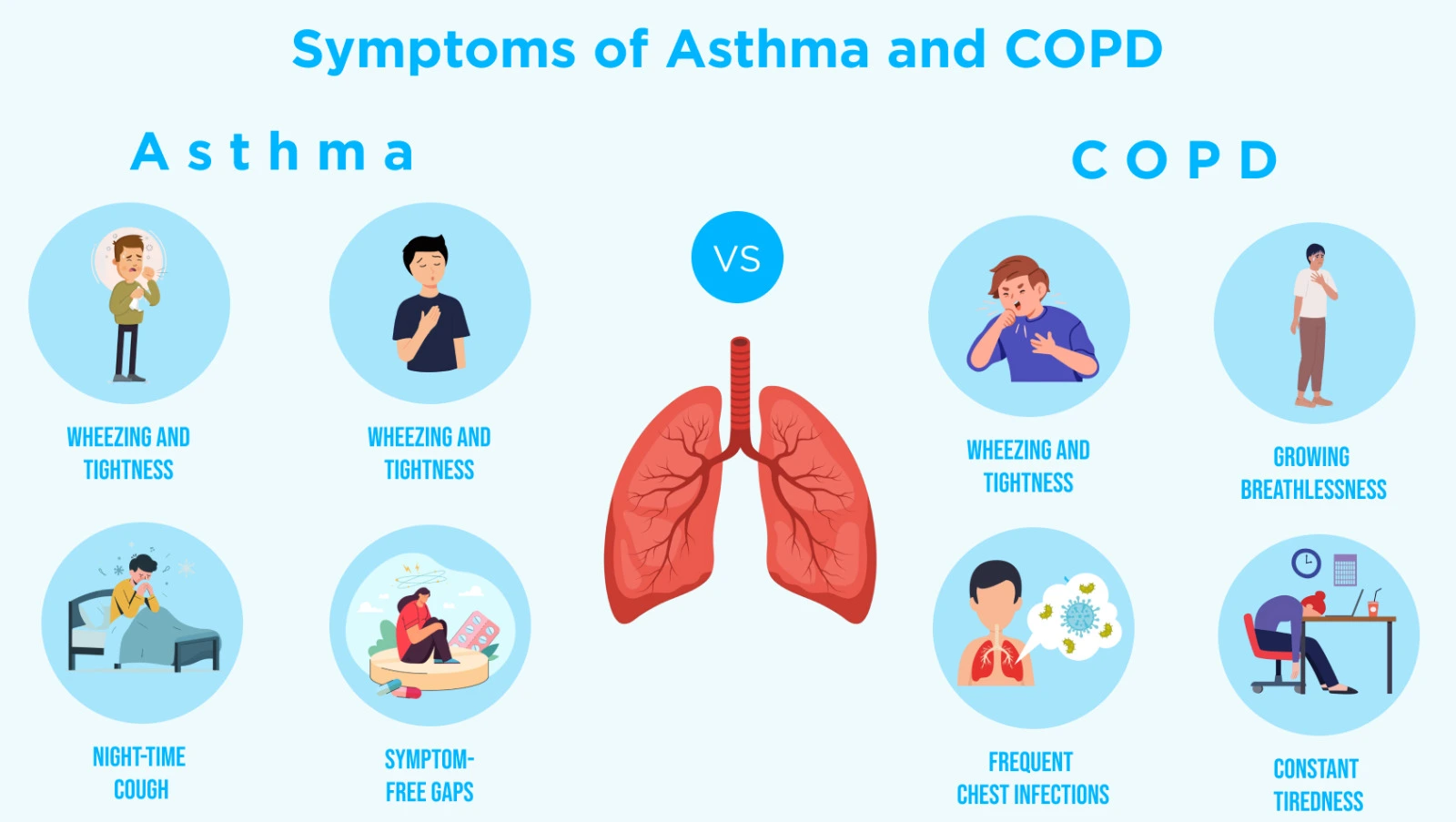
A whistling sound while breathing out and a squeezed feeling in the chest are classic signs. They often appear during a flare-up and ease once the airways relax.
Your breathing may feel tight and hurried on one day, then perfectly easy the next. It often follows a trigger such as dust, smoke, or cold air.
A dry cough that gets worse at night or after exercise is common in asthma. It may settle on its own or with a reliever inhaler.
Between flare-ups, breathing often feels completely normal. This pattern of good days and bad days is one of the clearest signs of asthma.
A cough with mucus that refuses to clear up for several weeks is often one of the first warning signs. Many people brush it off as a smoker’s cough or a seasonal cold.
Breathing gets harder gradually, even during simple tasks like climbing stairs. Since breathlessness can also come from the heart, it helps to know the heart attack warning signs too.
A simple cold can travel down to the chest and hang on far longer than it should. Repeated infections can weaken the lungs further.
When the lungs work harder to move air, the whole body feels drained. This tiredness often stays even after rest.
Your doctor starts with your symptoms, family history, and habits, such as smoking or work exposure. Then comes a lung test.
Once the cause is clear, asthma treatment usually focuses on controlling airway swelling and avoiding triggers, while COPD care focuses on easing symptoms and preventing flare-ups.
Yes. This is called asthma-COPD overlap, and a study at a North Indian tertiary care hospital found that 25.5% of patients met its criteria.
Book a visit if you notice any of these:
Seek emergency care right away if you struggle to speak a full sentence, your lips turn bluish, or your reliever inhaler gives no relief.
If these signs sound familiar, our pulmonologist specialists in Chennai can test your lungs and guide you on the next steps.
Asthma and COPD may feel alike, but they need different care. Asthma tends to flare up around certain triggers, whereas COPD develops gradually as the lungs wear down over many years. The earlier you find out which one you have, the easier it is to stay active and breathe comfortably.
If a cough or breathlessness has become part of your routine, do not ignore it. Dr. Mehta’s Hospitals, the best private multispeciality hospital in Chennai, offers lung testing and expert guidance under one roof. A short check-up today can protect your breathing for years.
Asthma does not turn into COPD on its own, but poorly controlled asthma combined with smoking can raise the risk of lasting lung damage.
2. Is COPD curable?
COPD can’t be cured, but the right treatment can ease your symptoms, slow further damage, and help you stay active.
3. Can asthma be cured?
Asthma can’t be cured, but the good news is that most people keep it well under control with the right plan and live normally.
4. Which is more serious, asthma or COPD?
COPD usually worsens over time, while a severe asthma attack can be dangerous, so both need medical care.
5. Which test tells asthma and COPD apart?
Spirometry, often repeated after an inhaler dose, is the main test.
6. Does asthma only affect children?
No, it can begin at any age, including adulthood.
7. Can non-smokers get COPD?
Yes, long-term exposure to polluted air, cooking smoke, or workplace dust can cause it.
8. Do the same inhalers work for both?
Some are used for both, but the type and dose differ, so use only what your doctor prescribes.
9. Which doctor should I see for breathing trouble?
A pulmonologist is the right specialist for lung and breathing problems.
10. Is exercise safe with asthma or COPD?
Yes, light and regular activity helps, but check with your doctor on what suits you.