
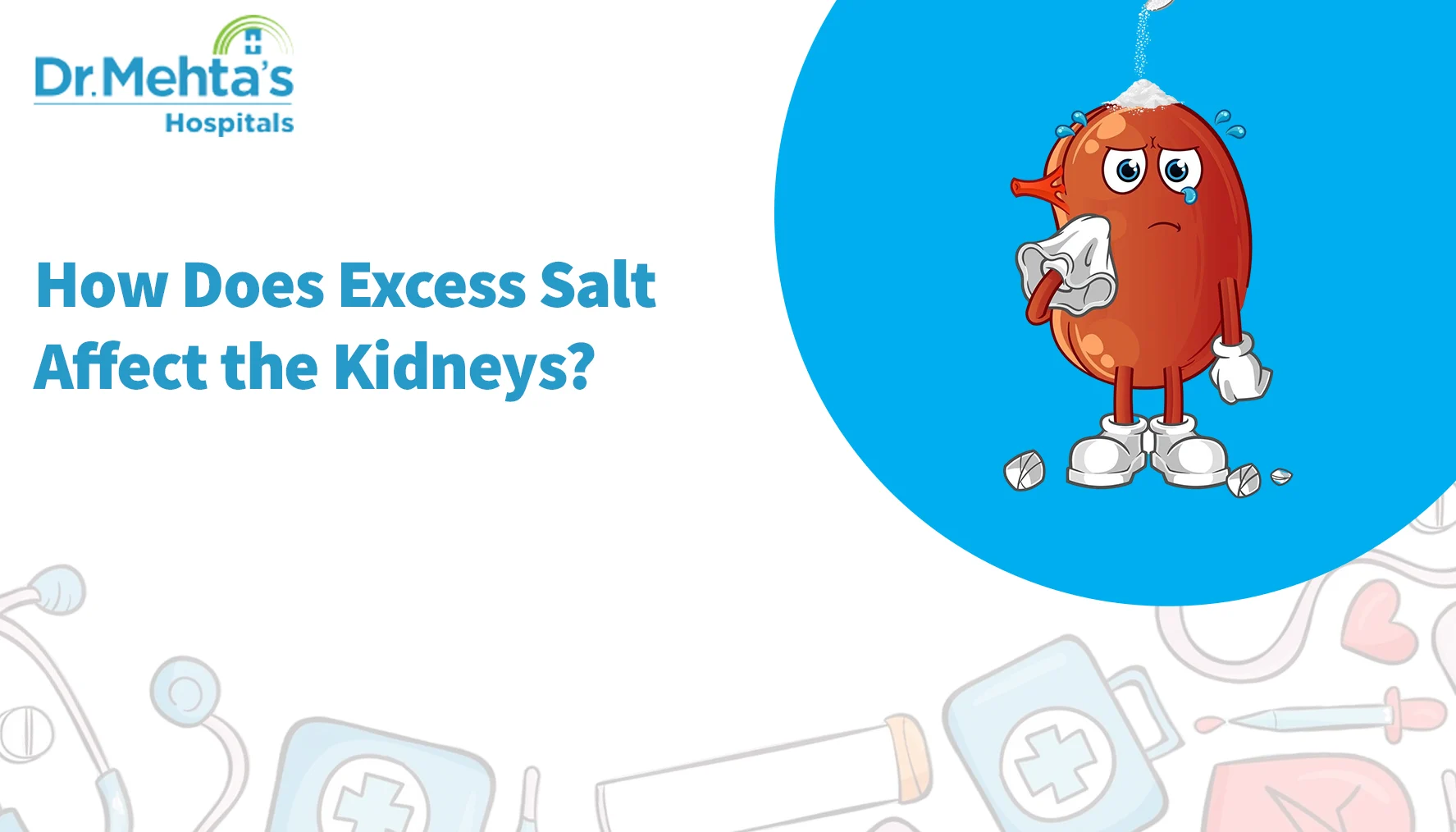
Excess salt can put extra pressure on the kidneys by increasing the amount of sodium the body needs to handle. Eating too much salt regularly can also raise blood pressure, which may gradually affect kidney health.
Salt is a common part of everyday meals, from home-cooked dishes to packaged snacks and ready-to-eat foods, making it easy to consume more than intended. The effects may not be noticeable immediately, but consistently high salt intake can become a concern over time.
So, how much salt is too much, and what can you do to protect your kidneys? Let’s look at the effects and simple ways to reduce your intake.
Eating too much salt makes the kidneys work harder to remove excess sodium from the body. This can increase fluid retention and raise blood pressure, putting additional strain on the kidneys over time. A consistently high-salt diet may therefore contribute to kidney damage, especially in people who already have kidney problems or high blood pressure.
Reducing salt can help ease this pressure and support healthier kidney function. According to data from the World Health Organization and the Indian Council of Medical Research, average salt intake in India ranges from 8 to 11 grams per day, nearly twice the WHO-recommended daily limit of 5 grams.
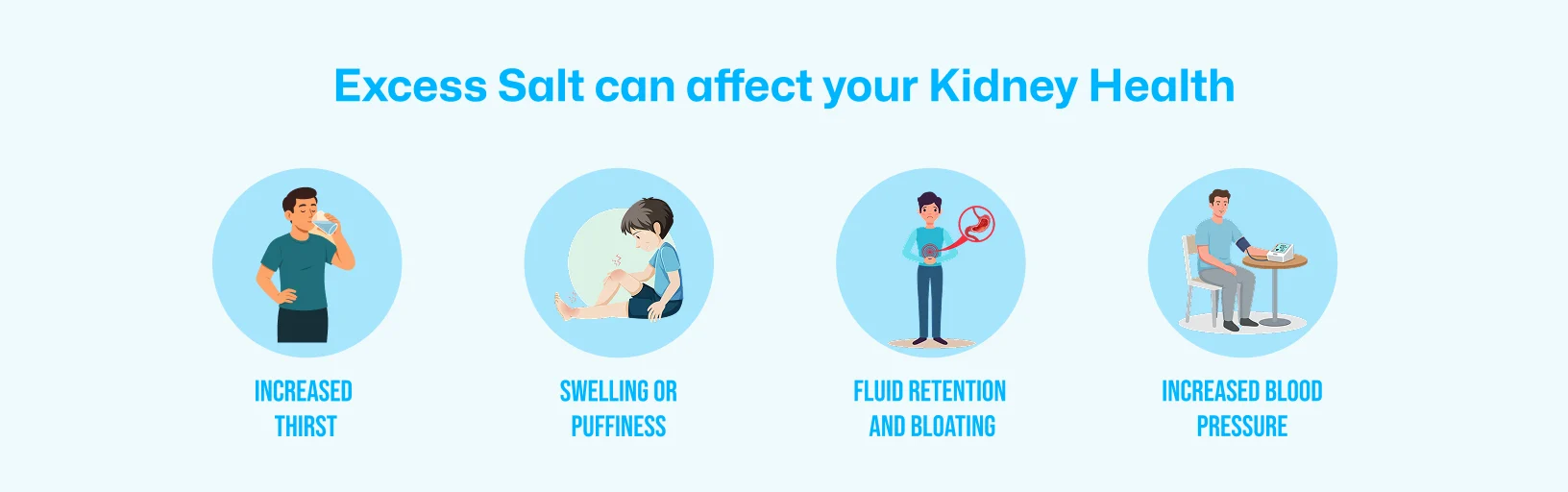
Eating a high-salt meal can leave you feeling thirstier than usual as your body responds to the extra sodium. This can make you want to drink more fluids throughout the day. There is no single amount that suits everyone, but how much water is good for the kidneys depends on your health, activity and fluid needs.
Too much salt can cause the body to hold on to extra fluid, leading to puffiness around the face, hands, feet or ankles. This is more noticeable when high-salt meals are eaten regularly. Persistent swelling should be checked by a doctor, particularly if you have kidney or heart problems.
Excess sodium can cause the body to hold onto more fluid, which may lead to a swollen or bloated feeling. This is often more noticeable after meals containing heavily salted or processed foods. Persistent or unexplained swelling should be discussed with a doctor.
Eating too much salt can cause the body to retain more fluid, which can raise blood pressure. Repeatedly high blood pressure puts additional stress on the blood vessels and kidneys. Keeping salt intake in check is one practical step towards maintaining healthier blood pressure and kidney function.
People with the following conditions should be particularly mindful of their salt intake:
Learning how to lower blood pressure and protect your kidneys can help reduce these risks.
Many everyday foods can contain significant amounts of sodium, particularly when salt is added during processing, preservation or cooking. Here are some common high-salt choices to watch:
|
High-Salt Food Category |
Common Examples | Why Sodium Can Be High |
| Packaged snacks | Chips, crackers, namkeen |
Savoury seasonings often add significant sodium. |
|
Pickled foods |
Pickles, preserved foods | Preservation methods often rely heavily on sodium. |
| Papad & similar foods | Papad, salted accompaniments |
Sodium can be present in the ingredients and seasoning. |
|
Processed foods |
Instant noodles, ready meals | Processing often involves sodium-containing ingredients. |
| Sauces | Ketchup, soy sauce, packaged chutneys |
Condiments can contain concentrated amounts of sodium. |
|
Restaurant & fast food |
Pizza, burgers, fried foods | Sauces, processed ingredients and preparation methods add sodium. |
More than 5 grams of salt a day, or about one teaspoon, is considered too much for most adults. The American Heart Association also recommends limiting sodium intake to 2,300 mg per day, with an ideal limit of 1,500 mg for most adults, as reported by the organisation.
These limits include sodium from packaged foods, restaurant meals and cooking, not just table salt. People with kidney disease may need a lower limit based on their doctor’s advice. A Nephrologist in Chennai can provide personalised guidance.
For personalised kidney care in Chennai, speak with a qualified kidney specialist.
See a doctor within a few days if you notice persistent swelling, unusual thirst, changes in urination or consistently high blood pressure. These symptoms can have several causes, but ongoing changes should not be overlooked. Seek medical attention sooner if you develop severe swelling, very little urine, shortness of breath or sudden weakness.
A doctor can check your blood pressure, kidney function and other relevant markers to identify the cause. If you have an existing kidney condition or related concerns, consulting a Nephrologist doctors in Chetpet can help you receive appropriate evaluation and care.
Keeping salt intake within recommended limits can help reduce strain on your kidneys and support healthier blood pressure. Simple choices such as eating more fresh foods and checking sodium on labels can make a difference over time.
Dr. Mehta’s Hospitals provides comprehensive care for kidney and related health concerns, supported by experienced specialists and multiple medical services. With coordinated treatment and personalised guidance, you can take practical steps towards better long-term health at a top multispeciality hospital in Chennai.
1. Can eating too much salt cause kidney problems?
Regularly consuming excess salt can increase blood pressure and place additional strain on the kidneys.
2. Does salt cause kidney stones?
A high-salt diet can increase calcium levels in urine, which may raise the risk of certain kidney stones.
3. Can reducing salt improve kidney function?
Lowering salt intake can help reduce blood pressure and fluid retention, supporting kidney health.
4. Is rock salt better for the kidneys than regular salt?
Rock salt still contains sodium, so it should also be consumed within recommended limits.
5. Does drinking more water remove excess salt from the body?
The kidneys remove excess sodium through urine, but drinking excessive amounts of water is not necessary or always safe.
6. Can salt cause swelling in the feet?
Yes, excess sodium can cause the body to retain fluid, which may contribute to swelling in the feet and ankles.
7. How can I tell if a food is high in sodium?
Check the nutrition label for sodium per serving and compare it with similar products.
8. Is homemade food always lower in salt?
Not necessarily, as the amount of salt added during cooking can still make homemade meals high in sodium.
9. Should people with kidney disease completely avoid salt?
Most people with kidney disease need to limit salt rather than eliminate it completely, based on their doctor’s advice.
10. Does salt affect blood pressure and kidney health together?
Yes, excess sodium can raise blood pressure, which can increase stress on the kidneys over time.