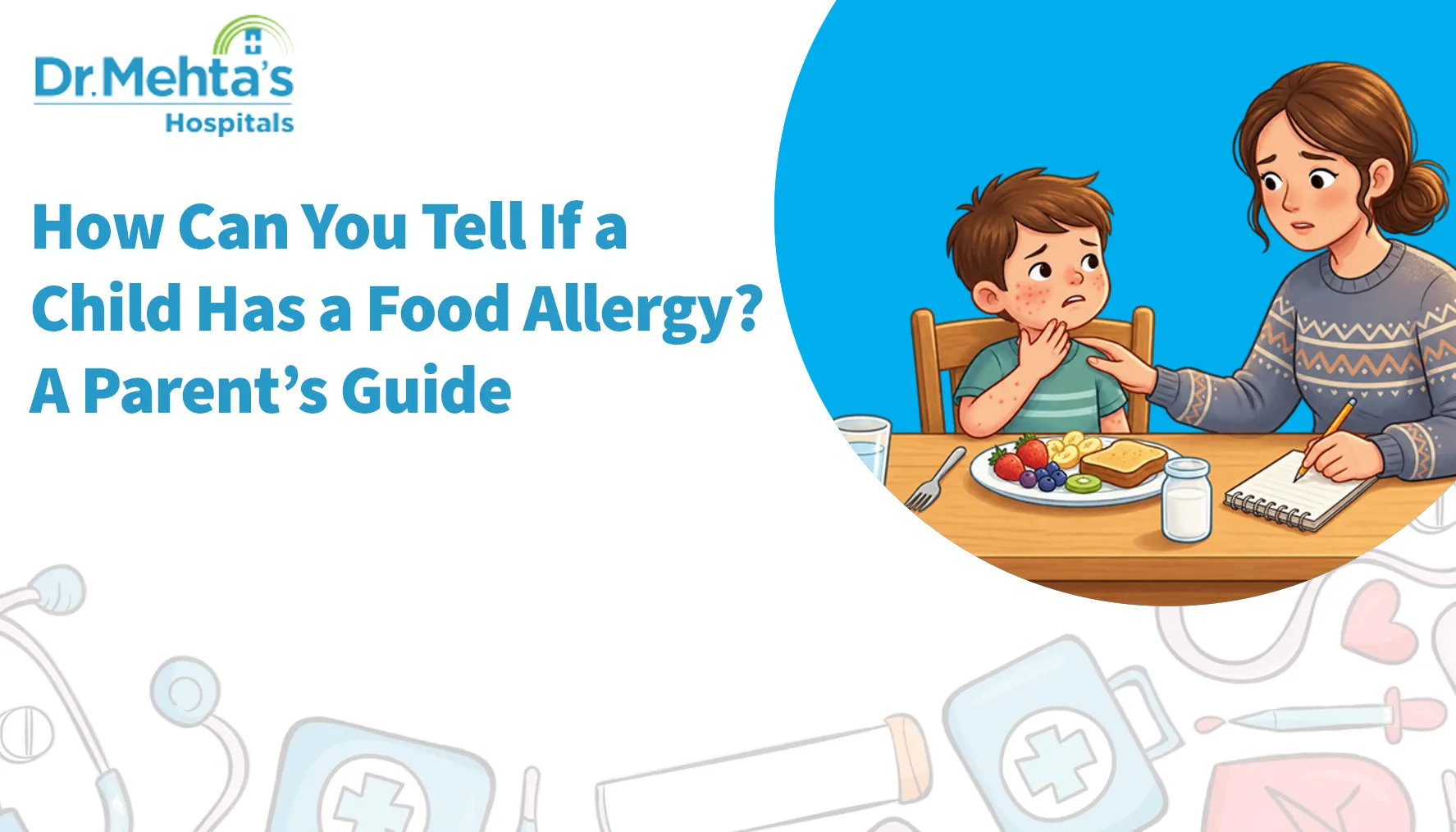
When your child develops a rash, complains of an itchy mouth, or suddenly feels sick after eating, it is natural to wonder whether something they ate has triggered the reaction. Food allergies in children can be confusing because the symptoms can vary from one child to another and may involve the skin, stomach, or even breathing. For parents, knowing what is normal and what calls for prompt medical attention can make these situations much easier to navigate.
|
Body Area |
Possible Signs of a Food Allergy in Children |
|
Skin |
You may notice itching, mild redness, hives, or some puffiness on the skin. |
| Mouth & Face |
Your child may experience an itchy or tingling feeling around the mouth, lips, or face. |
|
Stomach |
Some children may feel nauseous or have tummy discomfort, vomiting, or diarrhoea. |
| Breathing |
A food allergy may sometimes cause coughing, a stuffy nose, wheezing, or changes in breathing. |
|
General |
Your child may feel tired, dizzy, weak, or generally unwell after eating a particular food. |
If your child develops difficulty breathing, swelling of the throat or tongue, fainting, severe dizziness, or becomes unusually weak or unresponsive after eating, seek 24/7 emergency medical care immediately.
Food allergies involve the immune system, while food intolerances usually affect digestion without triggering an immune response. Recent studies in India have reported food allergy prevalence of 0.14% among children, despite food sensitisation being detected in 19.1% of children tested, highlighting that sensitisation does not always mean a child has a clinically relevant food allergy.
Parents should watch for signs of an allergic reaction when introducing babies first solid foods and seek medical advice if symptoms appear.
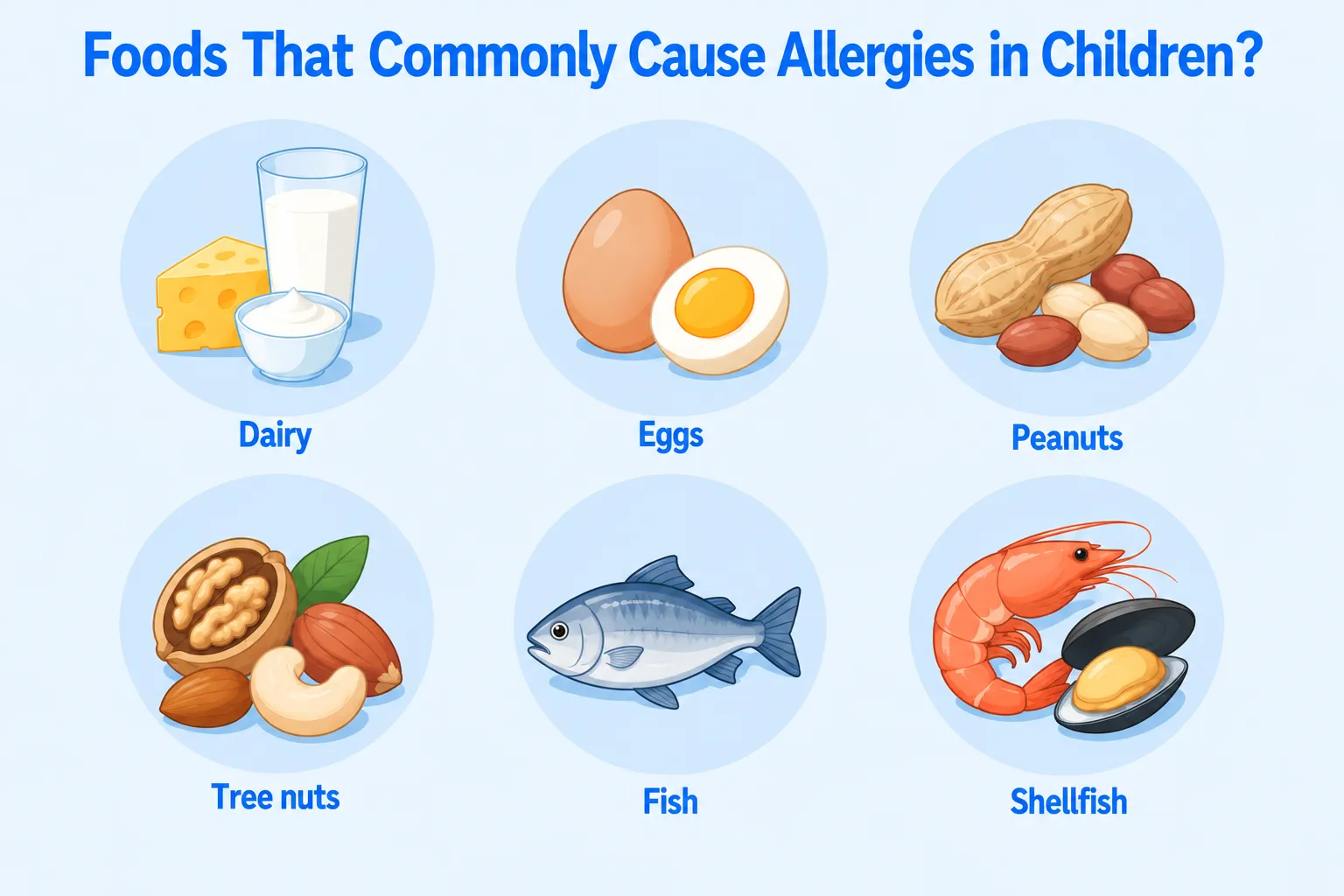
While any food can trigger an allergic reaction, certain foods are responsible for a large share of food allergies in children.
Parents, don’t lose hope. A 2024 review published by the National Library of Medicine notes that children can outgrow certain food allergies, particularly milk and egg allergies.
If your child develops unusual symptoms after eating a particular food, taking a few sensible steps can help you respond safely and give your pediatrician useful information.
Here are the things you must do:
Knowing how to choose the right pediatrician can help ensure your child receives appropriate evaluation, guidance, and follow-up for a suspected food allergy.
You should consider consulting a child specialist if your child develops any of these symptoms after eating a particular food:
Most immediate food allergy reactions begin within minutes to two hours after eating certain trigger foods, although symptoms can sometimes appear later, so parents should not rely on timing alone to judge the severity of a reaction.
Final Word
Recognising a possible food allergy early can help parents respond appropriately and know when their child needs medical attention. Since reactions can range from mild skin symptoms to serious breathing or swelling symptoms, understanding the warning signs and seeking the right medical guidance is important.
At Dr. Mehta’s Hospitals, pediatricians can evaluate suspected food allergies, help identify potential triggers, and guide parents on appropriate allergy management. Families looking for comprehensive pediatric and emergency care can also consider the best multispeciality hospital in Chennai for evaluation when a child develops concerning symptoms after eating.
Hives, itching, swelling, vomiting, coughing, wheezing, or an itchy mouth may appear first.
2. When should I take my child to a doctor for a possible food allergy?
See a doctor if your child repeatedly reacts to a particular food or has a severe reaction.
3. Which food allergy symptoms require emergency care?
Breathing trouble, throat or tongue swelling, fainting, or severe weakness require immediate emergency care.
4. How quickly can a food allergy reaction start in children?
It can start within minutes to two hours after eating, though some reactions may appear later.
5. What is the difference between a food allergy and food intolerance?
A food allergy involves the immune system, while food intolerance mainly affects digestion.
6. Which foods most commonly cause food allergies in children?
Milk, eggs, peanuts, tree nuts, fish, and shellfish are common triggers.
7. Can a child develop a food allergy after eating the same food safely before?
Yes, a child can develop an allergy to a food they previously ate without experiencing a reaction.
8. Can a food allergy cause vomiting or diarrhoea in children?
Yes. Food allergies can cause vomiting, abdominal pain, or diarrhoea.
9. How is a food allergy diagnosed in children?
A pediatrician uses the child’s symptoms, medical history, and allergy tests to diagnose food allergies.
10. Can children outgrow food allergies?
Yes. Some children outgrow allergies, particularly milk and egg allergies.