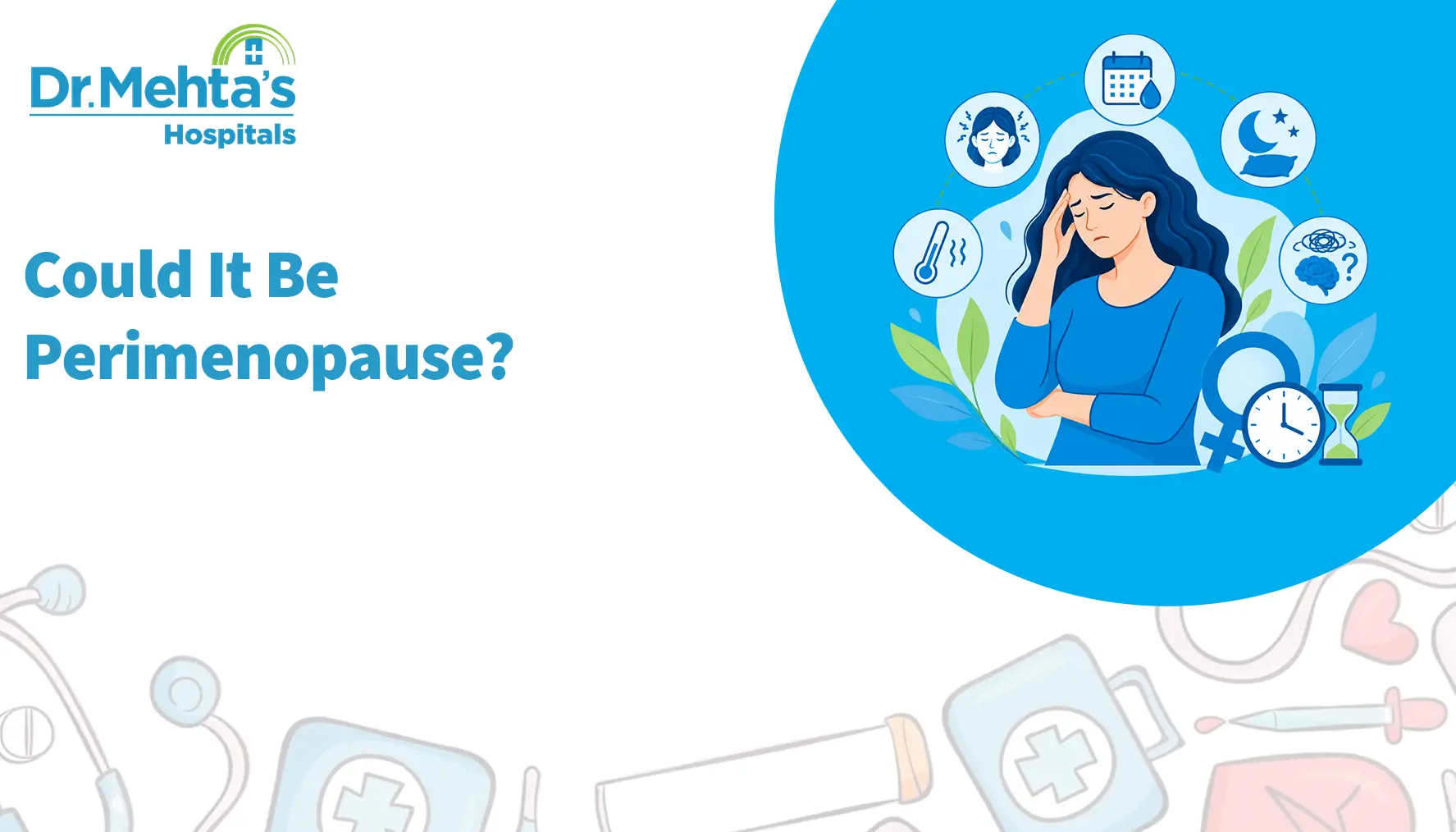
Imagine waking up with aching joints that don’t seem to have a cause. A few weeks later, you’re struggling to sleep. Then comes brain fog, unexplained anxiety, weight gain despite the same lifestyle, or a sudden racing heartbeat.
Individually, these symptoms may not seem alarming. Together, they can be confusing.
Many women assume they are caused by stress, ageing or a busy lifestyle. But what if these seemingly unrelated symptoms were connected?
For many women, they can be. They may be among the early signs of perimenopause, the hormonal transition leading up to menopause that can begin years before periods stop completely.
Understanding perimenopause symptoms can help women recognise changes earlier, seek appropriate medical advice and take better care of their health through midlife.
Perimenopause is the stage before menopause, when the ovaries undergo changes in hormone production. It commonly begins during the 40s, although the timing varies between women.
During this transition, hormone levels can fluctuate, causing changes in menstrual cycles and other aspects of health. Periods may become heavier, lighter, shorter, longer or less predictable.
Menopause is different. It is reached after 12 consecutive months without a menstrual period, when there is no other medical explanation for the absence of periods.
This means a woman can experience menopause symptoms and hormonal changes well before she reaches menopause itself.
The signs of perimenopause can vary significantly from one woman to another. Some experience only mild changes, while others find that symptoms interfere with their work, sleep, and everyday life.
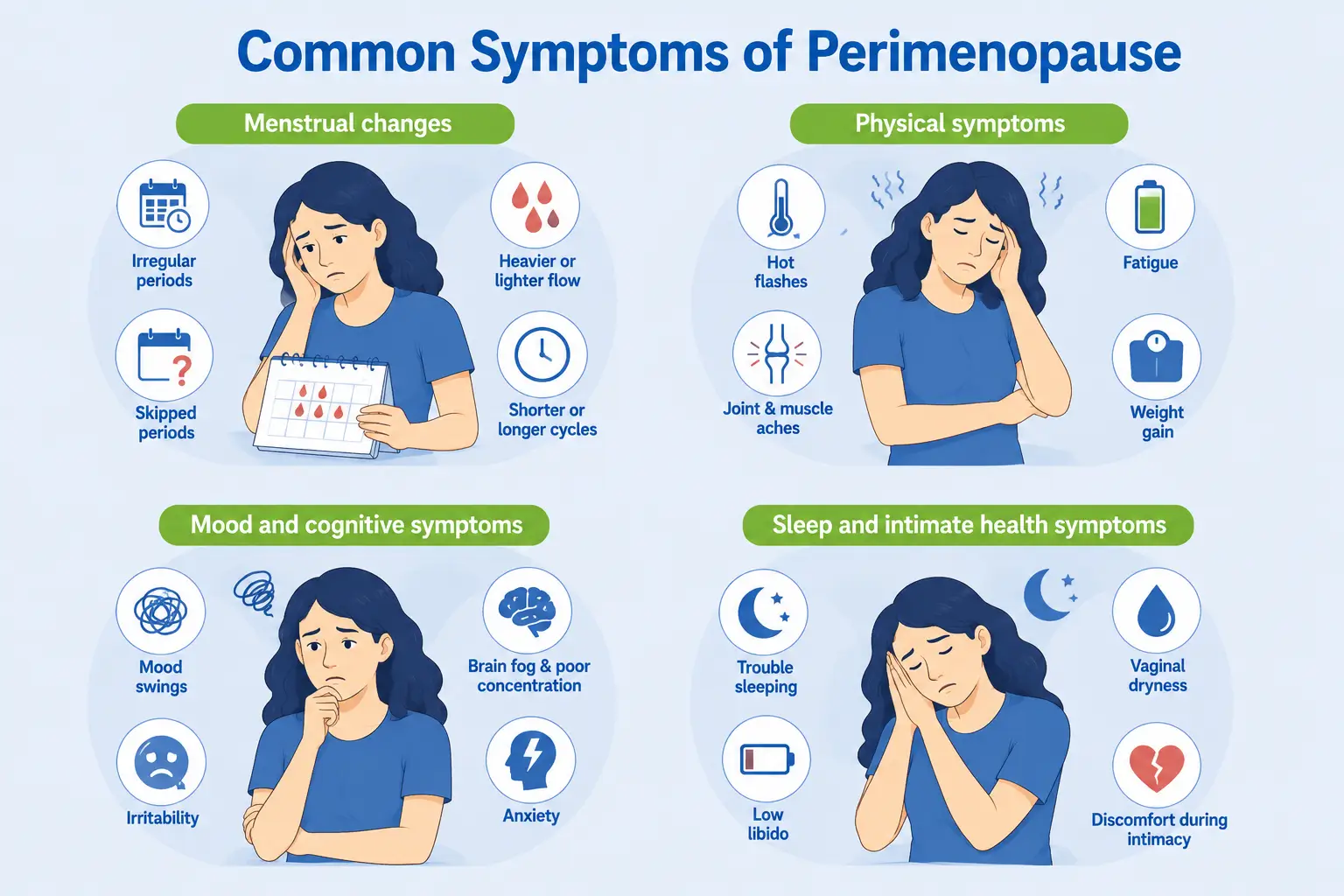
Not every symptom is necessarily caused by perimenopause. Persistent, severe or unusual symptoms should always be evaluated by a doctor.
One reason perimenopause symptoms can seem unrelated is that oestrogen has effects beyond reproductive health.
Hormonal changes during menopause can influence areas such as the brain, bones, muscles, cardiovascular system, bladder and skin. This is why a woman may notice sleep problems alongside mood changes, or menstrual changes alongside hot flashes and joint discomfort.
However, symptoms such as palpitations, persistent joint pain, anxiety or fatigue can have many causes. A comprehensive medical assessment helps determine whether they are related to perimenopause or require investigation for another condition.
The early signs of menopause are not always obvious because they rarely appear together.
A woman may first notice that her periods have changed. Several months later, she may experience sleep problems or hot flashes. She may then begin experiencing mood changes, fatigue or difficulty concentrating.
Because these symptoms can appear at different times, they are often treated as separate problems.
This is where a women’s health specialist can look at the complete picture. Your age, menstrual history, symptoms and overall health can help a gynaecologist determine whether perimenopause may be contributing to what you are experiencing.
You do not have to wait until your periods stop before seeking medical advice.
If you are experiencing significant menopause symptoms after 40, consider speaking to a gynaecologist, particularly if you have:
Women in Chennai looking for personalised women’s healthcare can benefit from a comprehensive gynaecological evaluation rather than treating each symptom separately.
There is no single test that confirms perimenopause in every woman.
A gynaecologist in Chennai may consider your age, menstrual history, symptoms, and overall health. Hormone testing is not routinely required for every woman because hormone levels can fluctuate significantly during perimenopause.
Additional tests may be recommended when symptoms occur at a younger age or when your doctor needs to rule out another medical condition.
The goal is not simply to identify hormonal changes. It is to understand your symptoms in the context of your overall health.
There is no single approach to perimenopause treatment. Your care should be based on your symptoms, medical history, age, risk factors, and individual needs.
Regular physical activity, including strength and weight-bearing exercise, can support bone and muscle health. A balanced diet with adequate protein, calcium, and essential nutrients can support overall wellbeing. Good sleep habits and stress management can also help manage several symptoms.
If you are considering menopause treatment in Chennai, a consultation with a menopause specialist can help determine which options are appropriate for you.
Perimenopause is not simply about irregular periods or hot flashes. It is a whole-body transition that can affect sleep, mood, menstrual health, intimate health, and overall wellbeing.
Understanding the connection between seemingly unrelated symptoms is often the first step towards getting appropriate care.
At Dr. Mehta’s Hospitals, our Obstetrics and Gynaecology team provides comprehensive women’s health care in Chennai, from preventive health and gynaecological evaluation to personalised care for menopause and other midlife health concerns.
As a women’s health hospital in Chennai, we bring together experienced specialists and multidisciplinary support to address women’s health needs across different stages of life. Whether you are looking for a gynaecologist in Chennai, menopause care or broader women’s wellness support, timely evaluation can help you understand your symptoms and make informed decisions about your health.
If you’re searching for the women’s health hospital in Chennai for comprehensive women’s healthcare, Dr. Mehta’s Hospitals is committed to providing personalised, evidence-based care for every stage of a woman’s life.
Your symptoms deserve to be understood, not simply endured.
1. What are the first signs of perimenopause?
Changes in menstrual cycles are often among the first signs. Hot flashes, sleep problems, mood changes and other symptoms may also occur.
2. Can I still get my periods during perimenopause?
Yes. Periods usually continue during perimenopause, although their timing, duration or flow may change.
3. At what age does perimenopause usually start?
Perimenopause commonly begins during the 40s, although the timing varies between women.
4. Can perimenopause cause joint pain?
Joint and muscle discomfort can occur during the menopause transition. Persistent pain may have another cause and should be evaluated.
5. Can perimenopause cause anxiety?
Yes. Anxiety and mood changes can occur during perimenopause. Persistent or severe anxiety should be discussed with a healthcare professional.
6. Can perimenopause cause brain fog?
Some women experience forgetfulness, difficulty concentrating or a feeling of mental fog during the menopause transition.
7. Can perimenopause affect sleep?
Yes. Difficulty sleeping, frequent waking and night sweats can affect sleep quality during perimenopause.
8. Is weight gain common during perimenopause?
Changes in body composition and weight can occur during midlife. Diet, activity, sleep, ageing and metabolic health can all contribute.
9. Can perimenopause cause vaginal dryness?
Yes. Hormonal changes can contribute to vaginal dryness and discomfort during intercourse.
10. How is perimenopause diagnosed?
A doctor generally considers your age, symptoms and menstrual history. Hormone testing is not routinely required for every woman.
11. How long does perimenopause last?
The duration varies between women. The transition can continue for several years before menopause is reached.
12. Can lifestyle changes help manage perimenopause?
Yes. Regular exercise, strength training, balanced nutrition, adequate sleep and stress management can support health during the menopause transition.
13. When should I see a doctor for perimenopause symptoms?
Consult a gynaecologist if symptoms are persistent, severe, affecting daily life or accompanied by significant changes in menstrual bleeding.
14. Where can I find menopause care in Chennai?
Women looking for menopause care in Chennai can consult an experienced gynaecologist for personalised evaluation and treatment. Dr. Mehta’s Hospitals provides comprehensive women’s healthcare and gynaecological services across different stages of a woman’s life.