You’ve made sure bedtime happens on time. You’ve counted the hours, tucked them in, maybe even read the same story for the hundredth night in a row. And yet, your child wakes up rubbing their eyes, dragging their feet to breakfast, or crashing by mid-afternoon.
If this sounds familiar, take a breath, you’re not doing anything wrong, and you’re definitely not alone. Plenty of well-rested-looking kids still struggle with tiredness, and there’s usually a clear, fixable reason behind it. Let’s walk through what might really be going on.
A child who is sleeping well wakes up on their own, feels rested within a few minutes, and stays energetic through most of the day without being coaxed out of bed or relying on naps they don’t usually need.
Beyond the number of hours, good sleep shows up in daily signs, such as falling asleep without a long struggle, staying asleep through the night, waking up calm rather than cranky, and remaining alert through the day.
As reported by PubMed Central, persistent fatigue in children can be associated with sleep disturbances, mood disorders, infections, and other underlying health factors. If tiredness continues despite adequate sleep, it may be worth speaking with a pediatrician.
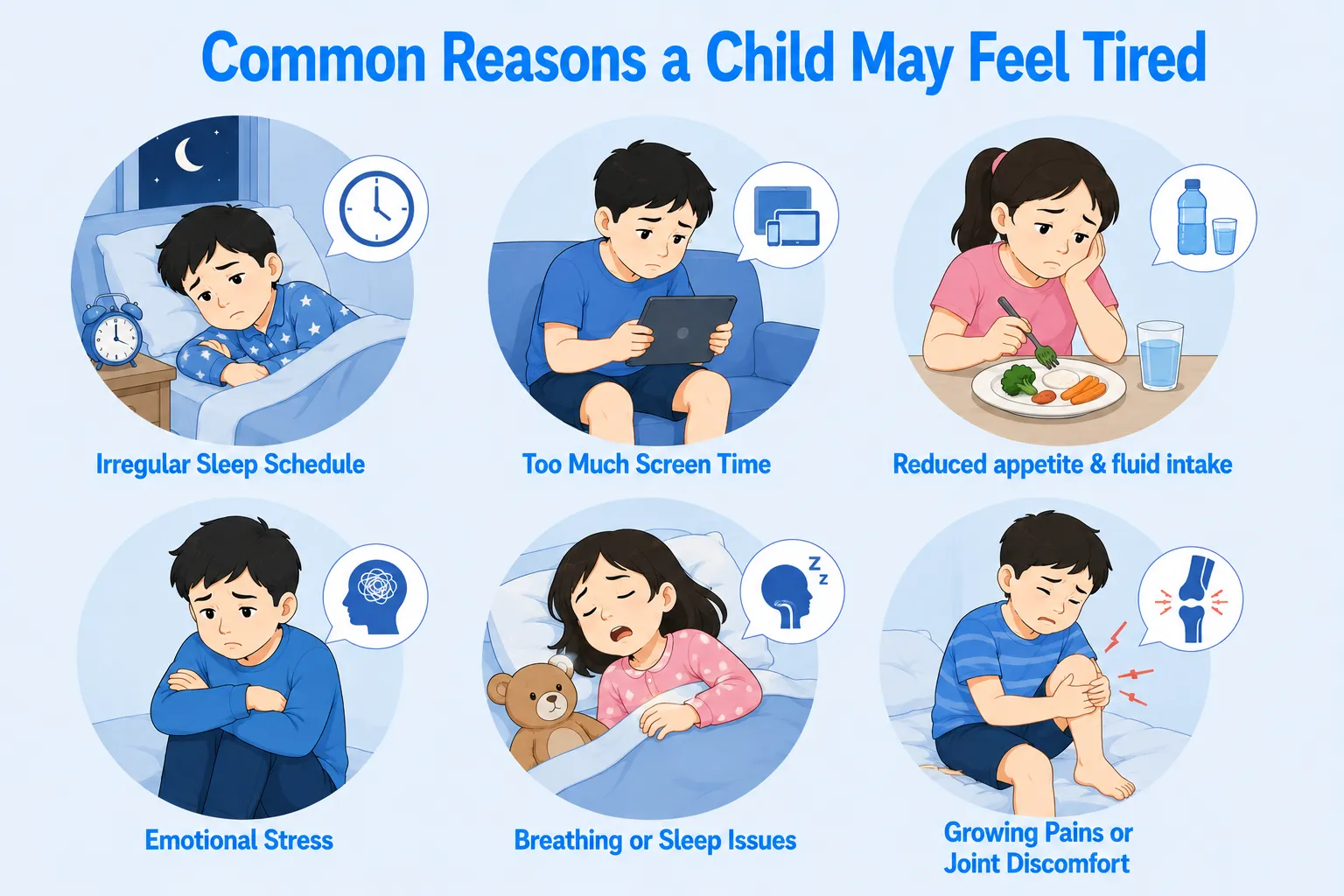
Going to bed at different times each night confuses a child’s internal clock, even if the total hours look fine on paper. This makes it harder for their body to settle into deep, restorative sleep.
Screens keep young minds alert long after they’re switched off. A child who scrolls or watches something exciting close to bedtime often takes longer to fall asleep and wakes up feeling foggy.
Skipped meals, low water intake, or too many sugary snacks can leave a child’s energy levels dipping in and out all day, often mistaken for tiredness caused by poor sleep. As reported by the Times of India, children and teenagers may need approximately 1.5 to 3 litres of water daily, depending on factors such as age, gender, and weight.
Worries about friendships, exams, or new routines don’t switch off at night. Many parents don’t realise stress is behind their child’s fatigue until a child specialist points it out during a routine check-up.
Loud snoring, mouth breathing, or pauses in breathing during sleep can quietly disrupt rest without waking a child fully. If this sounds familiar, it may be worth consulting a pediatric pulmonologist, who specialises in sleep-related breathing concerns in children.
Aches in the legs or joints at night, often linked to growth spurts, can quietly interrupt sleep. If this keeps happening, it’s a good idea to get it checked for any underlying pediatric orthopedic problems.
The table below gives you a simple age-wise guide to how much sleep your child typically needs, along with what that stage of sleep usually looks like in real life.
|
Age Group |
Sleep Needed (Hours/Day) | What This Looks Like |
| Infants (4–12 months) | 12–16 hours |
Sleep comes in short stretches through the day; waking up at night is completely normal at this stage. |
|
Toddlers (1–2 years) |
11–14 hours | A steady nap and bedtime routine keeps them in good spirits and less prone to meltdowns. |
| Preschoolers (3–5 years) | 10–13 hours |
Most still benefit from an afternoon nap, which supports how they learn and grow. |
|
School-age children (6–12 years) |
9–12 hours | Keeping bedtime consistent and screens limited in the evening makes a noticeable difference to sleep quality. |
| Teenagers (13–18 years) | 8–10 hours |
Enough sleep at this age directly affects mood, concentration, and overall wellbeing. |
Keep in mind, these numbers are general guidelines, not strict rules; every child is different. If your child is getting these hours but still seems constantly tired, it’s worth looking beyond the clock at things like sleep quality, daily habits, and nutrition.
If you’ve tried these and your child is still low on energy, it may be time to check in with a pediatrician who knows how to look at the full picture: sleep, diet, and daily routine together.
Parents in the area often turn to the leading Pediatricians in Vellapanchavadi for exactly this kind of guidance.
If your child’s tiredness continues for more than 1-2 weeks despite good sleep, food, and routine, it’s time to get it checked. Persistent fatigue can sometimes point to an underlying issue that needs a professional eye, not just a few schedule tweaks at home.
For a more thorough check, especially if breathing, growth, or nutrition seems involved, a child speciality hospital can offer the right tests and specialists under one roof. Booking a visit with the best pediatrician in Chennai helps rule out the real cause early, rather than waiting it out.
Tiredness in kids isn’t always about missing sleep. Sometimes, it’s the small, everyday things adding up quietly in the background. The good news is, most causes are easy to spot and even easier to fix once you know what to look for. Trust your instincts as a parent; you know your child better than any checklist ever could.
And if the tiredness lingers longer than it should, don’t wait it out. Reach out to a top multispeciality hospital in Chennai like Dr. Mehta’s Hospitals, where experienced pediatric specialists can help you get to the root of it and get your child back to their bright, energetic self.
It’s usually not about hours slept but sleep quality, nutrition, or daily stress affecting their energy.
2. How many hours of sleep does a school-going child need?
School-age children (6–12 years) typically need 9–12 hours of sleep each night.
3. Can screen time really affect how tired my child feels?
Yes, screens before bedtime delay deep sleep and often leave kids feeling groggy the next day.
4. Is snoring in children something to worry about?
Frequent snoring or mouth breathing can disrupt sleep quality and may need a specialist’s evaluation.
5. Can a poor diet make a child feel sleepy during the day?
Yes, skipped meals or low fluid intake can cause energy dips that mimic tiredness from bad sleep.
6. Does napping too much during the day affect nighttime sleep?
Yes, excessive daytime naps can push bedtime later and disrupt a consistent sleep cycle.
7. Can a recent illness leave a child feeling tired even after recovery?
Yes, the body often needs extra rest for a few days after illness to fully recover its energy.
8. Does an irregular school and activity routine affect a child’s sleep?
Yes, inconsistent schedules confuse a child’s body clock, making restful sleep harder to achieve.
9. When should I take my child’s tiredness seriously?
If fatigue continues beyond two weeks despite good habits, it’s time to consult a pediatrician.
10. Can emotional stress make children physically tired?
Yes, unresolved stress or anxiety can affect sleep quality and show up as constant tiredness.