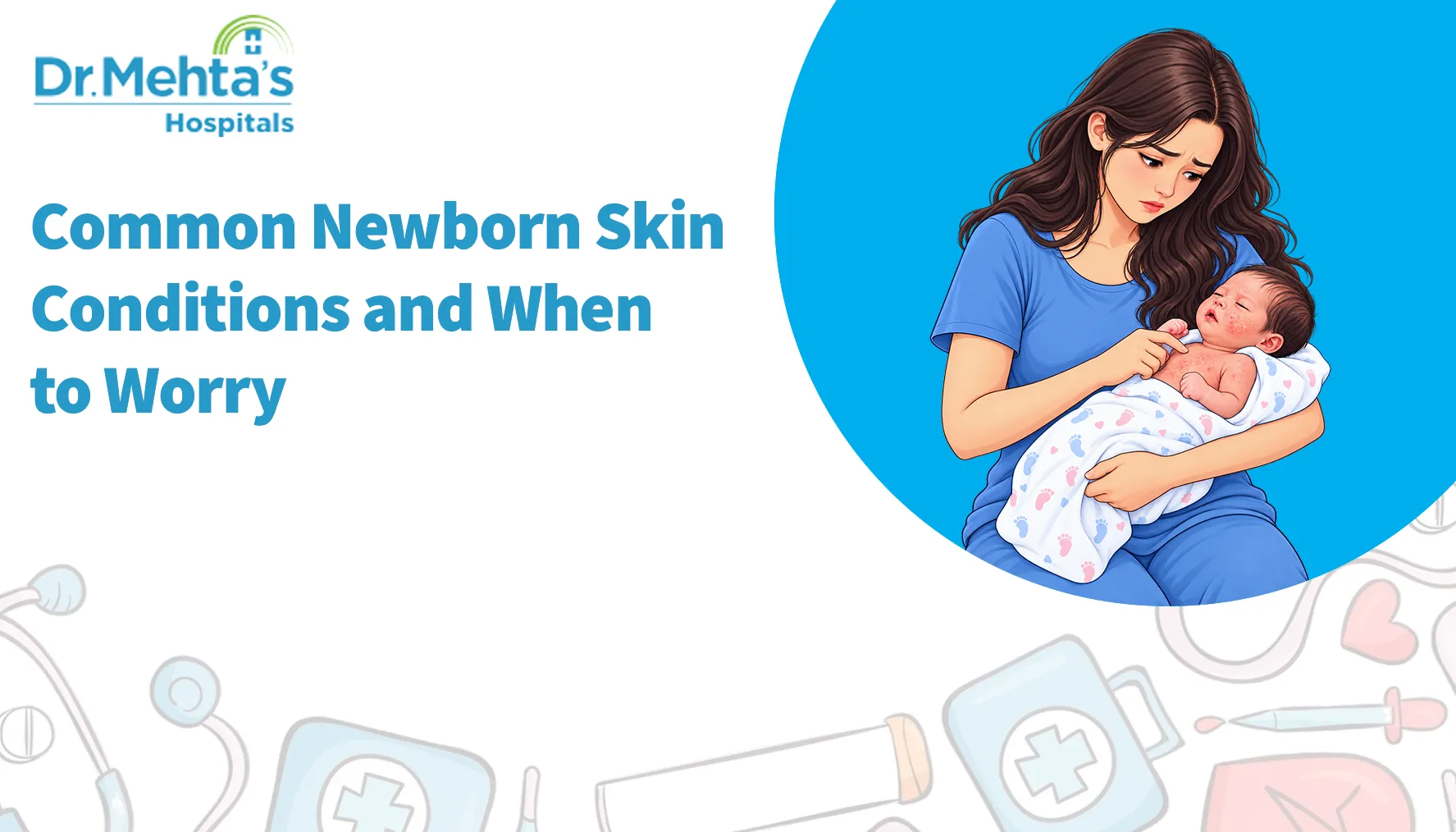
A newborn’s skin can seem to change almost overnight. One day it may look smooth and clear, and the next you might notice tiny white bumps, red patches, dry flakes, or small spots that were not there before. For new parents, these changes can understandably raise questions about whether something is wrong. In most cases, newborn skin is simply adjusting to life outside the womb and may react to heat, moisture, hormones, or everyday contact.
Still, not every skin change should be brushed aside. Knowing what common newborn skin conditions look like and recognising the signs that need medical attention can help you care for your baby with greater confidence.
Yes, skin changes are very common in newborns and are usually harmless and temporary as their skin adjusts to life outside the womb. Your baby may have dry or peeling skin, tiny white bumps, red patches, or small spots during the first few days or weeks.
Studies published on PMC suggest that harmless newborn skin conditions are common, although they can sometimes look more severe than they actually are and cause unnecessary worry for parents.
These changes can appear suddenly, but many settle on their own as your baby grows. However, skin changes along with fever, blisters, fluid, or unusual behaviour should be checked by a doctor.
|
Skin Condition |
What It Looks Like | Where It Usually Appears | Does It Need Medical Attention? |
| Milia | Tiny, firm white or pearly bumps | Nose, cheeks and chin |
Usually no; they clear on their own. |
|
Baby Acne |
Small red or white bumps that resemble pimples | Cheeks, forehead, chin and sometimes chest | Usually no; it often settles without treatment. |
| Erythema Toxicum | Red patches with tiny white or yellowish bumps | Face, chest, arms and legs |
Usually no; it is harmless and fades naturally. |
|
Heat Rash |
Tiny red bumps or small clear blisters | Neck, chest, face and skin folds | Usually no; keeping the baby cool can help. |
| Cradle Cap in Babies | Greasy, flaky or crusty patches | Mainly the scalp and sometimes eyebrows |
Usually no; medical advice may help if it becomes inflamed. |
Most newborn skin changes are harmless, but certain signs need prompt medical attention. Parents should seek help if:
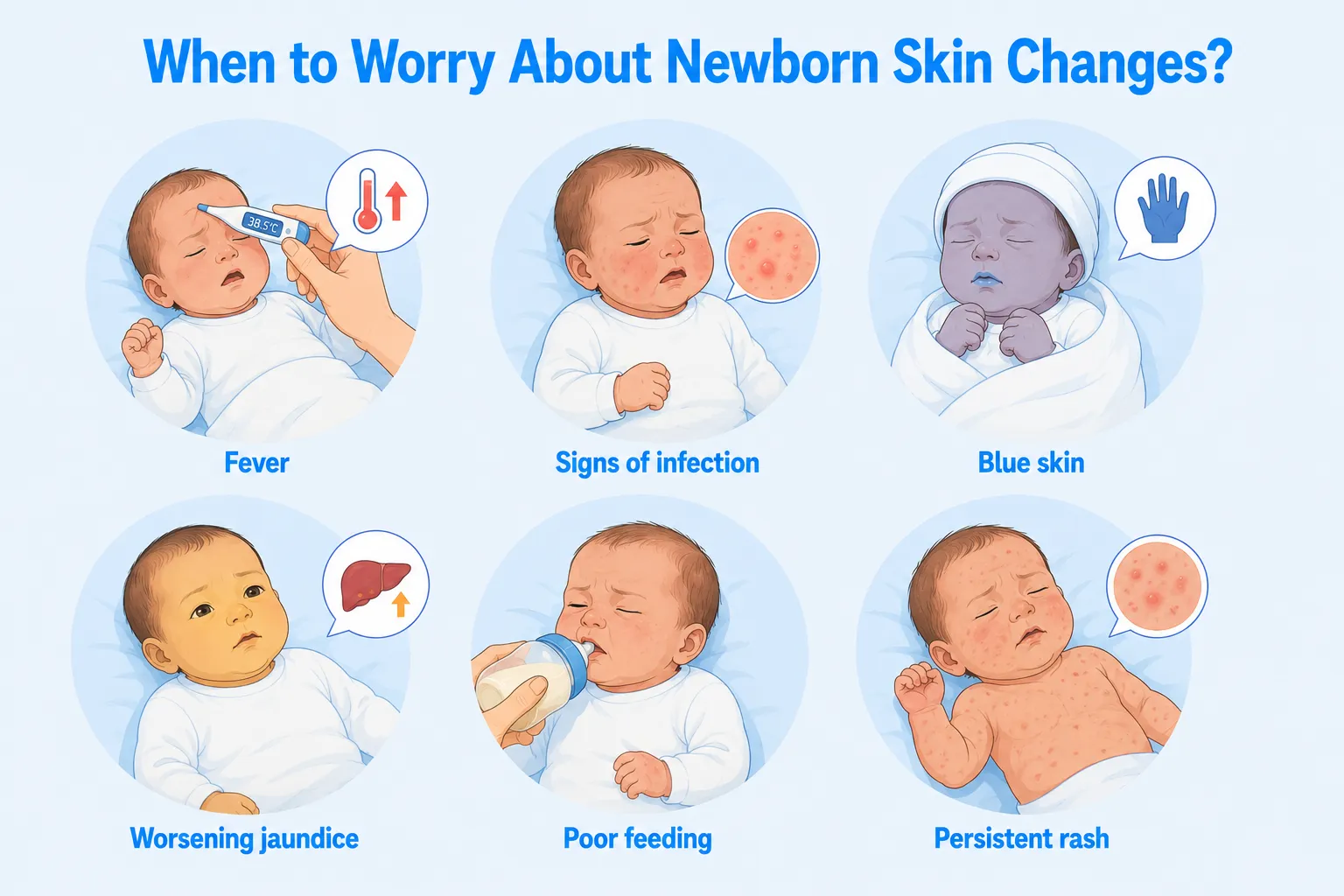
As reported by The Indian Express, most newborn rashes are short-lived and harmless, often clearing on their own, but parents should still keep an eye on them.
Following a simple pediatric medicine guide can help parents understand everyday newborn skin care and know when professional advice may be needed. If you are unsure about a persistent skin change, consult a leading pediatric hospital in Chetpet for appropriate guidance.
Most newborn skin changes improve within a few days or weeks without treatment, but persistent, worsening, or unusual changes should be checked by a doctor.
For timely evaluation and personalised care, a top pediatric hospital in Chennai can provide comprehensive pediatric care for newborn skin concerns.
Parents should pay attention when a skin change spreads, worsens, or appears alongside fever, poor feeding, unusual sleepiness, or breathing difficulties. Knowing what is normal and recognising warning signs can help you seek medical advice at the right time without unnecessary worry. For families looking for dependable newborn and child health support, Dr. Mehta’s Hospitals, a best private multispeciality hospital in Chennai, provides comprehensive pediatric care with a focus on each child’s individual needs.
Call now to book an appointment in Dr. Mehta’s Hospitals for personalized child health consultations.
Yes, mild rashes and other skin changes are very common during the first few weeks of life.
2. Which newborn skin conditions usually clear on their own?
Milia, baby acne, erythema toxicum, heat rash, and cradle cap often improve without medical treatment.
3. How long does newborn acne usually last?
Baby acne often clears within a few weeks, although some babies may have it for several months.
4. What does erythema toxicum look like in newborns?
It usually appears as red patches with small white or yellowish bumps and commonly settles on its own.
5. How can parents manage heat rash in a newborn?
Keep your baby cool, use loose breathable clothing, and avoid heavy creams or products that can trap heat.
6. Is cradle cap harmful to newborns?
No, cradle cap is usually harmless and often improves gradually with gentle scalp care.
7. When should a newborn’s skin rash be checked by a doctor?
Seek medical advice if a rash spreads, becomes painful, develops blisters or pus, or occurs with fever or poor feeding.
8. Is yellow skin normal in newborn babies?
Mild jaundice is common after birth, but yellowing during the first 24 hours or rapidly worsening jaundice needs medical assessment.
9. What temperature is considered a fever in a newborn?
A temperature of 38°C (100.4°F) or higher in a baby younger than three months requires prompt medical attention.
10. When should parents seek urgent care for a newborn’s skin changes?
Seek urgent care if skin changes occur with breathing difficulty, blue lips, extreme sleepiness, difficulty waking, or poor feeding.