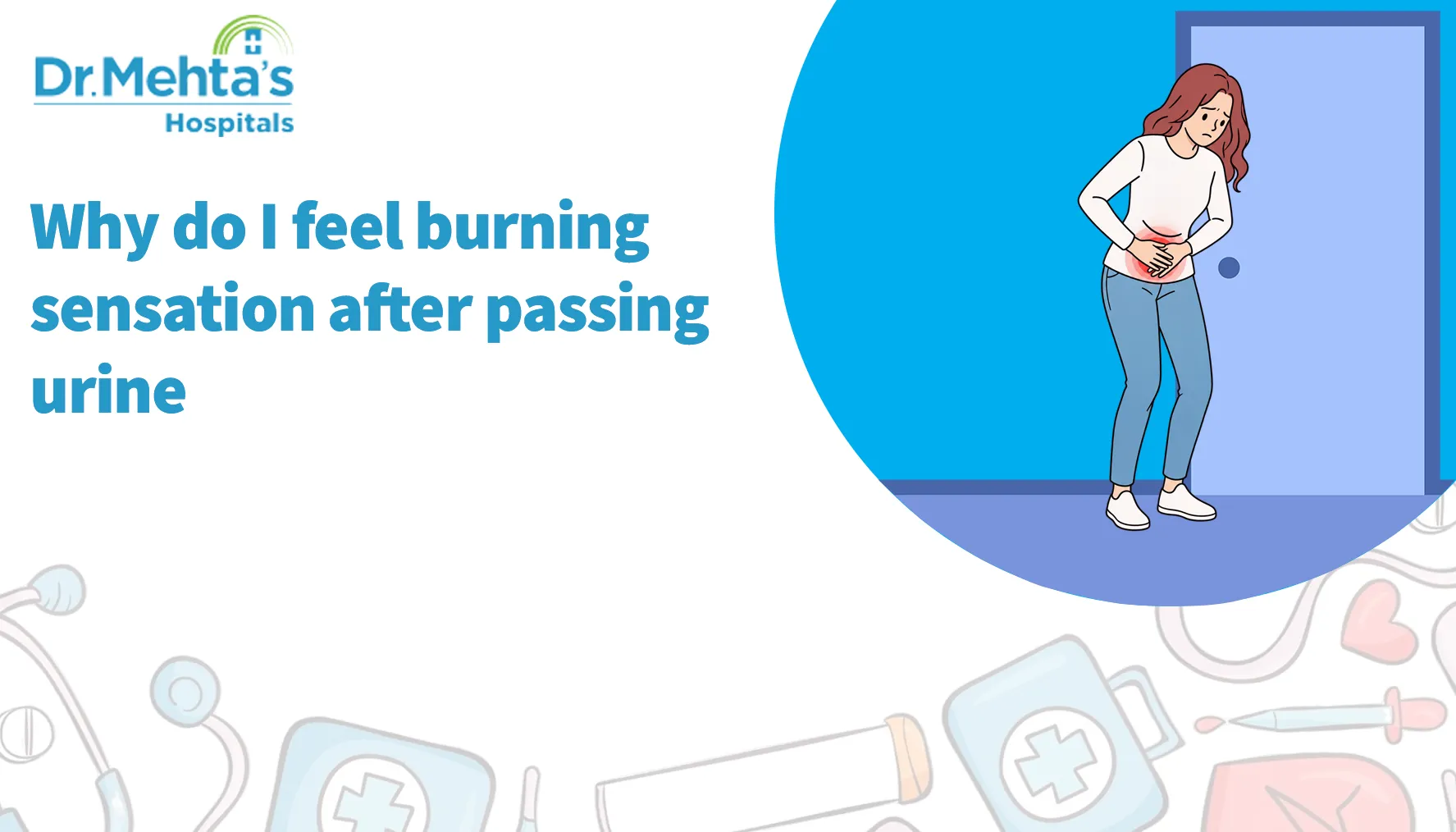
A burning sensation after passing urine can be uncomfortable, irritating, and sometimes worrying. You may notice a mild sting that goes away quickly, or a stronger burning feeling that continues for some time after using the bathroom.
While it can happen for simple reasons such as not drinking enough water or irritation, it can also be linked to a urinary infection or other conditions that may need attention. Most causes can be identified and treated with timely care, so knowing what may be causing the burning can help you decide what to do next.
A burning sensation after urinating is known as dysuria and is most often caused by irritation or inflammation of the urinary tract. A urinary tract infection (UTI) is one of the most common causes, but dehydration, urinary stones, sexually transmitted infections (STIs), and irritation from soaps or personal-care products can also lead to it.
In India, studies have estimated UTI prevalence at about 21.8% to 31.3% in studied populations, highlighting how common these infections can be. Dysuria may also be linked to conditions affecting the bladder, urethra, prostate, or vaginal area, especially when accompanied by frequent urination, discharge, pain, or blood in the urine.
| Causes | Women | Men |
| Bacterial Infections | UTIs are common because bacteria can enter the urinary tract more easily. | UTIs are less frequent but become more likely with age or urinary problems. |
| Body Structure | A shorter urethra allows bacteria to reach the bladder more easily. | The longer urethra provides some protection against urinary infections. |
| Sexual Activity | Sexual activity can increase the chance of irritation or a urinary infection. | Burning may be linked to sexual activity, particularly when an STI is involved. |
| Hormonal or Prostate Changes | Lower oestrogen after menopause can make urinary tissues more sensitive. | Prostate enlargement or inflammation can affect urine flow and cause burning. |
| Urinary Problems | Stones, blockages, or other urinary changes can cause burning and sometimes blood in urine. | Stones, urethral narrowing, or prostate-related blockages can cause similar symptoms. |
The right burning sensation treatment depends on the underlying cause, while changes in urine may also make it useful to understand the common causes of foamy urine and smelling urine.
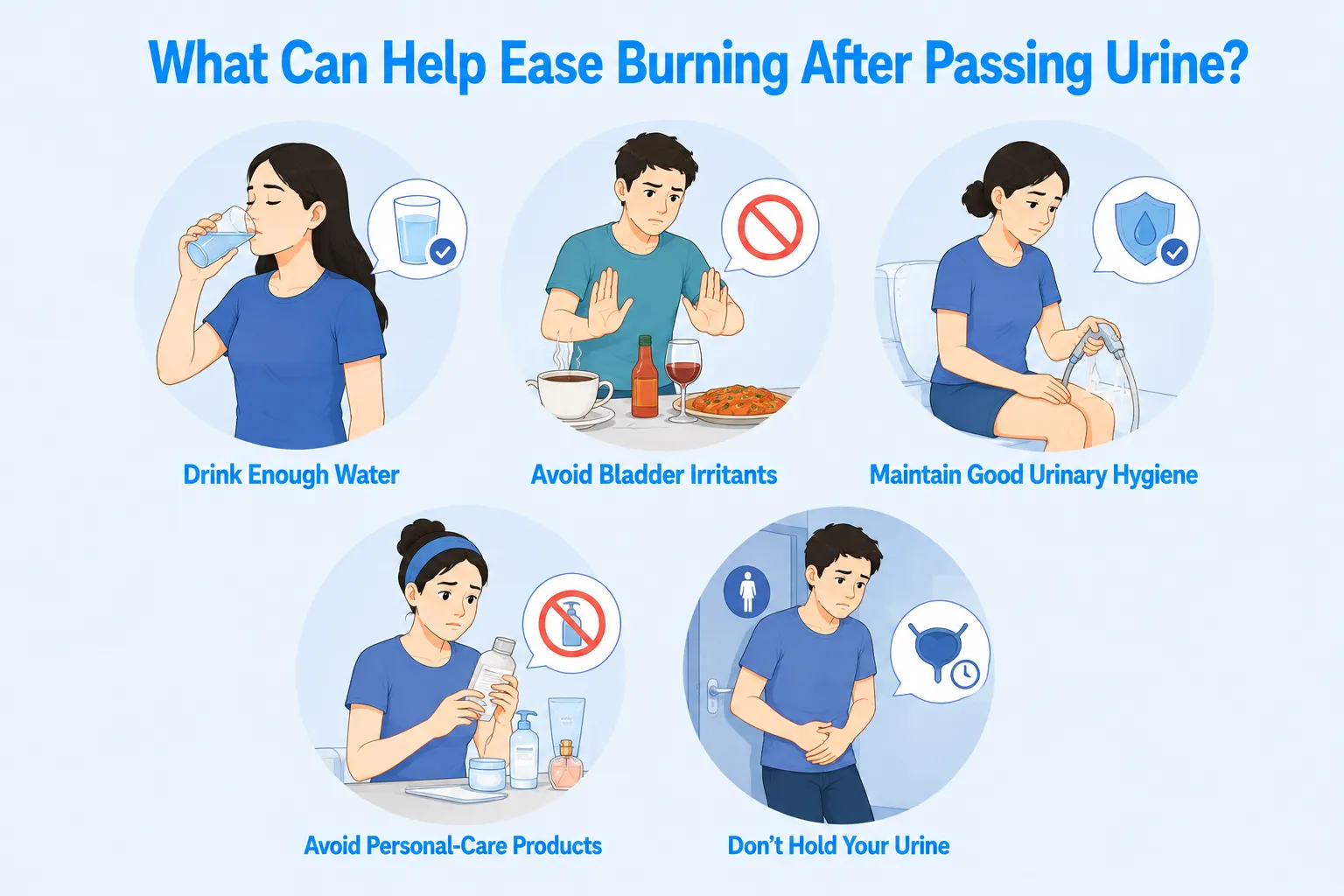
A few simple changes may help ease burning and make urination more comfortable. However, these measures may not fix the underlying problem if an infection, stone, or another condition is causing the discomfort.
Drink water regularly throughout the day. This can help prevent your urine from becoming too concentrated, which may make the burning feel worse. As reported by NHS Foundation Trust, drinking around 1.5–2 litres of fluid a day (about 8 cups) can help prevent bladder irritation and support healthy urinary function.
Coffee, alcohol, fizzy drinks, spicy foods, and some acidic drinks may make bladder discomfort worse for some people. If you notice that certain foods trigger more burning, try cutting them out temporarily. As reported by The Times of India, acidic, spicy, and caffeinated foods can irritate the bladder, while alcohol, sugary foods, high-sodium foods, and processed meats may also worsen UTI symptoms.
Keep the area around your genitals clean and dry, but avoid scrubbing too hard. After using the toilet, women should wipe from front to back to help reduce the spread of bacteria toward the urinary opening.
Scented soaps, sprays, intimate washes, and douches can irritate sensitive skin around the urinary opening. Using mild, fragrance-free products may help if the burning is related to external irritation.
When you feel the need to urinate, try to go rather than holding it for long periods. If the burning continues, keeps returning, or is accompanied by other symptoms, speaking with top UTI doctors in Chetpet can help you find the right cause and treatment.
You should see a doctor if the burning lasts for more than 1–2 days, keeps coming back, or does not improve after drinking enough water and avoiding possible irritants. Do not wait if you also have a fever, chills, lower abdominal or back pain, blood in your urine, unusual discharge, vomiting, or trouble passing urine, as these symptoms may point to an infection or another condition that needs prompt care.
Men, pregnant women, children, and people with recurrent urinary problems should seek medical advice sooner. A consultation at the best urologist hospital in Chennai can help identify the cause and provide appropriate urinary discomfort treatment.
Burning after passing urine may seem like a small problem, but it can make even a routine part of your day uncomfortable. Sometimes, the reason is as simple as dehydration or irritation, while persistent burning may need proper medical attention. You do not have to keep guessing or put up with the discomfort.
If the symptoms continue, become more frequent, or come with pain, fever, blood in the urine, or unusual discharge, getting checked is the sensible choice. A top multispeciality healthcare centre in Chennai such as Dr. Mehta’s Hospitals can help you find the cause and get the right care without unnecessary worry.
Burning after urination can result from a UTI, dehydration, irritation, urinary stones, an STI, or inflammation around the urinary tract.
2. Is burning after urination always a UTI?
No, burning can have several causes, although UTIs are one of the more common reasons for painful urination.
3. Can dehydration cause burning when passing urine?
Yes, not drinking enough water can make urine more concentrated and may increase irritation while passing urine.
4. How long should burning after urination last?
If the burning lasts for more than a day or keeps returning, it is advisable to speak with a healthcare professional.
5. Can an STI cause burning after urination?
Yes, STIs such as chlamydia and gonorrhea can cause burning, particularly when accompanied by genital discharge or other symptoms.
6. Can kidney or urinary stones cause burning after urination?
Yes, stones can irritate the urinary tract and may cause burning, pain, or blood in the urine.
7. What symptoms can occur with burning urination?
Frequent urination, urgency, lower abdominal pain, unusual discharge, cloudy urine, or blood in the urine may occur depending on the cause.
8. When should I see a doctor for burning urine?
Seek medical advice if the burning persists, returns repeatedly, or occurs with fever, blood in the urine, back pain, vomiting, or unusual discharge.
9. Can drinking more water stop burning after urination?
Drinking enough water may ease irritation caused by concentrated urine, but persistent burning may need treatment for its underlying cause.
10. What tests may be needed for burning urination?
A doctor may recommend a urine test or urine culture, while STI tests or other investigations may be needed depending on your symptoms.