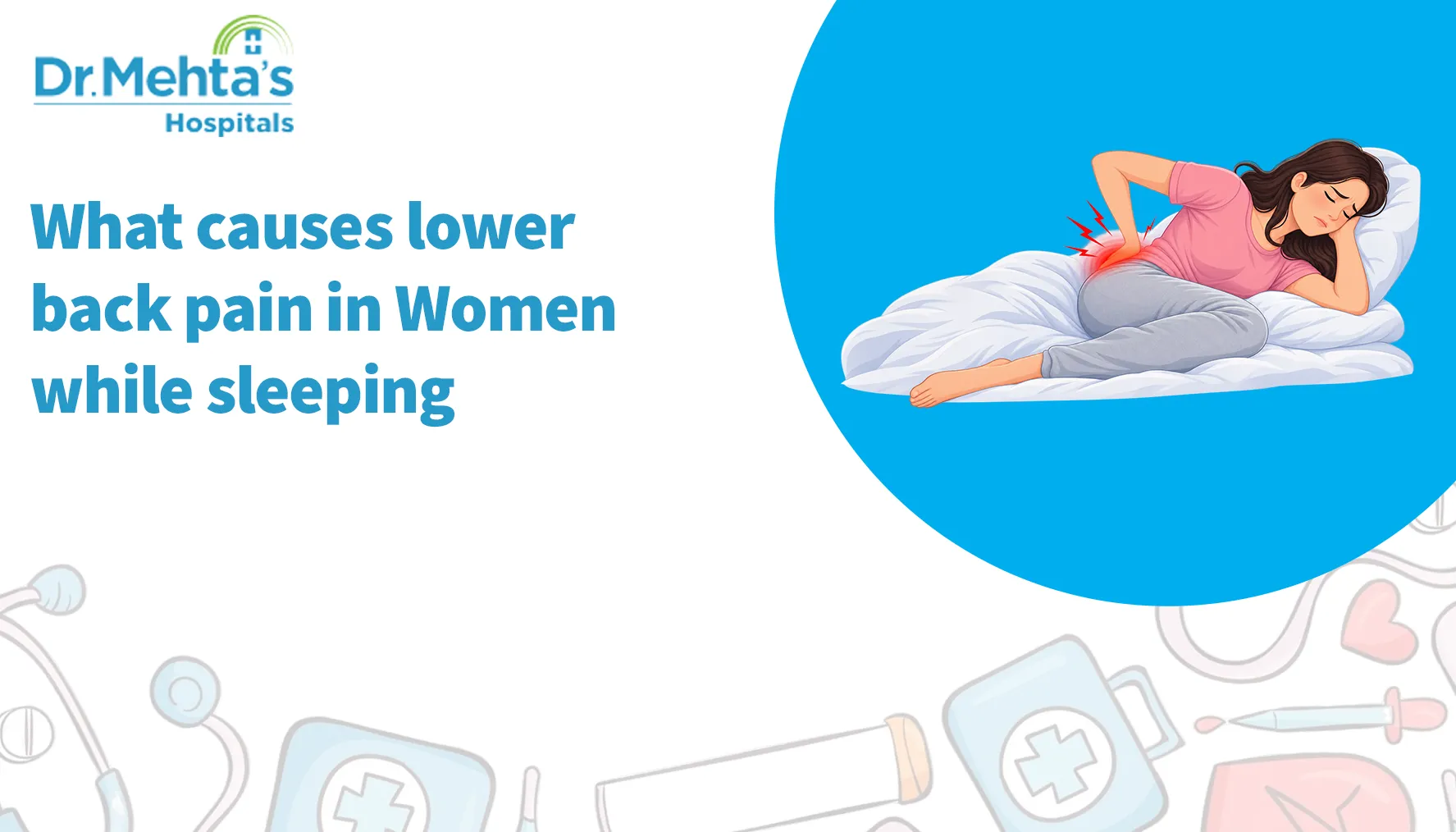
Lower back pain while sleeping can affect a woman’s comfort, sleep quality, and ability to feel refreshed in the morning. It may occur because of sleeping posture, an unsuitable mattress, muscle strain, hormonal changes during the menstrual cycle, pregnancy, or other underlying concerns. In some cases, pain may become more noticeable at night because the body remains in one position for several hours.
Understanding what causes lower back pain in women while sleeping can help identify simple changes that may provide relief. However, persistent or severe pain should not be ignored, especially when it affects daily activities or sleep regularly.
Women may experience lower back pain while sleeping due to a combination of sleeping posture, hormonal changes, pregnancy-related changes, muscle strain, mattress support, and underlying health conditions. Hormonal fluctuations during the menstrual cycle may contribute to discomfort, while pregnancy can change posture, shift body weight, and place additional strain on the lower back. Staying in one position for several hours can also increase stiffness and discomfort, particularly when the spine is not well supported.
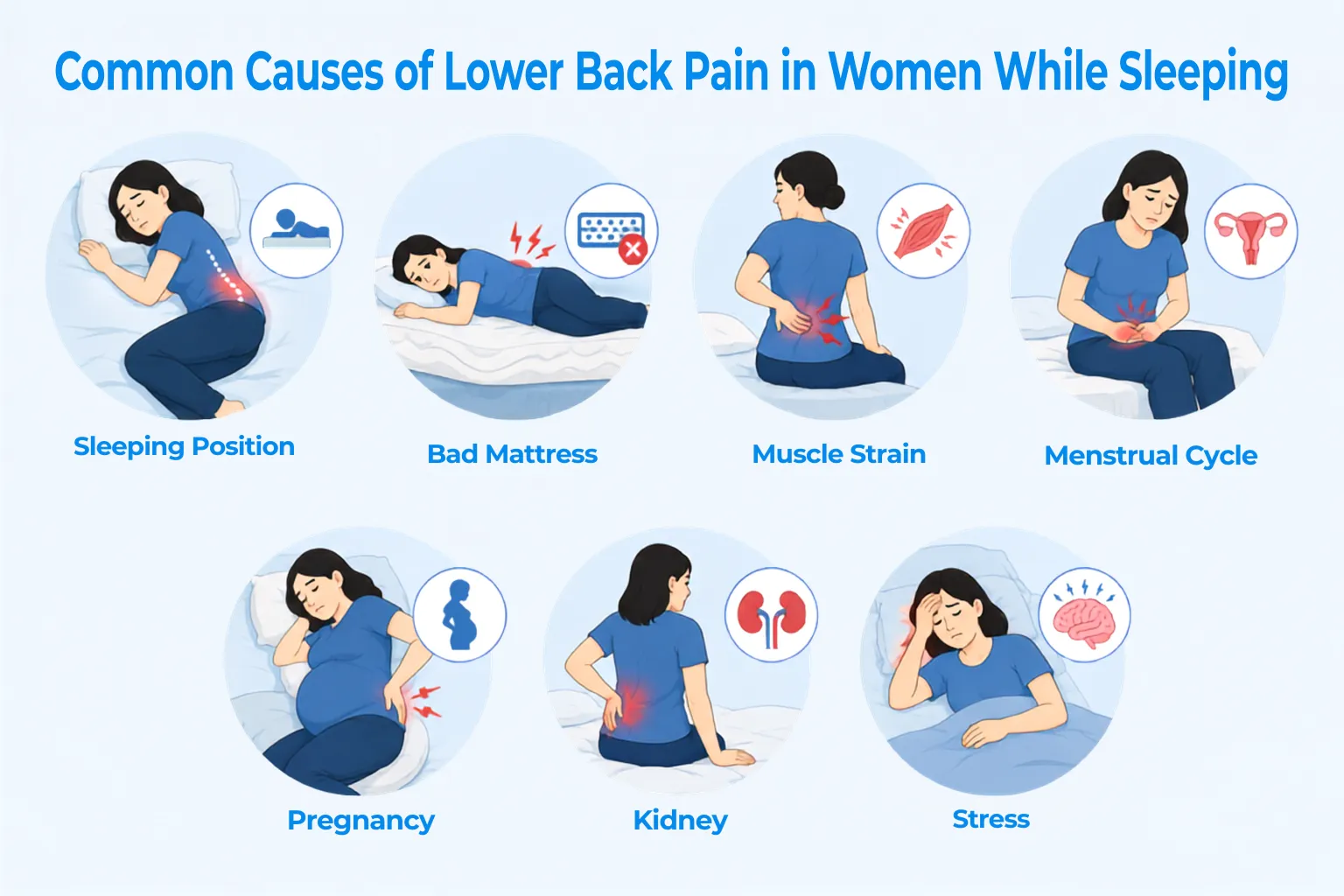
Lower back pain while sleeping can happen for several reasons, from an uncomfortable sleeping position to changes in the body during periods or pregnancy. Here are some common causes:
Your sleeping position can affect how much pressure your lower back experiences during the night. Sleeping on your stomach may put extra strain on your back, while poor support when sleeping on your side or back can also cause discomfort. Understanding how sleep position affects your spine can help you choose a more comfortable position and reduce lower back pain while sleeping.
An old or unsuitable mattress may not provide enough support for your lower back, causing discomfort while sleeping or after waking. A 2023 study found that 78.46% of participants with lower back pain reported moderate disability. The study also found that longer mattress use was linked to greater pain severity, while medium firmness was associated with less pain.
Muscle strain is a common cause of lower back pain while sleeping. It can happen after lifting, exercising, playing sports, sudden movements, or sitting for long periods. The affected muscles may become sore and stiff, making certain sleeping positions uncomfortable. Rest, gentle movement, and adequate support while sleeping may help ease mild muscle-related back pain.
Hormonal changes during the menstrual cycle can cause lower back pain in some women, particularly before or during their period. The pain may occur along with cramps and can make sleeping uncomfortable. Mild discomfort often improves as the period ends. Gentle stretching, adequate rest, and a comfortable sleeping position may help manage lower back pain during menstruation.
Lower back pain is common during pregnancy as the body changes and the growing baby adds more weight to the lower back. Hormonal changes can also loosen the joints and affect posture. Using supportive pillows, avoiding prolonged standing, and sleeping in a comfortable side-lying position may help reduce pregnancy-related lower back pain.
Kidney problems can sometimes cause pain in the lower back or side, particularly when an infection or kidney stone is present. The pain may occur with other symptoms such as fever, chills, nausea, painful urination, or changes in urine. Lower back pain with these symptoms should not be assumed to be caused by sleeping and should be medically assessed.
Stress can contribute to lower back pain by causing muscles to become tense, especially around the back and shoulders. This tension may become more noticeable at night and make it harder to sleep comfortably. Managing stress through relaxation, gentle stretching, regular movement, and a consistent sleep routine may help reduce stress-related lower back discomfort.
Sleeping on your back with a pillow under your knees or on your side with a pillow between your knees may help reduce pressure on the lower back. However, there is no single sleeping position that works for everyone. A study published in the National Library of Medicine, involving 375 people with chronic lower back pain (CLBP), found that 87% preferred side sleeping, 47% slept on their back, and 22% slept on their stomach. The study also found that 42% avoided sleeping on their stomach because of pain, showing that the most comfortable position can vary from person to person.
If lower back pain while sleeping continues despite these changes, a spine specialist can help identify the underlying cause and suggest appropriate treatment.
Lower back discomfort may improve with simple changes, but certain signs mean it should be checked by a doctor:
For expert evaluation and treatment, consider the best orthopedic hospital in Chennai.
Waking up with lower back pain does not always mean something is seriously wrong. Your sleeping position, mattress, muscle strain, periods, pregnancy, or even stress can make your back uncomfortable through the night. Start with simple changes such as improving your sleeping position, adding pillow support, or checking whether your mattress still feels comfortable.
If the pain continues, keeps coming back, or starts affecting your daily activities, speak to a doctor instead of ignoring it. Dr. Mehta’s Hospitals is among the best multispeciality hospitals in Chennai, offering specialist care when back pain needs proper evaluation.
Lower back pain at night can result from your sleeping position, mattress, muscle strain, hormonal changes, pregnancy, stress, or other health conditions.
2. What is the best sleeping position for lower back pain?
Side sleeping with a pillow between your knees or back sleeping with a pillow under your knees may improve comfort.
3. Can sleeping on my stomach cause lower back pain?
Yes, sleeping on your stomach may increase strain on the lower back and worsen discomfort in some people.
4. Can a bad mattress cause lower back pain?
An old, overly soft, or poorly supportive mattress may contribute to lower back discomfort during sleep.
5. Why does my lower back hurt more during my period?
Hormonal changes and period-related cramps can cause discomfort that spreads to the lower back.
6. Is lower back pain normal during pregnancy?
Lower back discomfort is common during pregnancy because of changes in body weight, posture, and the growing abdomen.
7. Can stress cause back pain at night?
Stress can increase muscle tension and make existing lower back discomfort more noticeable while resting.
8. How can I reduce lower back discomfort during sleep?
Try changing your sleeping posture, using targeted pillow support, and replacing a mattress that no longer feels supportive.
9. When should I see a doctor for lower back pain?
See a doctor if the discomfort persists, worsens, follows an injury, or occurs with weakness, numbness, fever, or bladder or bowel changes.
10. Can kidney problems cause lower back pain?
Kidney problems can cause back or side discomfort, particularly when accompanied by fever, urinary changes, nausea, or chills.