Many women experience a bladder infection at some point in their lives, while for others, it may become a recurring problem. Knowing why they happen can help you take the right steps to protect your urinary health and reduce the chances of future infections.
In this blog, we’ll explain why women are more likely to get bladder infections, the common causes, symptoms to look out for, simple ways to lower your risk, and when to see a doctor.
Women are more likely to get frequent bladder infections because their shorter urethra allows bacteria to reach the bladder more easily, and its location closer to the anus makes it easier for bacteria such as E. coli to enter the urinary tract. Hormonal changes, pregnancy, menopause, sexual activity, and incomplete bladder emptying can further increase the risk. According to the National Institutes of Health (NIH), around 50–60% of women will develop a urinary tract infection (UTI) at least once during their lifetime, highlighting how common these infections are.
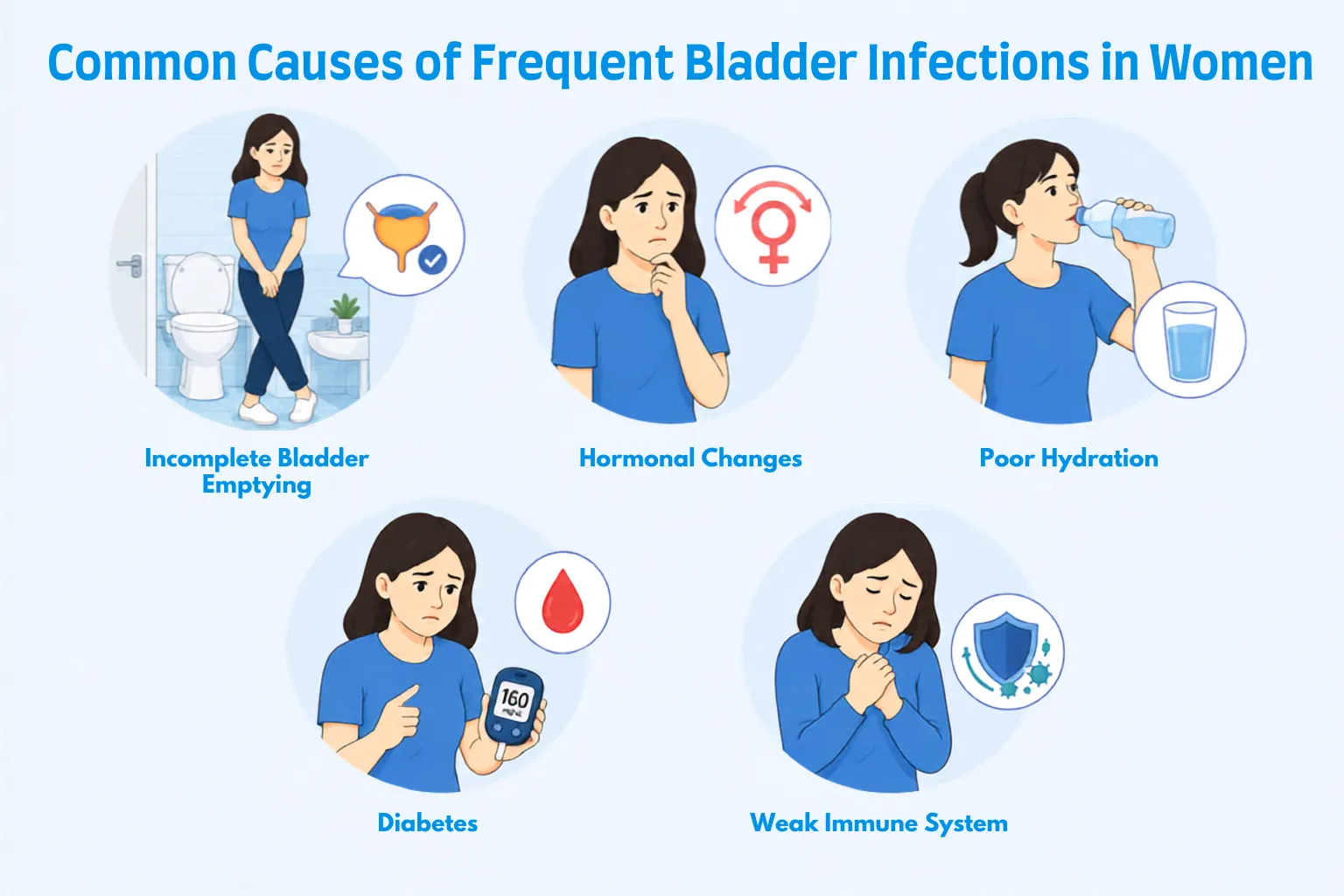
Incomplete bladder emptying can increase the risk of frequent bladder infections by allowing urine to remain in the bladder, creating an environment where bacteria can grow and multiply. This may occur due to urinary tract blockages, pelvic floor disorders, nerve-related conditions, or an enlarged uterus during pregnancy.
Changes in hormone levels, especially during menopause, can reduce the body’s natural protection against harmful bacteria. Lower estrogen levels may cause the tissues around the urinary tract to become thinner and drier, making it easier for bacteria to enter and cause frequent bladder infections. Pregnancy can also increase the risk due to hormonal changes.
Drinking too little water means you urinate less often, allowing bacteria to stay in the bladder for longer. Staying well hydrated helps flush bacteria out of the urinary tract before they can multiply. Making water intake a daily habit can play an important role in lowering the risk of frequent bladder infections.
High blood sugar levels can encourage bacterial growth and weaken the body’s ability to fight infections. Diabetes may also affect bladder function, causing urine to remain in the bladder for longer. Keeping blood sugar under control can help lower the risk of frequent bladder infections.
A weak immune system makes it harder for the body to fight off bacteria that enter the urinary tract. This may be caused by certain medical conditions, medications, or ongoing illnesses. As a result, bladder infections may occur more often and take longer to resolve.
If you experience frequent bladder infections, consulting a gynecologist in Chennai can help identify the underlying cause and recommend the most appropriate treatment plan.
The signs of a bladder infection often begin gradually, so recognizing them early can help you get timely treatment. Watch for these common warning signs:
Needing to urinate more often than usual, even when only a small amount of urine is passed, is a common sign of a bladder infection. This symptom may disrupt your daily routine and should not be ignored if it persists.
A burning or stinging feeling while passing urine is one of the earliest symptoms of a bladder infection. If the discomfort continues or becomes more severe, it is important to seek medical advice.
Pain, pressure, or discomfort in the lower abdomen or pelvic area may indicate that the bladder is inflamed. This symptom often occurs along with frequent urination and pain during urination.
Bladder infections are among the common causes of blood in urine, causing urine to appear pink, red, or brown due to irritation of the urinary tract. Even a single episode should be assessed by a doctor.
A fever, chills, or pain in the back or sides may be a sign that the infection has spread to the kidneys. This requires prompt medical attention to prevent serious complications.
Studies in India estimate that bladder infections affect 3.14% to 19.87% of women following sexual activity, as bacteria can more easily enter the urinary tract during or after intercourse.
If bladder infections keep returning despite healthy habits, our Experienced doctors in Chetpet can evaluate the underlying cause and recommend appropriate treatment.
Yes, frequent bladder infections can often be prevented by identifying the underlying cause, following healthy lifestyle habits, and seeking timely medical care when needed. Simple steps such as staying hydrated, maintaining good personal hygiene, emptying the bladder completely, and managing conditions like diabetes can help lower the risk. If bladder infections keep coming back, a doctor’s evaluation can identify the cause and recommend the right treatment to support long-term urinary health.
You should visit a doctor within 24–48 hours if bladder infection symptoms persist, or immediately if you develop a fever, notice blood in your urine, or experience severe back pain. Frequent bladder infections may indicate an underlying condition that requires medical evaluation rather than repeated antibiotic treatment.
Our experienced obstetricians and gynecologists in Chennai provide comprehensive evaluation and personalized care to identify the root cause, reduce recurrent infections, and help protect your long-term urinary health.
Frequent bladder infections are common among women, but they should never be considered a normal part of life. Understanding the underlying causes, recognizing the early symptoms, and adopting healthy daily habits can help reduce the risk of recurrent infections and improve urinary health.
Seeking timely medical care is equally important, especially if infections keep returning or symptoms become severe. As the best multispeciality hospital in Chennai, Dr. Mehta’s Hospitals offers comprehensive diagnosis and personalized treatment to help women manage bladder infections effectively and protect their long-term well-being.
1. Why are bladder infections more common in women?
Women have a shorter urethra, making it easier for bacteria to reach the bladder and cause infection.
2. What causes frequent bladder infections in women?
Hormonal changes, incomplete bladder emptying, poor hydration, diabetes, and a weakened immune system can increase the risk.
3. Can hormonal changes increase the risk of bladder infections?
Yes, hormonal changes during menopause and pregnancy can make women more prone to bladder infections.
4. How can I reduce the risk of frequent bladder infections?
Staying hydrated, maintaining good hygiene, and avoiding holding urine for long periods can help lower the risk.
5. What are the early symptoms of a bladder infection?
Frequent urination, a burning sensation while urinating, and pelvic discomfort are common early symptoms.
6. When should I see a gynecologist for a bladder infection?
You should seek medical advice if symptoms persist, become severe, or keep returning despite treatment.
7. Can diabetes lead to frequent bladder infections?
Yes, uncontrolled blood sugar levels can encourage bacterial growth and increase the risk of recurrent infections.
8. Can bladder infections be prevented?
Many bladder infections can be prevented by following healthy habits and addressing any underlying medical conditions.
9. Is blood in the urine always a sign of a bladder infection?
No, blood in the urine can have several causes and should always be evaluated by a doctor.
10. Can a gynecologist treat bladder infections in women?
Yes, gynecologists can diagnose and treat many bladder infections in women and recommend further evaluation when needed.