
A lot of people feel joint cracks, pops or clicks as they walk, stretch, bend or step up/down the stairs. The sounds may occur in the knees, shoulders, fingers, neck or ankles and are typically common.
Sometimes, joint cracking is a normal occurrence and is fine in most situations, even if there is no pain or swelling. They are commonly associated with natural joint movement, tiny air bubbles, or moving tendons around the joint.
When joints start making these sounds, it’s important to understand why to avoid unnecessary worry and to identify when it may be advisable to seek medical advice. Fortunately, many joint sounds are harmless and normal.
According to the local study, which was conducted on 150 college students aged 18-25 years old in Bengaluru, knuckle cracking was seen to be very common among the participants, particularly those who are stressed and have very flexible joints. Joint cracking is the crack, click, or snap that occurs when a joint moves. These sounds can happen at times of:
The sound is often referred to as “joint cracking” or “joint popping.” In many cases, the sound is caused by the normal movement of tissues and joints.
Yes. Some people have a popping sound in their joints that they experience from time to time, and that does not cause them any concern. Healthy joints contain:
As joints move, the small gas bubbles in the fluid inside the joint may release or relocate, causing a cracking noise. Tendons and ligaments can also slide a little on bones when they move. When the sound is there without pain, swelling, stiffness, and little or no movement, it is generally not serious.
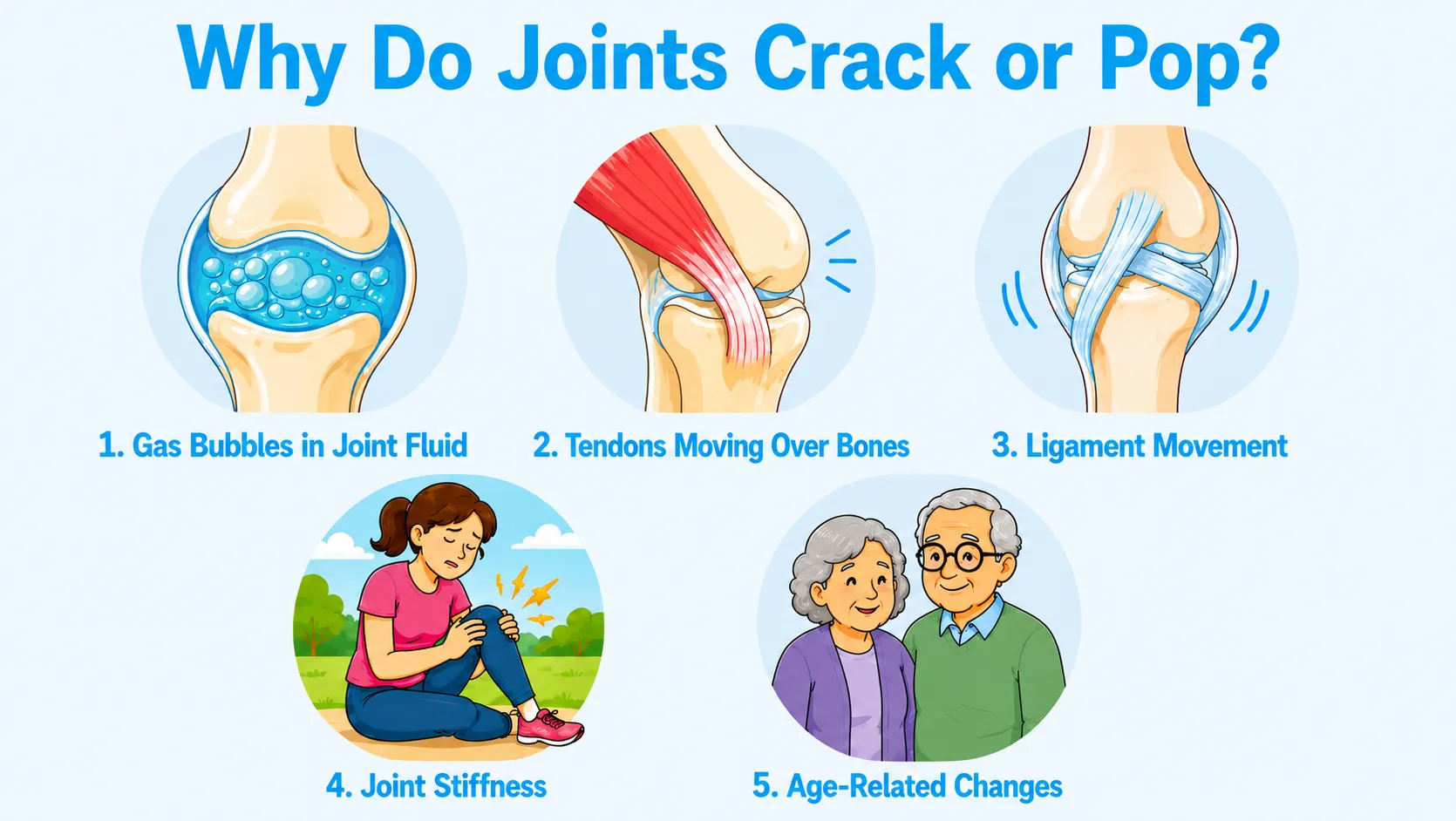
There are several common reasons why joints make sounds.
The gases are dissolved in the fluid of the joints. Sometimes very small bubbles can form or burst from the movement, producing a popping sound.
Tendons can move slightly while moving and may lead to clicking.
Ligaments may lengthen and realign during movement, particularly when in one position for a prolonged period.
When joints are inactive for long periods, they can move with a slight stiffness and then make sounds when the movement resumes.
Natural changes to cartilage and flexibility as people get older can cause some joint sounds. The majority of these causes are normal joint function.
Over 150 million Indians suffer from some form of arthritis, and arthritis of the joints affects almost 25% of all Indians over 40 years of age, according to a major study supported by the WHO. Joint cracking may occur anywhere in the body. The most frequently affected joints are:
If your joints make sounds, it happens more easily with exercise or after a long rest. It’s important to seek advice from specialists at a reputed orthopedic hospital in Chennai to determine if the sounds are normal or if they require attention.
One of the most obvious joint sounds is knee cracking. This can occur because:
Often, sounds are heard in the knee that are not painful. If cracking is accompanied by swelling, discomfort, stiffness or walking impairment, however, medical evaluation may be useful.
Yes. Joint sounds can sometimes be more noticeable temporarily when exercising or stretching. This usually happens because:
Gentle exercise is generally beneficial for joint health and flexibility. Moving frequently can help joints remain more comfortable and movable. When joint pain or sudden discomfort becomes severe, prompt treatment by a trusted 24/7 emergency care hospital in Chennai can make a significant difference.
|
Usually Normal |
May Need Attention |
|
Occasional popping |
Swelling with sound |
|
No pain |
Persistent discomfort |
| Happens during stretching |
Limited movement |
| No stiffness |
Repeated locking sensation |
Joints that are painful, swollen, warm, limited in motion, or injured are more likely to require medical attention.
Taking good care of the joints through everyday habits can help maintain their flexibility and comfort over time. Here are some helpful habits:
Consuming well-balanced meals high in calcium and protein. If you are looking for professional support for recovery and better movement, specialists at a trusted physiotherapy and rehabilitation centre in Chennai can help improve strength, flexibility, and daily mobility.
|
Food |
How It May Help |
|
Leafy vegetables |
Provide nutrients for bone health |
| Milk and curd |
Support calcium intake |
|
Nuts and seeds |
Provide healthy fats |
| Fruits |
Provide antioxidants |
| Protein-rich foods | Support muscles and joint support |
Simple movement and balanced nutrition often help maintain better joint flexibility.
Not all joint sounds can or need to be prevented because many are completely normal. But there may be some healthy habits to help ease excess stiffness or strain:
Moderate activity during the day can aid joint movement.
Orthopedic specialists evaluate joint sounds by considering:
Doctors may recommend:
These assessments are used to establish if sounds are normal movement or associated with joint conditions.
If joint sounds are accompanied by pain, swelling, limited motion or feelings of instability, a physician should be seen. Repeat locking, or symptoms that are increasingly becoming a problem in daily functioning, should also not be neglected. If they ever make a sound, in most cases, it’s nothing to worry about, but if they continue to cause pain or problems, it could be a sign of an underlying problem that needs medical treatment. Early evaluation can help detect any joint issues and aid in maintaining long-term joint health, comfort and mobility.
It is also important to note the duration of the symptoms and whether they gradually worsen over time. Continued joint pain can result in mobility issues and impact daily living. A health care provider will be able to assess the situation and provide you with a treatment plan or adjustments to your lifestyle that may be needed to prevent further joint strain or damage.
Joint cracking and popping are very common and may be part of normal motion. In many cases, these sounds occur spontaneously as a result of the changes in joint fluid, stretching around the joints or the movement of the tendon.
Fortunately, the cracking is often harmless and painless in this instance. Good movement habits and regular stretching, staying active, and supporting joint health will help promote flexibility and comfort.
When joint sounds are accompanied by pain, swelling, stiffness, and/or limited motion, it is important to seek clarity, reassurance, and appropriate direction for long-term joint wellness by seeing an orthopedic specialist. Connect with our doctors to book an appointment now.
No. Joint cracking is usually painless and does not signify arthritis.
2. Why do knees make popping sounds while climbing stairs?
This can occur because of tendon movement, gas bubbles, or normal joint movement when doing an activity.
3. Can exercise increase joint sounds?
Yes. Joint sounds may occur during the initial stretching and exercise due to increased mobility of the joint.
4. Is cracking fingers harmful?
For most people, finger-cracking is not a problem as long as it doesn’t cause pain.
5. When should joint cracking be checked by a doctor?
Medical advice may be useful if cracking is painful, swollen, stiff or if there is restricted movement.
6. Can dehydration affect joints?
Hydration is essential for healthy joint lubrication and flexibility.
7. Are joint sounds more common with age?
The sounds from joints may get louder because of the joints’ natural ageing process.
8. Can stretching help reduce stiffness?
Yes. Stretching gently may be helpful in increasing flexibility and decreasing stiffness.
9. Which doctor should I consult for joint concerns?
An orthopedic specialist will be able to assess joint pains and mobility issues.
10. Are painless joint sounds usually normal?
Yes. Sometimes, the painless cracking or popping is a normal function of the joint.