Bladder stones are small, hard mineral deposits that develop in the bladder when the urine is not fully emptied. They can affect people of all age groups, including children, adults, and older adults, but they are more commonly seen in older men and individuals with certain urinary tract disorders or bladder emptying problems.
Although bladder stones can be alarming, they may be effectively managed if timely medical care is provided along with healthy lifestyle habits. Early recognition of symptoms and appropriate guidance can help ensure comfort and support urinary health in the long term.
In this article, we will discuss the common causes, symptoms, diagnosis, and treatment of urinary stones, along with simple daily habits that can support better urinary health.
Bladder stones typically form when the bladder does not empty completely. Minerals in the urine can join together over time to slowly create stones. Bladder stones are more likely to occur in people who have:
While a kidney stone is not the same as a bladder stone, it is still one of the major urinary ailments in India that affects almost 1% to 19% of the people, as per a report by PudMed Central. They are frequently associated with dehydration, low fluid intake, and some diet practices. Bladder stones may be more likely in some people:
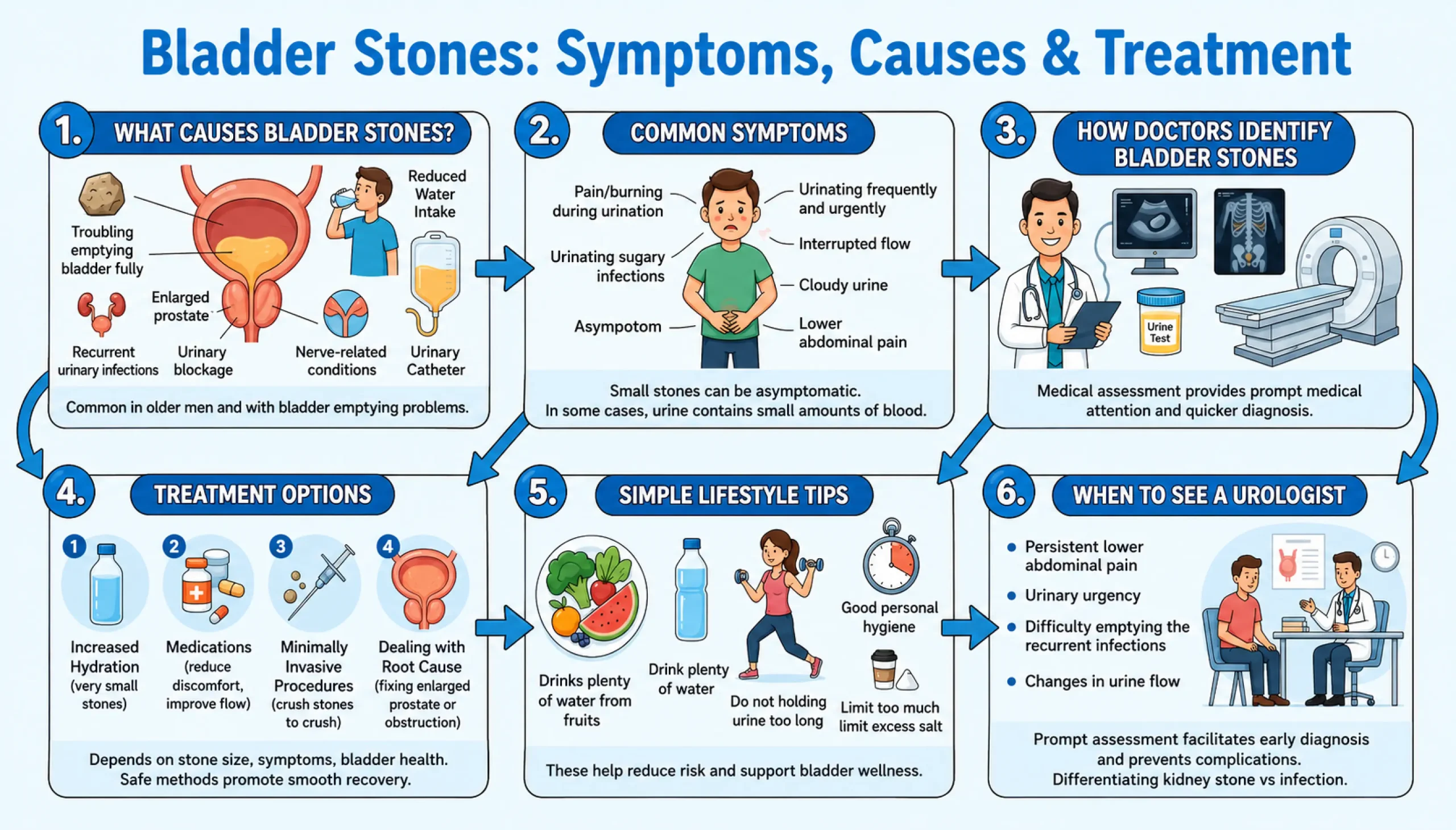
Small bladder stones can occur without any symptoms right away. But if the stone is larger or if there is an irritation in the bladder, there may be discomfort.
Symptoms include:
Other urinary problems can also cause these symptoms, so you should see the best nephrologist in Chennai to make sure you get the right diagnosis.
Doctors typically start by asking about symptoms and a history of the illness. A physical exam also may be recommended.
Doctors might recommend:
These tests can help the doctor discover where, how many, and how big the stones are, and the most effective treatment. If the pain is severe or if the complications seem to take place at once, reaching out to a 24/7 emergency care team in Chennai will help provide timely help and prompt medical attention, which can lead to quicker diagnosis.
According to a report by The National Medical Journal of India, almost 12% of Indians are vulnerable to urinary stones during their lifetime. Treatment depends on stone size, presence of symptoms, and the health of the bladder.
Drinking more fluids might sometimes help pass very small stones. This is typically only recommended with medical supervision.
Doctors may prescribe medications to:
Different medication options may be recommended based on a person’s overall health condition and specific needs.
In many cases, bladder stones can be treated through minimally invasive techniques involving the use of a small instrument to locate and crush the stones into smaller pieces for removal. These methods are generally safe and promote a smooth recovery for the patient.
When bladder stones are associated with conditions like an enlarged prostate or urinary obstruction, the doctor may also treat the underlying condition to minimize the risk of future stones. Early treatment can result in easier recovery and improved urinary health later on.
Healthy daily habits can support bladder wellness and may help reduce the risk of urinary concerns.
|
Habit/Food |
How It May Help |
|
Water-rich foods |
Support hydration and healthy urine flow |
| Fresh fruits and vegetables | Provide fibre and nutrients for overall wellness |
| Limiting excess salt |
May help support urinary and kidney health |
| Healthy hydration habits |
Help the bladder function more comfortably |
Other urinary health advice:
These basic practices can help maintain bladder comfort and well-being.
If you get any of these symptoms, you should speak with your urologist:
Prompt medical assessment can facilitate early diagnosis and treatment, especially when differentiating between conditions like kidney stones and kidney infections, where timely urological evaluation plays an important role in preventing complications.
At Dr Mehta’s Hospitals, patients are treated with compassion and personalised care for urination and urinary problems. The hospital’s leading experts prioritize patient comfort, early diagnosis, and advanced treatment methods.
Bladder stones are treatable urinary stones, particularly if the condition is detected early. By focusing on symptoms, maintaining hydration, and getting early medical advice, you can improve bladder health and overall comfort.
Simple lifestyle habits and regular health check-ups often go a long way in maintaining a healthy urinary system. If you experience recurrent urinary discomfort or altered bladder habits, you can turn to an experienced urologist to get the proper treatment and reassurance you need. Contact our expert doctors right now to get treated.
Bladder stones are hard mineral masses that develop in the bladder when it is not emptied properly.
2. What causes bladder stones?
Bladder stones can form when the bladder doesn’t empty completely, when there is a urinary infection, when the prostate enlarges, or when the amount of water consumed is decreased.
3. Can bladder stones go away naturally?
Sometimes, very small stones may pass on their own, provided that sufficient hydration is maintained, although medical guidance is important.
4. Are bladder stones painful?
Others may have mild symptoms or discomfort, burning while urinating, or lower abdominal pain.
5. How are bladder stones diagnosed?
In many cases, urine tests, ultrasound, or other imaging tests will be used to detect bladder stones.
6. Is surgery always needed for bladder stones?
Not always. The treatment approach usually depends on the size of the stone. Minimally invasive procedures are an effective treatment option for many cases.
7. Can drinking water help prevent bladder stones?
Hydration helps keep urine flowing and can decrease the risk of mineral crystals forming in the urine.
8. Who is more likely to get bladder stones?
Bladder stones are more likely to occur in older adults, men with an enlarged prostate, and individuals who have urinary diseases.
9. Can bladder stones return after treatment?
Bladder stones can recur if the underlying urinary disorder is not treated. Regular follow-up care can help lower the risk of recurrence.
10. When should I consult a urologist for urinary symptoms?
If you experience persistent urinary discomfort, recurrent infections, problems with urination, or a urine flow disturbance, you should seek the advice of a urologist.