

Lower back pain or urinary issues can sometimes be confusing, particularly when you are not sure of the cause. Kidney stones and kidney infections are two common conditions that can cause these symptoms.
Although they might seem similar, they differ significantly in how they develop and are treated. Knowing the difference between a kidney stone and a kidney infection can help you take the right action at the right time and feel more confident about your health.
The good news is that both conditions can be treated successfully with timely care and the right medical advice.
Although both conditions affect the kidneys, their causes and symptoms vary.
|
Feature |
Kidney Stones |
Kidney Infection |
|
Cause |
Mineral buildup in the kidneys | Bacterial infection |
|
Pain Type |
Sharp, intense, may come in waves | Constant, dull or aching |
|
Fever |
Rare |
Common |
|
Urine Changes |
May include blood in urine |
Cloudy or strong-smelling urine |
| Onset | Sudden |
Gradual |
Understanding these differences can help you recognise early signs and seek appropriate care.
Kidney stones are quite common in India. According to a report published by PubMed Central, kidney stones affect around 10 to 12 percent of people in India, especially in the northern region often called the “stone belt.” The most noticeable symptom is intense, wave-like pain in the side or lower abdomen. Many people also experience blood in the urine, along with nausea and vomiting.
Common symptoms include:
The intensity of pain may vary depending on the size and movement of the stone. Certain stones can be passed naturally through adequate hydration and care. For accurate diagnosis and the right treatment approach, it is advisable to consult experts at a top kidney specialist hospital in Chennai.
A kidney infection is usually caused by bacteria that travel up the urinary tract and reach the kidneys. It may begin with mild symptoms and gradually become more severe.
Urinary tract infections can affect people of all ages, from new borns to older adults. It is especially common in women, with nearly 50 to 60 percent experiencing at least one UTI at some point in their lives.
Common symptoms are:
These symptoms occur as the body responds to the infection and can affect overall well-being. The condition can be managed comfortably with early attention.
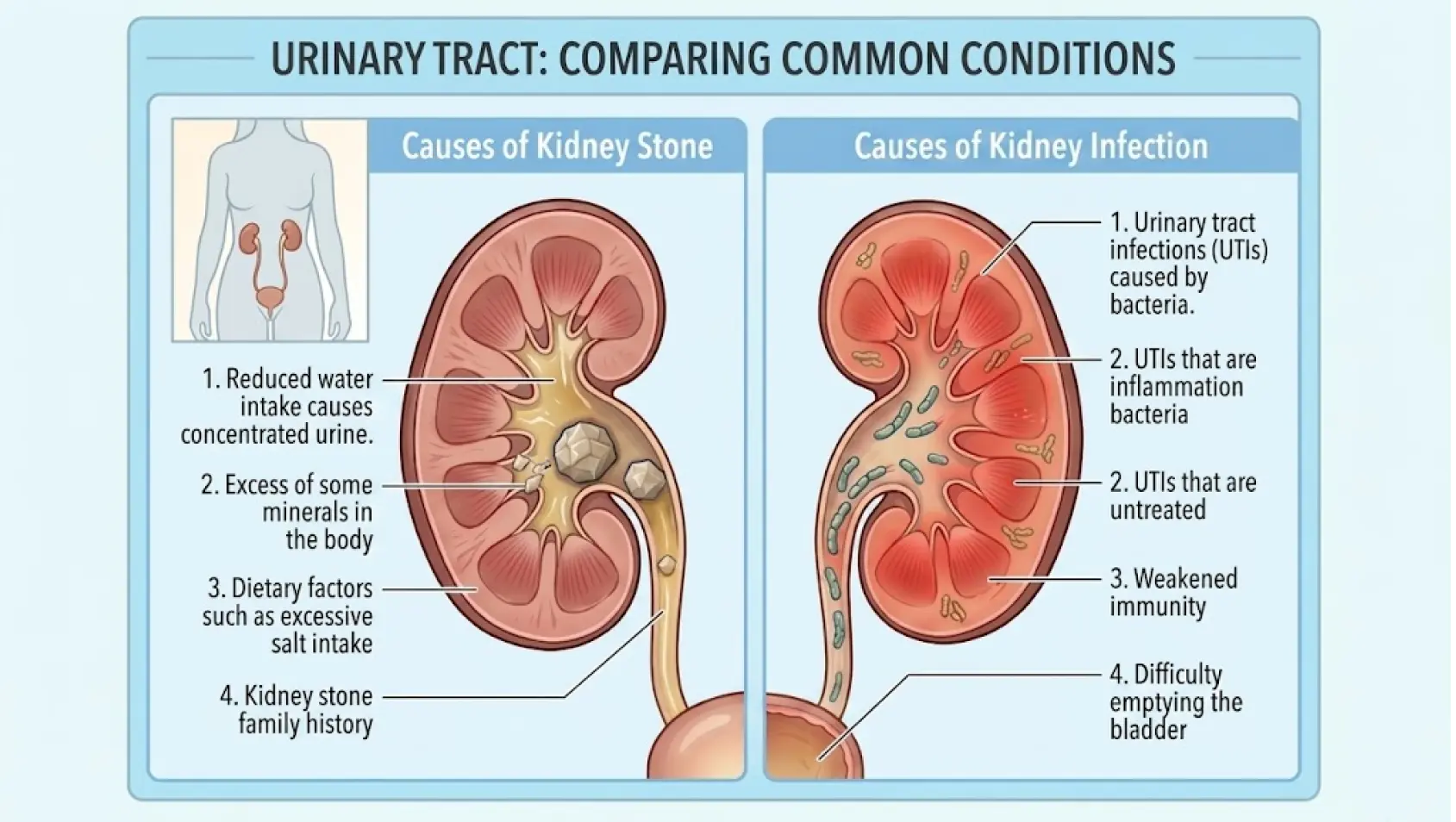
Understanding the causes can help you prevent these conditions and take better care of your health.
Although the causes vary, both conditions can be managed with early care and easy lifestyle awareness. In case of sudden or severe symptoms, seeking help from a 24/7 immediate care hospital in Chennai can ensure quick and reliable medical support.
It is understandable to feel confused when the symptoms are similar, but a few signs can help you tell the difference between a kidney stone and a kidney infection.
Pain pattern:
Kidney stone pain is sharp and can be intermittent, whereas the pain caused by infection is more constant.
Fever present:
In kidney infections, fever is often present and is uncommon with kidney stones.
Urination changes:
Infections are more likely to cause a burning sensation and frequent urination, whereas kidney stones can lead to visible blood in the urine.
Onset of symptoms:
Kidney stones usually lead to sudden discomfort, whereas infections can progress slowly. If you are unsure, it is always best to consult a doctor for a proper evaluation.
Although mild symptoms may resolve through simple care, it is essential to monitor symptoms that might require medical attention. If the lower back pain does not go away, you develop a fever, or you notice urinary changes that are not improving, it is advisable to consult a doctor.
Early diagnosis helps identify the exact cause and ensures the right treatment plan is followed. Starting treatment early can also help prevent complications and support a quicker recovery. Access to a reliable online pharmacy in Chennai can further make it easier to get prescribed medicines without delay.
Maintaining kidney health can reduce the chances of both kidney stones and infections. Here are some simple tips to support your kidney health:
Drinking enough water plays a key role in keeping your kidneys healthy. It supports the natural removal of waste from the body and may reduce the risk of mineral buildup.
Adding fresh fruits, vegetables, and home-cooked meals may help maintain overall kidney health. Avoid consuming too much salt and processed foods, as they can strain the kidneys over time.
The risk of urinary tract infections can be reduced by following proper hygiene practices. Even simple daily hygiene practices can help reduce the risk of infection.
Emptying your bladder regularly helps keep the urinary tract healthy. Holding urine for long periods can lead to infection.
Moderate exercise, such as walking or light physical activity, may help improve circulation and support overall kidney health.
If you notice any unusual discomfort or urinary changes, it is best to consult a doctor promptly.
These steps help in identifying the exact cause and guiding the right treatment approach.
Understanding the difference between a kidney stone and a kidney infection is an important step towards better health awareness.
Although kidney stones are associated with mineral deposition, bacteria cause kidney infections. Their symptoms can sometimes overlap, but understanding the important differences, such as pain pattern, fever, and urinary changes, can assist you in responding early.
Both conditions are manageable with timely guidance. If you have been experiencing persistent pain, changes in urination, or fever, consulting a specialist can help you get the right diagnosis and treatment. Get in touch with our top specialists at Dr. Mehta’s Hospitals right now to book an appointment.
Kidney stones are caused by mineral buildup, while kidney infections are caused by bacteria affecting the kidneys.
2. Can kidney stones cause a fever?
Fever is usually associated with kidney infections rather than kidney stones.
3. How can I tell if my pain is caused by a kidney stone?
Sharp, wave-like pain in the lower back or side is commonly linked to kidney stones.
4. Are kidney infections serious?
Yes. With timely diagnosis and treatment, kidney infections can usually be managed effectively.
5. Can both conditions occur together?
In some cases, a kidney stone may increase the risk of infection, so proper evaluation is important.
6. When should I see a doctor?
If you notice persistent discomfort, fever, or changes in urination, it’s best to seek medical advice.
7. Can dehydration increase the risk of kidney stones?
Yes. Not drinking enough water can make urine more concentrated, which may increase the risk of kidney stone formation.
8. Do kidney stones always require surgery?
No. Small kidney stones may pass naturally with hydration and medication, while larger stones may need medical treatment or procedures.
9. Can kidney infections go away on their own?
Kidney infections usually require medical treatment, including antibiotics, to prevent complications.
10. Is blood in the urine always a sign of kidney stones?
No. Blood in the urine can also occur due to infections, bladder problems, or other urinary conditions.