It is common to experience some stiffness or slight discomfort in the knees as we get older. This may make daily tasks such as walking, sitting or climbing stairs a little harder than usual.
In most cases, this pain is linked to reduced muscle strength and limited joint mobility. The good news is that simple home exercises for seniors can help improve movement, increase comfort, and boost confidence in daily life.
With the right approach, these exercises can become a simple and effective part of your daily routine.
Regular exercise is important for maintaining joint flexibility and muscle activity. In older adults, physical activity can help improve balance, coordination, and overall mobility.
Regular home exercise is especially important for seniors in India. As people age, their physical strength, mental well-being, and daily functioning can decline. In fact, more than 1/3 of individuals above 65 experience at least one fall each year, making regular movement and strength-building essential for safety and overall health, as per Sage Journals.
Home exercises are simple to follow, require little space, and can be performed at your own pace. They help improve circulation, reduce stiffness, and build strength in the muscles that support the knee.
With time, regular exercise can make routine activities more comfortable. Just a few minutes a day can improve joint health and support an active lifestyle.
When Should Seniors Start Knee Exercises?
Seniors should begin gentle movement early, especially when stiffness or mild discomfort first appears, rather than waiting for symptoms to become more severe. Starting simple exercises early can help improve flexibility, maintain muscle strength, and reduce the risk of worsening pain over time. Regular movement may also make everyday activities such as walking, standing, and climbing stairs easier and more comfortable.
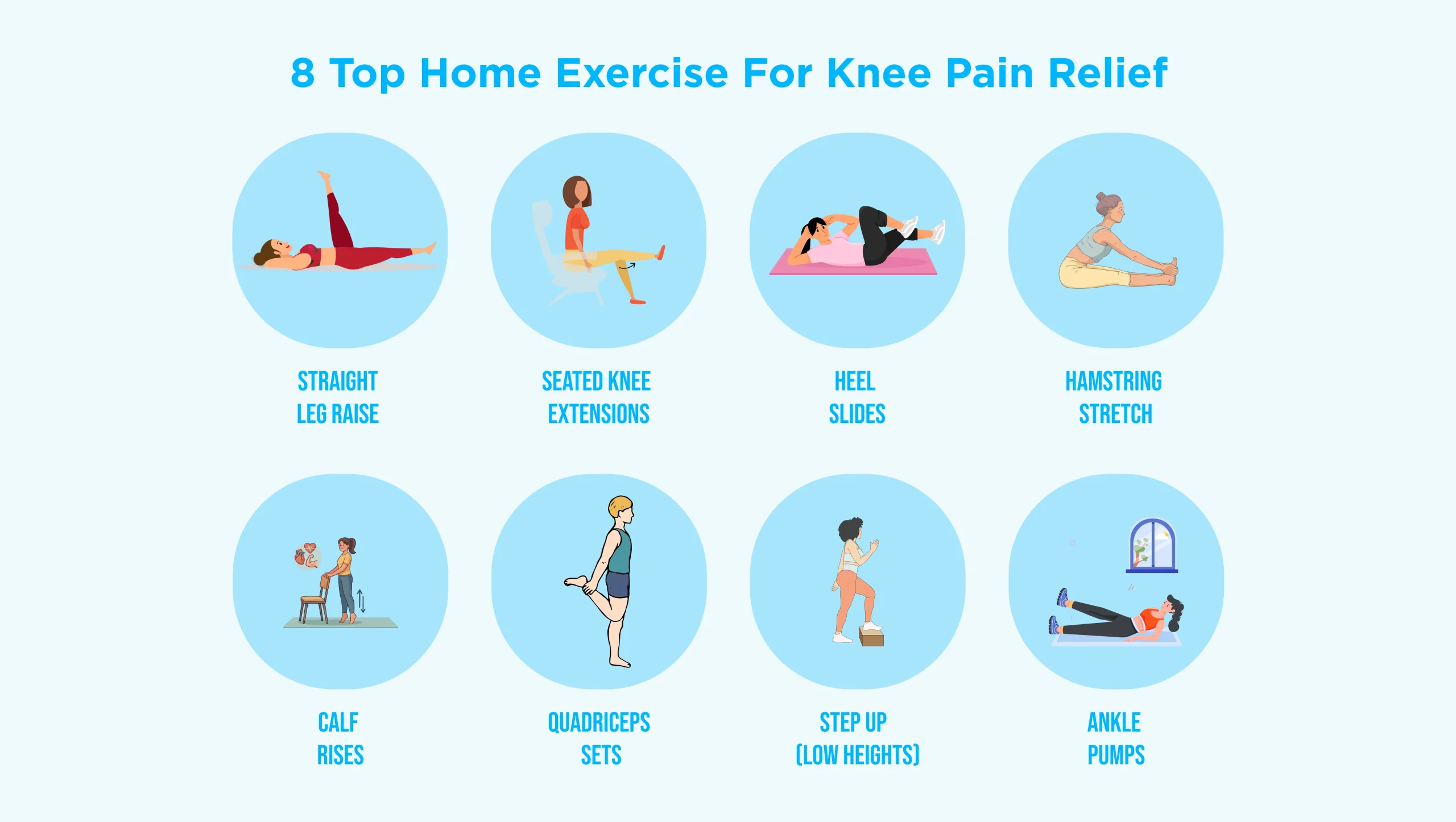
Before starting specific exercises, remember that moderate and regular activity helps keep your knees comfortable over time. These easy knee strengthening exercises and knee pain relief exercises are simple, easy to follow, and can be performed at your own pace. Focus on slow, controlled movements and rest when needed. These small efforts can gradually improve flexibility and support everyday mobility.
This is one of the best leg-strengthening exercises for older adults. Lie on your back in a comfortable position with one leg bent and the other straight. Slowly lift the straight leg to the level of the opposite knee, hold for a few seconds, then lower it gently. This exercise strengthens the thigh muscles without putting too much strain on the knee joint. Regular practice can improve stability and make walking easier. For persistent knee concerns or guidance on safe exercises, consulting a specialist in orthopaedics at the best orthopedic hospital in Chennai, like Dr. Mehta’s Hospitals, can ensure the right treatment and care.
Sit on a chair with your feet flat on the ground. Lift one leg slowly until it is straight, hold a moment or two, and then lower it. Do the same with the other leg.
A study conducted on 100 Indian outpatients aged above 65 showed that their average maximum knee extension strength was quite low, with a median value of 2.29 kg and a range between 0.5 kg and 10 kg.
It is a simple but effective exercise that helps improve muscle strength and joint flexibility. It is particularly helpful for older adults who prefer chair-based exercises that are gentle on the knees.
Lie down with your legs extended. Gradually slide one heel towards your body, bending your knee as much as is comfortable, and then return it to the starting position. Heel slides help improve knee flexibility and range of motion. The exercise is gentle, controlled, and suitable for individuals beginning a routine to improve joint movement.
Sit on the edge of a chair with one leg stretched forward and the heel resting on the floor.. Keep your back straight and lean slightly forward until you feel a stretch at the back of your thigh. Hold for a few seconds and relax.. This is a stretch that assists in decreasing stiffness and aids in improved knee performance during movement.
Stand behind a chair and hold it for support. Slowly lift your heels so you are standing on your toes, then carefully lower them again. This practice makes the calf muscles stronger, which is significant in supporting the knee joint. It also assists in enhancing balance and coordination, which are vital in everyday life.
Sit or lie with your legs extended. Contract the muscles at the front of your thigh, hold for a few seconds, and then relax.. This activity works the quadriceps without any knee movement, which is comfortable to elderly individuals with restricted mobility. It is commonly recommended as a daily leg-strengthening exercise for older adults.
Step onto a small platform with one foot, then bring the other foot up. Step down slowly, one foot at a time. This exercise helps improve strength, balance, and coordination. It can also help improve control while walking and climbing stairs. Perform this exercise slowly and with proper support nearby.
Sit or lie in a comfortable position and flex your ankles by moving your feet up and down. This is a basic exercise that enhances blood flow to the legs and overall joint health. It is commonly prescribed as a warming or relaxation exercise for the elderly. For added convenience, you can also access essential medicines and health supplies through a reliable online pharmacy in Chennai, making it easier to manage your routine care from home.
It is important to follow a few basic safety precautions before starting any exercise routine. These tips can help you stay comfortable, avoid strain, and make your routine easier. For older adults, a slow and gradual approach makes exercise safer and easier to maintain in daily life.
Start with some light motions and never do too much at a time. Increase your activity gradually as your body gets used to it. Starting gradually allows your muscles and joints to adapt safely.
Pay attention to how your body responds to exercise. If you feel discomfort, take a break and rest. Gentle consistency is more beneficial than overexertion.
Keep a chair, wall, or stable surface nearby for support. This makes you feel more confident and prevents the possibility of losing balance when exercising.
Proper posture makes exercises effective and comfortable. Keep the back straight and movements controlled to prevent unnecessary stress on the joints.
Long and tiring sessions are not as helpful as short and regular ones. Exercise daily with a gentle and consistent approach.
If you have knee pain, it is always a good idea to consult a professional. For urgent discomfort or sudden flare-ups, seeking timely support from the best emergency services in Chennai can help you get the right care without delay.
Knee pain management can often begin at home with simple exercises that help seniors stay comfortable, flexible, and mobile. These exercises help strengthen knee muscles, improve movement, and support daily activities.
With a consistent and careful approach, seniors can stay active and confident. The smallest things that one does daily can make a difference over time. Contact us today to book an appointment and receive the right guidance for your knee pain.
Gentle knee exercises can usually be done daily, depending on comfort and energy levels.
2. Are home exercises safe for seniors with knee pain?
Yes, when done correctly and at a comfortable pace, home exercises are generally safe and helpful.
3. Can these exercises improve mobility in seniors?
Yes, regular practice can support flexibility and ease of movement over time.
4. Do I need any equipment for these exercises?
No, most exercises can be done at home without any special equipment.
5. When should seniors stop exercising?
If you feel pain, dizziness, swelling, or unusual strain, it is best to stop, rest, and seek medical advice if needed.
6. Can seniors begin exercising at any age?
Yes, gentle exercises can be started at any age with proper guidance.
7. Can walking help reduce knee pain?
Yes, gentle walking can help improve circulation, strengthen muscles, and reduce stiffness when done in moderation.
8. Can arthritis-related knee pain improve with exercise?
Yes, gentle exercises can help reduce stiffness and improve mobility in seniors with arthritis-related knee pain.
9. What should seniors avoid when they have knee pain?
Seniors should avoid sudden movements, deep squats, jumping, heavy lifting, and any exercise that causes sharp pain.
10. When should seniors see a doctor for knee pain?
A doctor should be consulted if the pain is severe, lasts for several weeks, causes swelling, or affects walking and daily activities.