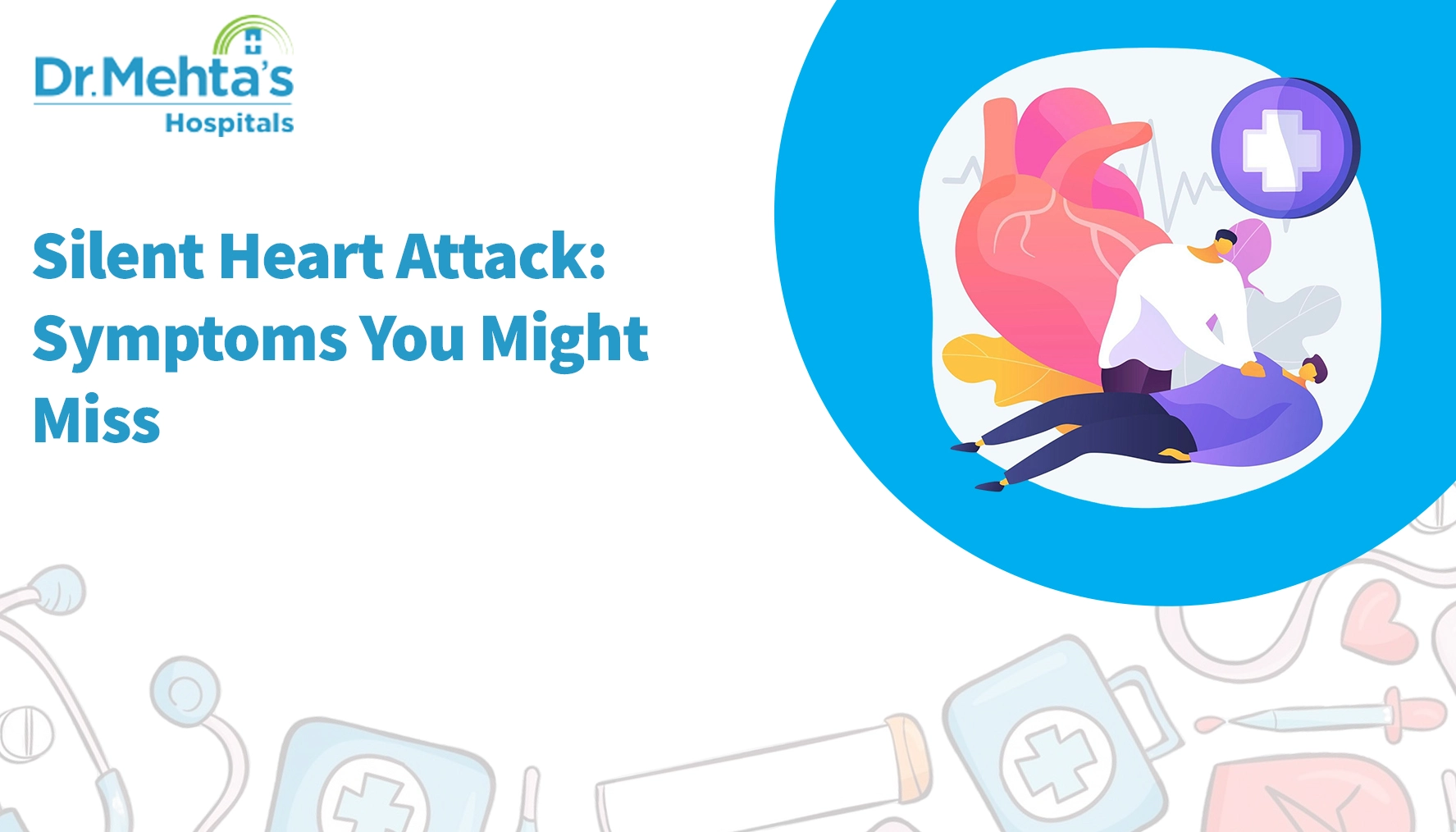
When people think of a heart attack, they often imagine sudden, with intense chest pain. But not every heart attack presents in this manner. In some cases, symptoms can be very mild or unclear and are often overlooked. These are commonly referred to as silent heart attacks.
A silent heart attack does not mean there are no symptoms. Rather, the symptoms can be mild, temporary, or can be confused with the typical symptoms of fatigue, acidity, or muscle tension. Recognizing these signs can help you understand when your body needs attention and seek timely care.
A hospital‑based study from Puducherry, South India, reported a higher prevalence of silent myocardial ischemia among asymptomatic individuals with type‑2 diabetics, highlighting why early warning signs are often missed in this group.
A silent heart attack does not mean that no symptoms are present. Instead, the symptoms may be mild, transient or may be mixed with the normal symptoms of fatigue, acidity or muscle tension. Being aware of these signs can help you recognise when your body needs care and seek timely treatment.
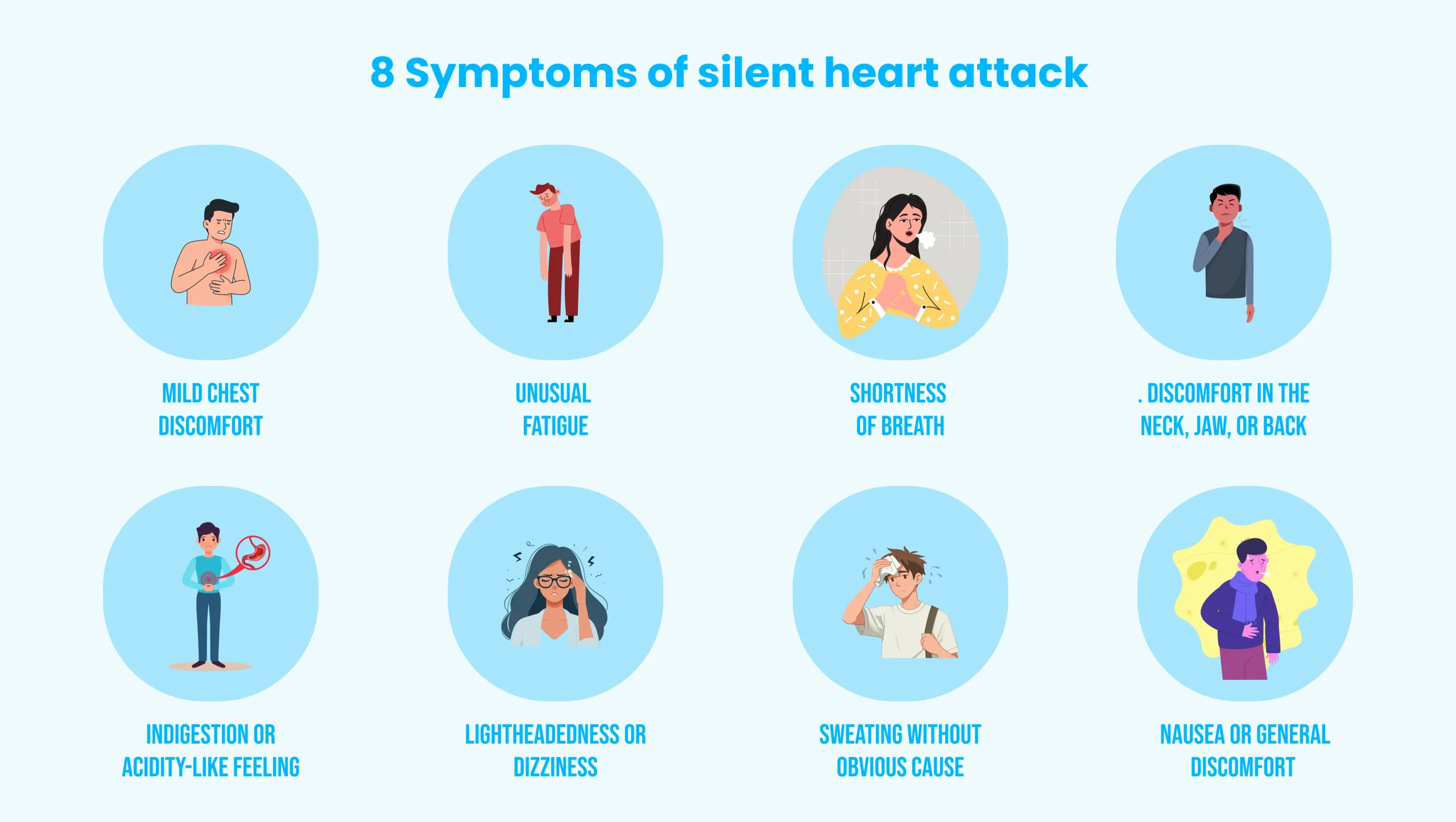
The symptoms of a silent heart attack may differ among individuals. They are not always severe, but are worth paying attention to.
You might experience a slight pressure, tightness or pain in the chest instead of sharp pain. It may come and go, and may not seem serious at first.
One early sign can be feeling unusually tired without any clear reason. This exhaustion may appear suddenly or last for a few days, even without intense physical exercise. If this fatigue continues, it is important to seek timely evaluation at a trusted centre, such as a leading heart hospital in Chennai, for proper care and guidance.
You may feel slightly out of breath during everyday activities like walking or stair climbing. This can occur without chest pain as well.
The pain or discomfort can extend to other parts of the body, such as the neck, jaw, shoulders, or upper back. These mild sensations can easily be mistaken for muscle strain.
Some individuals may experience symptoms resembling indigestion, such as a burning sensation in the chest or the upper abdomen. This can be mistaken for a stomach issue.
Dizziness or lightheadedness can be experienced as a result of low blood flow. This might be short, but not to be overlooked in case it occurs repeatedly.
Sudden sweating, even without physical activity, can be a minor indicator. It can be cold or clammy sweat. If such symptoms are noticed, it is important to monitor your symptoms and seek medical advice if needed. In case medications are already being followed, it is wise to stay prepared with essential medications and access to a reliable online pharmacy in Chennai for added convenience and peace of mind.
A study from Central India reported that approximately 8.24% of patients visiting a tertiary care hospital experienced symptoms such as nausea or vomiting. Some individuals may feel slightly unwell, experiencing symptoms like nausea or general discomfort. These symptoms might not be severe, but they can be linked to changes in the heart.
|
Risk Factor |
Why It Increases Risk |
|
Diabetes |
Nerve changes may reduce the ability to feel typical chest discomfort |
|
High blood pressure |
Puts extra strain on the heart and affects blood vessels over time |
| High cholesterol |
Leads to plaque build up in arteries, reducing smooth blood flow |
|
Smoking |
Affects blood vessels and reduces oxygen supply to the heart |
|
Sedentary lifestyle |
Lack of activity may weaken heart health over time |
| Older age |
Body responses may become less noticeable, making symptoms subtle |
| Family history of heart conditions |
Increases the likelihood of similar heart-related concerns |
Even when the symptoms appear mild, you should not ignore them.
These tests help evaluate heart function and guide further treatment. For accurate results and timely diagnosis, getting tested at a trusted facility offering comprehensive lab tests in Chennai can make a meaningful difference in care.
Although not every situation can be avoided, health-wise habits can help the heart.
Even minor lifestyle modifications can have a significant impact in the long run.
Consult a doctor if you experience:
Early assessment can provide clarity and reassurance.
Silent heart attacks do not necessarily have powerful or noticeable symptoms, though they need to be addressed. It is important to notice even the slightest changes in your body so that you can take the necessary measures in time and get the right treatment.
Listening to your body, keeping informed, and regular health check-ups are beneficial to long-term heart health. Even the mild symptoms are worth attention as early care can prevent additional complications. Connect with our specialists for timely evaluation and care.
A silent heart attack is a heart attack with mild or less noticeable symptoms that may be easily overlooked.
2. Can a silent heart attack happen without chest pain?
Yes, symptoms may include fatigue, breathlessness, or discomfort in other areas such as the jaw, back, or arms.
3. Are silent heart attacks common?
Yes, they are more common than many people realise, especially among individuals with underlying risk factors.
4. Can silent heart attacks be detected later?
Yes, they are sometimes identified during routine tests such as an ECG or imaging studies.
5. Is recovery possible after a silent heart attack?
With timely medical care and appropriate lifestyle changes, many individuals can recover well and maintain good heart health.
6. Who should go for regular heart check-ups?
Individuals with diabetes, high blood pressure, high cholesterol, or a family history of heart disease should consider regular screenings.
7. How is a silent heart attack diagnosed?
It is typically diagnosed through tests such as an electrocardiogram (ECG), blood tests, and imaging studies that assess heart function.
8. Why are silent heart attacks more common in people with diabetes?
Diabetes can affect nerve function, which may reduce the ability to feel typical chest pain, making symptoms less noticeable.
9. Can lifestyle changes reduce the risk of silent heart attacks?
Yes, maintaining a healthy diet, staying physically active, managing stress, and controlling blood sugar and blood pressure can significantly lower risk.
10. When should I seek immediate medical attention?
Seek urgent care if you experience persistent chest discomfort, unexplained fatigue, shortness of breath, dizziness, or sudden sweating even if symptoms seem mild.