


Many people have at one point experienced urinary discomfort in their lives. But not every urinary infection is alike. A urinary tract infection (UTI) and a kidney infection may sound similar, but they affect different parts of the urinary system and cause very different experiences for the person affected.
The difference between UTI and kidney infection may assist in identifying the symptoms promptly, seeking medical attention in time, and preventing needless pain and suffering. This guide is a description of the subject in easy language, with your health and peace of mind first and foremost.
| Aspect | UTI | Kidney Infection |
| Affected area | Bladder or urethra | One or both kidneys |
| Common causes | Bacteria entering the urinary tract | Untreated or spreading UTI |
| Symptoms | Burning while urinating, urgency | Fever, back pain, nausea, and urinary symptoms |
| Severity | Usually mild when treated early | Needs careful medical attention |
| Recovery | Often improves quickly with treatment | May take longer and requires closer monitoring |
UTI or urinary tract infection occurs when bacteria get into the urinary system, most commonly the bladder. A lot of individuals go online to find out what UTI is, particularly when they observe pain during urination.
.A multicentric Indian study across four geographical regions reported that 10.1% of patients presenting with urinary symptoms had confirmed UTIs, with women accounting for 72.5% of cases. The most common causative organism was E. coli (68.3%), followed by Klebsiella pneumoniae (17.7%), highlighting the burden of community-acquired UTIs in India.
Common causes include:
Common symptoms of a UTI include:
The majority of the UTIs can be handled as long as they are diagnosed early and dealt with by medical care. Timely guidance from the most experienced and among the top doctors in Chennai helps ensure the infection is treated completely and prevents further urinary complications.
So, what is a kidney infection? A kidney infection or pyelonephritis is a condition that arises when bacteria move upwards through the bladder to the kidneys. Most individuals seek solutions to the question of what a kidney infection is when the symptoms are more severe than those of a typical UTI.
Community-acquired UTIs are a significant concern in India, with 10.1% of symptomatic patients showing confirmed infection. When UTIs are delayed or inadequately treated, the infection can ascend to the kidneys, and recurrent or severe kidney infections may contribute to long-term kidney damage, increasing the risk of chronic kidney disease (CKD).
A kidney infection can cause:
Although kidney infections can be treated, they must never be overlooked. Timely assessment is beneficial to combat kidney health and general well-being.
The difference between the common symptoms of UTI and kidney infection is usually in the way the body experiences symptoms outside the urinary tract.
That is why it is essential to know the symptoms of UTI vs kidney infection. Medical consultation is highly advisable when the symptoms become more extensive or severe.
The initial symptoms can be similar to urinary ones, which is why it is often hard to distinguish between the two conditions. Knowing the differences between the symptoms of UTI and kidney infection can enable you to identify the changes as soon as possible and pursue the appropriate treatment with certainty.
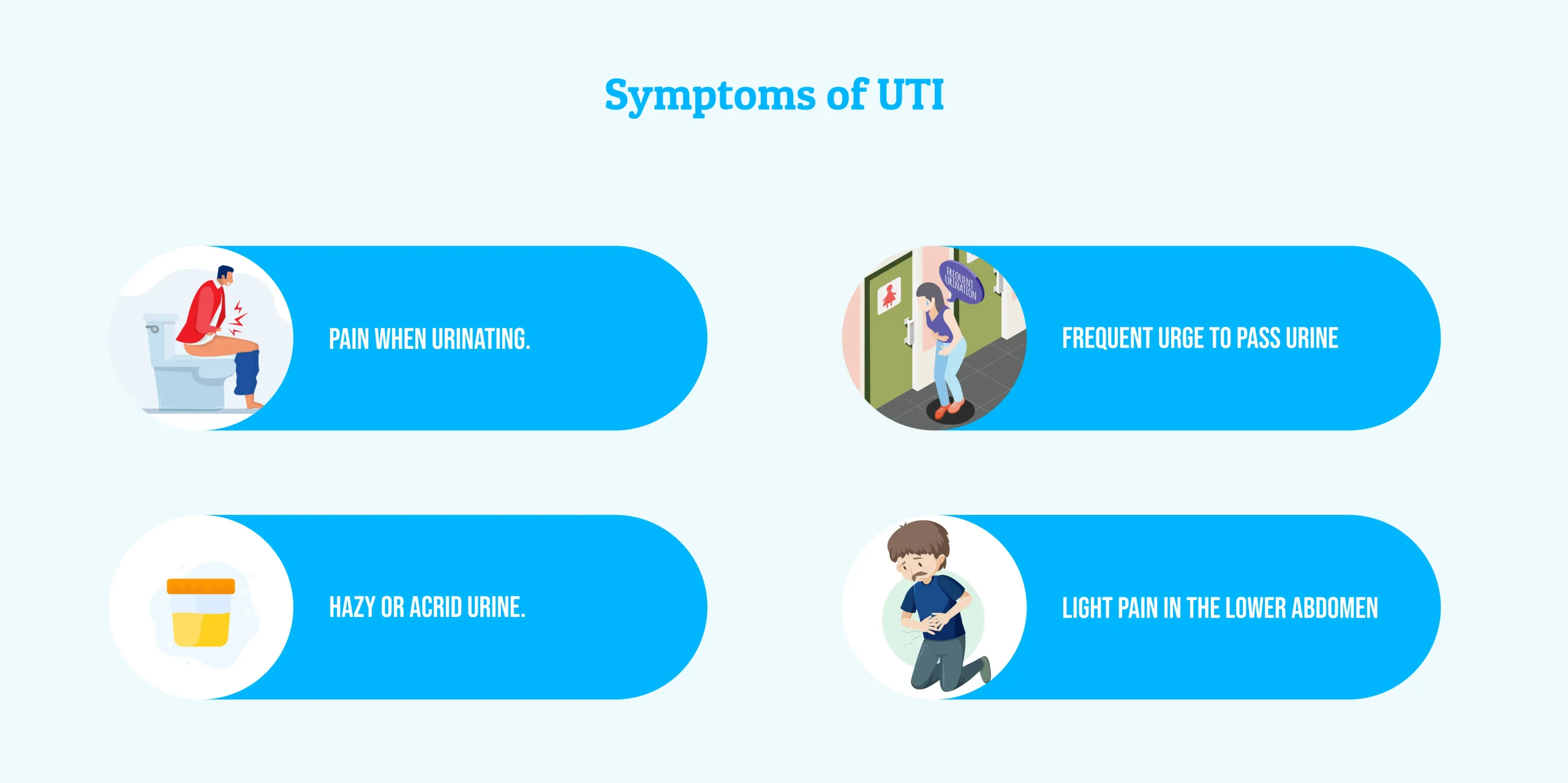
Common Symptoms of UTI
Common Symptoms of Kidney Infection.
The difference between the symptoms of UTI and kidney stones is also a frequent query of many people because kidney stones may cause sharp pain, blood in the urine, and relief that is periodical. Unlike infections, kidney stones usually do not cause fever unless an infection is also present. For a clearer understanding of how these conditions affect kidney function and what comprehensive care involves, many patients find it helpful to explore expert resources on nephrology and kidney health.
Yes, a UTI can progress into a kidney infection if left untreated. There is a common question among many patients: Can a simple bladder infection spread upwards? The response is yes, particularly when one ignores the symptoms or delays treatment.
Risk-enhancing factors include:
The risk can be significantly mitigated by early diagnosis and subsequent treatment. Many patients also value access to round-the-clock urgent care services that ensure prompt evaluation and intervention whenever critical needs arise, reinforcing peace of mind and continuous support.
You should seek medical advice when you experience:
Early consultations can help experienced doctors in Chennai to determine whether the issue is merely a UTI or something serious like a kidney infection.
Knowing the distinction between UTI and kidney infection can help you make wise decisions about your health. UTIs are frequent and can be treated in most cases, but kidney infections should be addressed on time to guarantee complete recovery.
Being mindful of yourself, keeping yourself hydrated, and consulting medical advice when your symptoms alter or continue can make a positive impact. Most urinary infections can be managed effectively with early diagnosis and appropriate medical care. If you are facing urinary problems or need professional consultation, the specialists at Dr Mehta’s Hospital, Chennai, can provide an accurate diagnosis and personalised care. Contact our team of specialists right now to start your treatment.
A UTI infection is caused by bacteria entering the urinary tract. It is very common, especially among women, and usually responds well to timely treatment.
A kidney infection affects the kidneys and often causes fever and back pain, unlike a UTI, which mainly affects urination.
Yes. The difference between UTI and kidney stone symptoms can be confusing, but stones often cause sharp pain without fever, while infections may cause discomfort with fever.
Most UTIs are not serious when identified early and treated under medical guidance.
Staying hydrated, avoiding urine retention, and maintaining good hygiene may help reduce UTI risk. Pelvic floor exercises can also be beneficial for people with recurrent urinary issues, as they support bladder control. However, individual factors vary, so consulting a doctor is recommended.
If you experience fever, back pain, nausea, or worsening symptoms, it is best to seek medical advice promptly.