
It is normal to wake up occasionally at night to pass urine, especially after a long day or after drinking a lot of fluids. However, when nighttime urination becomes frequent and starts affecting sleep, it can raise concerns. Many people wonder whether it is related to lifestyle habits or an underlying health condition.
The good news is that many causes of frequent nighttime urination are treatable. Understanding the reason can help you take simple steps to improve comfort and sleep quality.
Nocturia (or nighttime urination) may disrupt sleep. Long-term sleep disturbance can affect energy levels, mood, and daily functioning. While the symptom is not always serious, it can sometimes indicate an underlying condition that should be evaluated early.
Studies suggest that more than half of Indians aged 50 and above wake up at least once during the night to pass urine. Determining the cause aids in selecting the appropriate lifestyle modifications or health treatment, which result in enhanced sleep and well-being.
Nighttime urination usually happens due to a combination of habits, body changes, or medical conditions. Below are common causes explained simply.
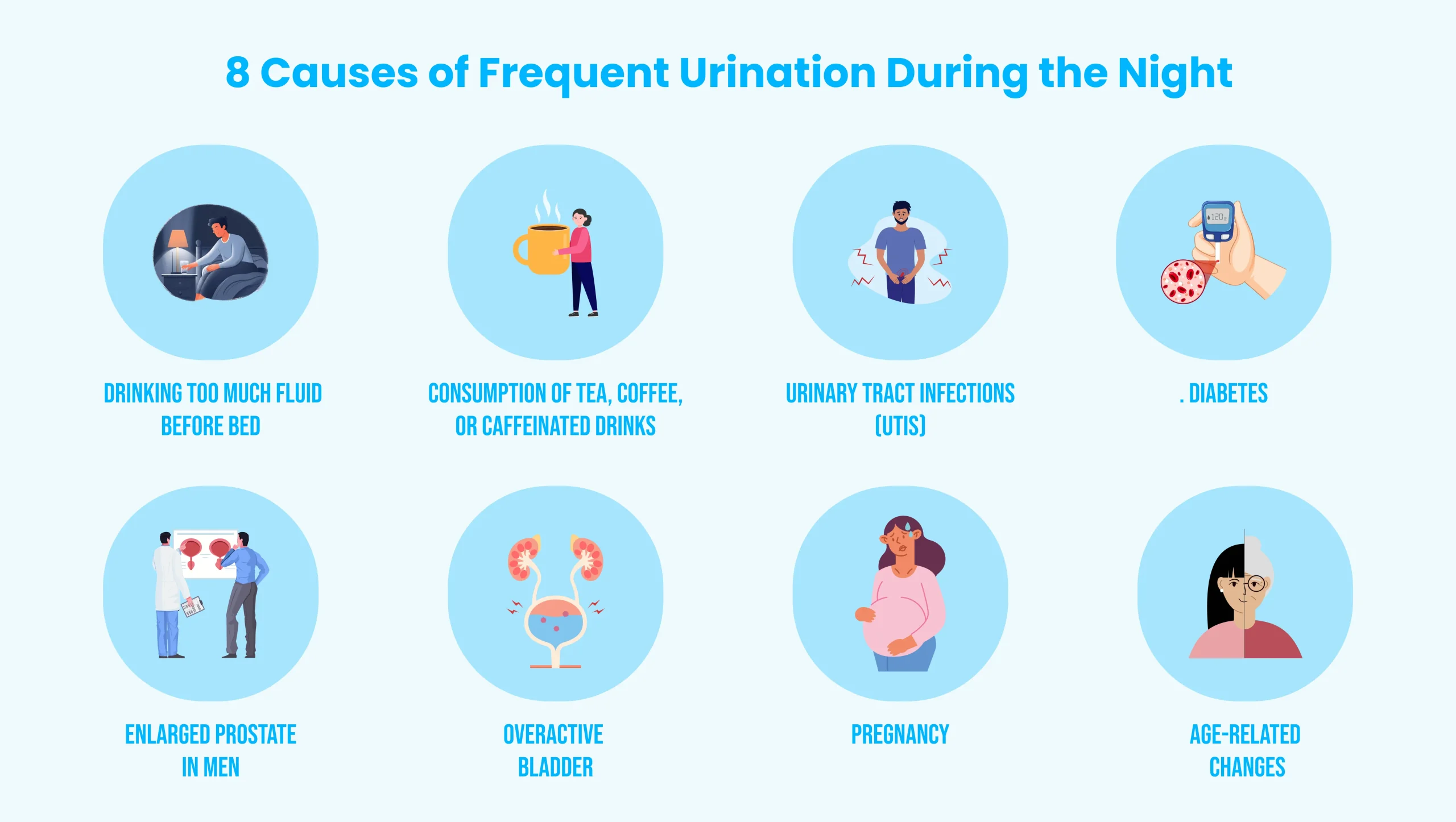
Drinking large amounts of water, tea, or other fluids close to bedtime increases urine production at night. This is among the most widespread and easily rectifiable causes.
Reducing fluid intake one to two hours before sleep can help decrease nighttime bathroom visits without affecting daytime hydration. For persistent concerns related to urinary health or kidney function, guidance from a specialized nephrology care in Chennai can help address the root cause with the right care.
Caffeine is a weak diuretic, which prompts the body to produce more urine. Having tea or coffee in the evening can increase nighttime urination. Replacing caffeinated beverages earlier in the day can be a significant change.
Urinary tract infections (UTIs) are very common in India, with studies showing that about 21% to 33.5% of people are affected. A urinary infection can irritate the bladder and cause frequent urges to urinate, including at night. It may also cause pain during urination or changes in urine appearance. UTIs are widespread and typically respond to prompt medical attention.
High blood sugar levels can increase urine production as the body tries to remove excess glucose. People with diabetes may experience frequent urination during both day and night, along with increased thirst. Regular health check-ups help in early detection and management.
The prostate gland can enlarge and press against the urinary tract as a man grows older. This may decrease bladder emptying and lead to frequent urination, particularly at night. Timely health assessments and access to reliable medications play an important role in managing symptoms safely and improving overall comfort, with trusted support available through a reliable online pharmacy in Chennai.
An overactive bladder can lead to impulsive urination even in times when the bladder is not full. The condition may happen both during the day and night and may interfere with sleep. Symptoms are usually controlled through bladder training and lifestyle changes.
In pregnancy, the pressure and hormonal changes associated with pregnancy may result in the urge to urinate, even at night. This is an ordinary experience, and it tends to clear up after childbirth. Sleep comfort can be achieved through simple interventions such as altering the timing of fluids.
Simple steps like adjusting fluid intake can support better sleep, while access to immediate medical care ensures timely support if any concerns arise, available round the clock at the best hospital in Chennai.
The capacity of the bladder can decrease, and the amount of urine produced at night can increase as people get older. It is a natural change and is not necessarily associated with illness. Maintaining healthy habits and discussing symptoms during regular check-ups can help manage concerns effectively.
| Cause | Day Frequency | Night Frequency | Other Symptoms | Who’s Affected |
| UTI | High | Moderate | Urine discomfort, cloudy urine | More common in women |
| Diabetes | Very high | High | Thirst, fatigue | All age groups |
| Prostate enlargement | Moderate | High | Weak urine flow | Older men |
| Excess fluids at night | Normal | High | None | All ages |
Small daily changes often bring noticeable improvement.
These steps can help reduce urine production at night.
In cases where the symptoms do not resolve, medical assistance can be needed. Doctors may recommend:
Treatment varies depending on the underlying cause.
You should take medical consultation in case:
Seeking medical advice early can help identify the cause and prevent complications. A healthcare professional can also provide. including guidance on foods and drinks to avoid for kidney stone risk.
Nighttime urinary frequency is common and often treatable. Sleep can be greatly enhanced by making some basic lifestyle changes, e.g., by regulating fluid intake or reducing caffeine. Timely care and advice during medical conditions can aid in restoring confidence and comfort.
Paying attention to your body and seeking support when needed are important steps toward better urinary and overall health. Consult a healthcare professional for proper evaluation and treatment.
Yes. Waking up once at night to urinate can be normal, especially if you’ve had more fluids in the evening.
Not necessarily, as long as you stay well hydrated during the day. The focus should be on timing your fluids rather than restricting them completely.
Stress can increase bladder sensitivity in some individuals, leading to more frequent urges to urinate.
Regular physical activity supports overall health and may improve bladder control over time.
Yes. Age-related changes in bladder can increase nighttime urination.
In many cases, lifestyle adjustments and timely medical guidance can help manage and reduce symptoms effectively.