


Prostate conditions become increasingly common as men age. Two frequently confused conditions are benign prostatic hyperplasia (BPH), commonly called an enlarged prostate, and prostate cancer. While both conditions affect the prostate gland and may cause urinary symptoms, they are distinct medical conditions that require different diagnostic approaches and treatments.
Understanding the differences between an enlarged prostate and prostate cancer helps men recognize warning signs early and seek timely medical evaluation. When detected early, many cases of prostate cancer can be effectively managed with appropriate medical treatment and monitoring.
The prostate is a small walnut-sized gland located below the bladder and in front of the rectum in men. It surrounds the urethra, the tube that carries urine from the bladder out of the body. As men age, the prostate may gradually enlarge, a non-cancerous condition known as benign prostatic hyperplasia (BPH).
In India, Benign Prostatic Hyperplasia (BPH) is extremely common with aging. Studies indicate that about 50% of men aged 50–60 years and up to 80–90% of men over 70 years show evidence of BPH.
Prostate cancer develops when abnormal cells in the prostate begin to grow and divide uncontrollably. Many prostate cancers grow slowly and may not cause noticeable symptoms in the early stages.
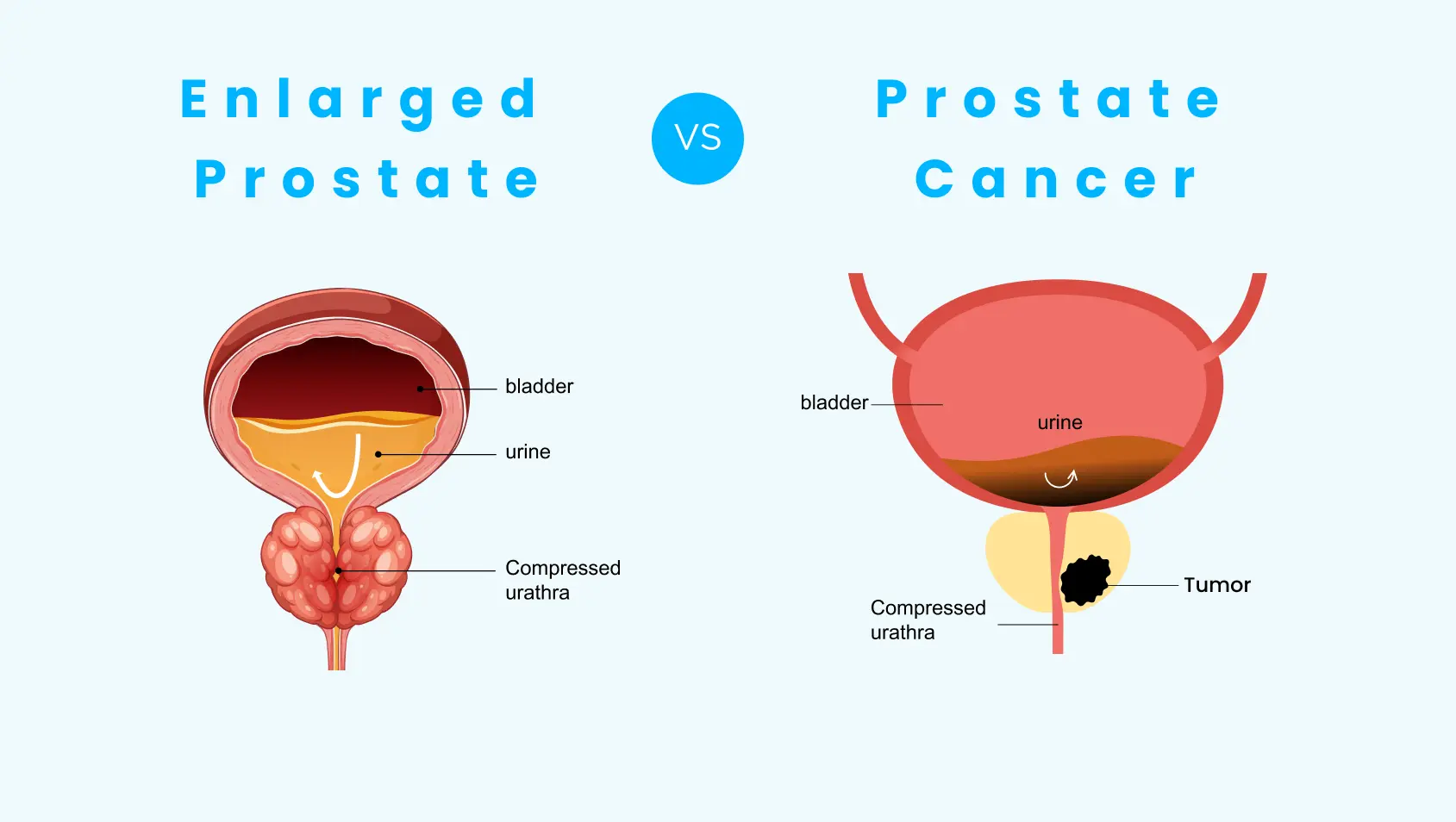
| Feature | Enlarged Prostate (BPH) | Prostate Cancer |
| Nature | Non-cancerous growth | Cancerous growth |
| Common Age | More common after the age of 50, though mild prostate enlargement may begin earlier | More common after 50 |
| Growth Pattern | Prostate enlarges around the urethra and may restrict urine flow | May develop in different parts of the prostate and may grow beyond the gland in advanced stages |
| Spread to Other Organs | No | Possible in advanced stages |
Even though these conditions differ, they may sometimes share similar urinary symptoms. This is why a medical evaluation is important when symptoms appear. If you experience persistent urinary symptoms, consult a qualified urologist from the best Urology centre in Chennai for proper evaluation and diagnosis.
The symptoms of an enlarged prostate gradually develop in many men as they age. The symptoms are primarily associated with alterations in the urinary flow since the enlarged gland is pressing on the urethra.
One of the most common symptoms of BPH is increased frequency of urination, especially during the day or night. The bladder may not empty completely, causing the urge to urinate again soon after.
Male patients experiencing an enlarged prostate might experience a lag in the timing of urine initiation. Men may experience a delay in starting urine flow despite feeling the urge to urinate. This is due to the fact that the swollen gland causes the urethra to be narrow.
Another typical symptom is a weaker or slower urine stream. Urine flow may become slow, weak, or stop and start intermittently. This transformation usually builds up over time.
There are men who do not feel that their bladder is fully emptied after urination. This feeling could result in repeated efforts to pass urine in a short time.
The unusual symptom of prostate enlargement is waking up several times at night to urinate, also referred to as nocturia. It may influence the quality of sleep and comfort in everyday life.
If symptoms persist or worsen, consult a healthcare professional for proper diagnosis and treatment. If you are managing prostate-related symptoms/ are ongoing treatment, you can conveniently order prescribed medicines through the trusted online pharmacy, which offers safe prescription refills and home delivery for added comfort
Prostate cancer is among the most common cancers affecting men in India. In 2020 alone, India reported around 34,500 to 40,000 new cases and approximately 16,783 deaths.
prostate cancer may produce symptoms similar to BPH or may cause no symptoms at all. Nevertheless, with the development of the condition, new signs may emerge.
Prostate cancer may also result in difficulty in starting or stopping urine flow. These alterations are usually similar to those of an enlarged prostate, hence the necessity to test to confirm the exact cause of the alteration.
Prostate cancer may also be associated with increased urination, especially at night. Nonetheless, this symptom is not a sure indication of cancer and may be experienced in various prostate disorders.
Sometimes, prostate cancer can lead to the presence of blood in urine or semen. Although this may be worrying, it may happen as a result of infections or other ailments. Medical evaluation is required to determine the underlying cause.
Men with prostate cancer might have difficulty maintaining a steady urine stream or experiencing interrupted flow.
Some men may experience persistent discomfort in the pelvic region, hips, or lower back.This symptom can be experienced when the prostate gland is irritated.
Erectile dysfunction may occur in some cases due to nerve involvement as the gland is located close to major nerves or other health factors.
7. Bone Discomfort in Advanced Stages
In advanced stages, prostate cancer may spread to bones, causing persistent bone pain, particularly in the hips, spine, or ribs. Early evaluation through screening tests can help detect prostate conditions before complications develop and to support such early diagnosis, patients can consider advanced diagnostic services and comprehensive lab tests in Chennai, which help doctors detect and monitor such health conditions accurately.
There are numerous prostate symptoms that are similar, and this is why a medical evaluation is essential. The tests may include:
These tests assist in determining whether the symptoms are caused by an enlarged prostate, infection, or other diseases.
Early evaluation helps doctors identify the cause of symptoms and recommend appropriate treatment.
Prostate wellbeing can be supported by maintaining overall health. Helpful habits include:
These are measures that contribute to overall health and promote early diagnosis of prostate issues.
Knowing the difference between an enlarged prostate and prostate cancer helps men to react positively to alterations in urinary health. Although an enlarged prostate is a benign or non-cancerous disorder that many men can easily deal with as they grow old, prostate cancer needs early medical attention and treatment.
The early identification of enlarged prostate symptoms and potential prostate cancer symptoms enables the physician to prescribe the most effective treatment. Prostate health is manageable with frequent screening and open communication with medical practitioners. If you notice persistent urinary changes or discomfort, consult a healthcare professional from Dr Mehta’s Hospitals for evaluation and guidance.
No. An enlarged prostate, known as benign prostatic hyperplasia (BPH), is a non-cancerous increase in prostate size. Prostate cancer occurs when abnormal prostate cells grow uncontrollably and may spread to other parts of the body.
No. BPH does not develop into prostate cancer. However, both conditions can occur independently in the same individual, so medical evaluation is recommended if symptoms appear.
Many medical guidelines suggest discussing prostate cancer screening with a doctor around age 50, or age 45 for men with higher risk, such as those with a family history of prostate cancer.
No. Urinary symptoms are more commonly caused by non-cancerous conditions such as BPH, urinary tract infections, or bladder issues. A medical evaluation is required to determine the exact cause.
Yes. Screening methods such as the PSA blood test and digital rectal examination (DRE) can help identify prostate cancer at earlier stages in some men.
Yes. Frequent nighttime urination (nocturia) may be associated with prostate enlargement, bladder conditions, or other health issues and should be evaluated by a healthcare professional.